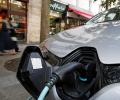
Automobile manufacturers, new and old, as well as ancillary suppliers are set to spend a combined Rs 70,630 crore over the next five years on either entering the electric vehicle segment or stepping up their presence in it. Data culled from announcements made by firms shows India, the world's fifth largest automobile market, is poised to receive one of the biggest capex pushes ever to fuel the transition from internal combustion engines to electric motors and batteries as part of a green drive. The EV push, egged on by the government's emphasis on electric mobility to meet its net zero targets, is expected to yield at least 25 electric vehicles - new ones as well as electrified versions of existing vehicles running on internal combustion engines.
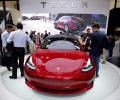
Palo Alto-based electric carmaker Tesla has initiated talks with the government on the modalities of setting up fully-owned retail outlets. The company needs to comply with the foreign direct investment (FDI) guidelines related to single-brand retail, including local sourcing norms, to sell directly in India. At least two other foreign majors - Apple and Ikea - were engaged in talks with the government long before the sourcing norms were eased under the single-brand retail route.
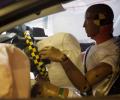
The Centre will make it mandatory for carmakers to provide a minimum of six airbags in motor vehicles that can carry up to 8 passengers for enhanced safety of occupants, Union Minister Nitin Gadkari said on Friday. In a series of tweets, the Road Transport and Highways Minister said his ministry had already mandated the implementation of fitment of the driver airbag with effect from July 1, 2019 and front co-passenger airbag with effect from January 1, 2022. "In order to enhance the safety of the occupants in motor vehicles carrying upto 8 passengers, I have now approved a Draft GSR Notification to make a minimum of 6 Airbags compulsory," Gadkari said.
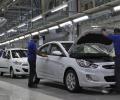
As the second wave of the Covid-19 pandemic abates, India's automakers are hopeful of a quick recovery in sales volumes, led by better rural sentiment, low interest rates, improved availability of finance and a gradual uptick in business and economic activity. In fact, companies have started to ramp up production already, encouraged by high order books and the growing preference for private transport in both rural and urban areas as a means to avoid infections. In early April, the industry had been bullish as the sales trend for March showed that the effects of the Covid-19 pandemic had been left behind. The total vehicle sales had grown by 77 per cent, albeit on a lower base, and for the past few months, sales had consistently touched 300,000 units per month.

German luxury carmaker Mercedes-Benz India on Thursday said it will hike prices of select models by up to two per cent from January 1, 2022, to offset feature enhancement and rising input costs. At the same time, Audi announced a price increase of up to 3 per cent across its entire model range, effective from January 1 next year. Mercedes, however, said it is committed to price protection to customers who have booked their cars and are waiting for more than four months for select models.

Maruti Suzuki India (MSI) on Thursday said its new manufacturing facility in Haryana, the company's third in the state, would reach peak production capacity of 10 lakh units per annum in the next eight years entailing a total investment of Rs 18,000 crore. The new facility, which would come at a 800-acre site at IMT Kharkhoda in Sonipat district, will entail total investment of Rs 11,000 crore in the first phase with a production capacity of 2.5 lakh units per annum. The first set of vehicles are expected to roll out from the facility in 2025.

Automaker Toyota Kirloskar Motor (TKM) on Tuesday said it will increase prices of its entire model range by up to 2 per cent with effect from October 1 in order to partially offset the impact of rise in input costs. The company, which is a joint venture between Japan's Toyota Motor Company and Kirloskar Group, sells a range of vehicles including Innova Crysta and Fortuner in the domestic market. The company will realign the prices of its models, with effect from October 1, 2021, TKM said in a statement.

The global semiconductor shortage hit passenger vehicle sales in September, with major manufacturers like Maruti Suzuki, Hyundai and Mahindra & Mahindra reporting a decline in sales on Friday. Kia India and Honda Cars also reported a dip in wholesales last month as compared with the year-ago period. Carmakers like Tata Motors, Toyota Kirloskar Motor, Nissan and Skoda, however, reported an increase in passenger vehicle dispatches last month despite supply chain issues.

North American automotive executives have picked India over China as the most popular offshore destination for the migration of business processing activities, according to a new survey.

The company further said once the situation was brought to its attention, it made the distributor acutely aware of the "inappropriateness of the action".

The first leg of the 35-day festive period, which ended with Dussehra, failed to bring any cheer for auto companies. While makers of passenger vehicles struggled to meet demand due to the persistent shortage of semiconductors, a recovery in demand remained elusive for two-wheeler manufacturers despite offers and schemes. The overall season, which ends two days after Diwali, is unlikely to bring any turnaround in either the supply or the demand scenario, said dealers and officials at auto companies.

The country's largest carmaker Maruti Suzuki India on Thursday launched a new version of its multi-purpose vehicle XL6 as it gears up to bring a slew of new products this fiscal and take the challenges of prevailing uncertainties head-on. The new XL6 is powered by a 1.5-litre petrol engine with a peak power of 75.8 kW. It is available in manual and automatic transmission options, priced between Rs 11.29 lakh and Rs 14.55 lakh (ex-showroom). Speaking at the launch, newly appointed Maruti Suzuki India managing director and CEO Hisashi Takeuchi said, "With the uncertainties prevailing today, the business realities are continuously evolving.

China reported 17,166 asymptomatic cases with a majority of them in Shanghai, China's business hub of 26 million.

German premium carmaker Audi on Monday launched the facelift version of its mid-spec performance car S5 Sportback in the domestic market at a starting price of Rs 79.06 lakh (ex-showroom). The five-seater, four-door sports coupe, has been brought as a completely built unit, the company said in a release. Audi India has seen a growth in demand from Tier-II and Tier-III cities, which is expected to accelerate further going forward, it added.

The company is voluntarily undertaking a recall for WagonR (1 litre) manufactured between November 15, 2018, and October 15, 2019, and Baleno (petrol) manufactured between January 8, 2019, and November 4, 2019, MSI said in a regulatory filing.

'Localisation saves a lot of time and cost for them. Keeping an eye on a long-term market, this is the best way these car-makers can build momentum for their brands.'
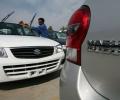
The country's largest carmaker Maruti Suzuki India on Wednesday reported a 66 per cent decline in consolidated net profit at Rs 487 crore in the second quarter ended September 30, 2021, as production was affected by the ongoing semiconductor shortage. The rise in commodity prices also had an adverse impact on the company's earnings.

A Mercedes-Maybach S650 Guard was recently added to the prime minister's cavalcade by the Special Protection Group.
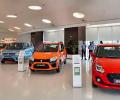
Passenger vehicle market leaders Maruti Suzuki and Hyundai on Saturday reported a decline in wholesales in December 2021, although homegrown majors Tata Motors and Mahindra & Mahindra reported growth, amid semiconductor shortage continuing to impact production. Other manufacturers Nissan and Skoda also reported an increase in December 2021 sales although Honda Cars India witnessed a decline last month. The country's largest carmaker Maruti Suzuki India (MSI) reported a 4 per cent fall in wholesales to 153,149 units in December 2021 as against 160,226 units a year ago.

Bhavish Aggarwal, the founder of ride-hailing firm Ola who disrupted the electric scooters market in the country, is planning to launch an electric sports car in 2024. The plan will put it in competition with Indian players, such as the Tata group and Mahindra & Mahindra, and global giants like Tesla and Hyundai. Aggarwal, recently, took a group of reporters to the firm's design studio at the Ola campus in Bengaluru where his teams are working on several EVs, including scooters, motorcycles, sedans, and SUVs - and even robotaxis.

Mercedes-Benz joins the connected cars revolution with the launch of their app -- 'Mercedes Me'.

The country's biggest carmaker is now more valuable than the combined market cap of the three leading automobile companies in the country: Tata Motors (Rs 1,18,684 crore), M&M (Rs 86,336 crore) and Ashok Leyland (Rs 34,700 crore).

With the threat of a third Covid-19 wave looming large, companies are scrambling to protect employees and keep operations safe--from a no-jab-no-entry-at-workplace policy to ramping up vaccination, it's an all-out effort to prevent the scale of devastation seen in the first two waves. At least two top steel companies--Tata Steel and ArcelorMittal Nippon Steel India (AM/NS India)--are pushing for vaccination certificates for entry into work premises. AM/NS India, a joint venture between world's leading steelmaker, ArcelorMittal, and Japan's Nippon Steel, is set to make vaccination the certificate a requirement from July 1.

India's electric mobility goal, which has so far been riding on two wheels, is all set to graduate to four wheels. At least, the journey has begun. Hyundai Motor India said it would invest Rs 4,000 crore till 2028 to launch half-a-dozen electric vehicles (EVs) in India. It would eventually straddle premium and mass segments. The first of these - the electrified version of an internal combustion engine (ICE)-powered model - will go on sale as early as next year.
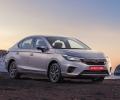
When a manufacturer launches the fifth generation of a product, it is given that earlier avatars hit the mark. Ditto for the new Honda City, the latest version of which also brings in sweeping changes to the carmaker's product strategy for the Indian market, says Pavan Lall.

German luxury carmaker Audi on Thursday launched a new version of its flagship SUV Q7 in India with prices starting at Rs 79.99 lakh (ex-showroom) as it seeks to further accelerate growth in the country. The locally assembled vehicle is powered by a 3-litre petrol engine with a 48V mild-hybrid system generating 340 hp. It can accelerate from 0-100 km/hr in 5.9 seconds. The new Q7 will be available in two variants -- Q7 Premium Plus and Q7 Technology -- priced at Rs 79.99 lakh and Rs 88.33 lakh (ex-showroom), respectively.
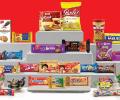
Indian consumers are likely to get respite from rising prices just before the festival season. Some consumer companies, including automakers, have indicated that they are planning to pause price hikes just before demand picks up in August, while keeping a close eye on volatile raw material prices.

Uniqueness of the first-ever BMW X3 M lies in a newly developed powerful engine and sophisticated chassis technology.
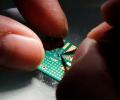
Time was when you turned on your car's ignition, all that happened was that the mechanical system fired up your engine and made it run. Today, the moment you do so, your stereo system probably lights up, connects to the Bluetooth on your smartphone, and lets you make calls through an audio assistant or play music from your phone, which you can hear on the car's speakers. All these smart features in a car are powered by semiconductors, or chips, as they are commonly called.

Market leaders Maruti Suzuki and Hyundai, who together control two-thirds of the domestic market, have not yet firmed up a decision on raising prices.
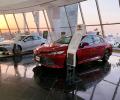
The growth momentum that started during the festival season is likely to sustain in the new year, reports Arindam Majumder.
The country's largest carmaker Maruti Suzuki India (MSI) on Wednesday reported a consolidated net profit of Rs 475 crore for the first quarter ended June 30. The auto major had posted a consolidated net loss of Rs 268 crore in the April-June quarter of 2020-21. It noted that during the first quarter its sales and production were adversely impacted due to the second wave of the COVID-19 pandemic.

With 15 models and a market share of close to 50 per cent, it rules the Indian market, selling almost 1.5 million units every year, rolling out one model every ten seconds.
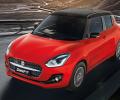
The country's largest carmaker Maruti Suzuki India on Tuesday said its models Swift, Baleno, WagonR, Alto and Dzire have emerged as best selling cars in 2020-21 and the top five models have come from its stable for the fourth consecutive year. Swift with over 1.72 lakh units was at the number one position followed by Baleno with 1.63 lakh units, the company said in a statement. Maruti Suzuki India's (MSI) tall boy WagonR was in the third spot with 1.60 lakh units while Alto and Dzire were at fourth and fifth with 1.59 lakh units and 1.28 lakh units respectively, it added.
'Bharat has been leading, but it cannot carry India as the bulk of the sales come from India in terms of volume and profitability.'

While auto sales in the US have plunged, vehicle sale in China has more than doubled since 2005, rising near 13 million units this year.

There is another common trend among these three players - they are all registering a volume decline in a market that is expanding at over 8 per cent

Tata Motors' UK-based subsidiary, Jaguar Land Rover or JLR, reported a muted operational performance in the December quarter of financial year 2021-22 (Q3FY22). The luxury carmaker saw a 33 per cent year-on-year (YoY) decline in wholesale volumes to just under 70,000 units in Q3, against estimates that were 16 per cent higher. The drop in despatches to dealers was on account of shortage in semiconductors.

M&M also saw its domestic passenger vehicle sales grow by 1 per cent, while Toyota Kirloskar Motor witnessed a decline in its PV sales.
