
N R Bhanumurthy, professor of economics at the National Institute of Public Finance and Policy, and the author of the series, presented in a report to the National Statistical Commission, explains to Abhishek Waghmare various aspects of the methodology.
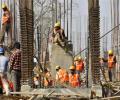
The First Advance Estimates of National Income, 2016-17 did not reflect the impact of demonetisation, effected on November 9 and are based on sectoral data for only seven months to October.

India's economic growth rate in the January-March quarter is likely to slip to 7.2 per cent q-o-q.

The rate of price rise has been on a decline for the past four months.

IIP down due to poor show by manufacturing, mining and power sectors

Chennai Sports Organisers Pvt Ltd (CSO) has been named the franchise owner of the Chennai team in the multi-million dollar World Series Hockey (WSH) league to be played across various cities of the country starting next month.

The Reserve Bank is likely to cut the repo rate by 25 basis points (bps) after the Budget.
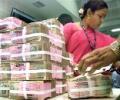
With Indian statistics facing heavy criticism from all quarters in recent times, the Central Statistical Organisation (CSO), which is responsible for coordination of statistical activities in the country and evolving and maintaining statistical standards, will have to explore ways to reduce dependence on outsourced secondary data collection.

Niti Aayog vice-chairman Rajiv Kumar said that the two major constraints being faced by the investors are less availability of finance and high interest rates.

Fruits, vegetables and eggs continued to witness deflationary trend during January this year, with their prices declining 4.18 per cent, 13.32 per cent and 2.44 per cent, respectively.

In a paper, EAC-PM accused Subramanian of "cherry-picking high-frequency indicators" to express his skepticism about the growth rates after 2011-12.

Brokerage house Nomura today said the downward revision of FY'13 growth figure by the Central Statistics Office will have a positive base effect for GDP expansion in the current fiscal.

Union Health Minister Mansukh Mandaviya on Tuesday suggested that stickers for houses to notify completion of both doses of COVID-19 vaccines should be given to fully vaccinated families to encourage uptake of vaccine among the population.

India's GDP estimates for 2020-21 show that the economy is expected to perform much better than earlier projections by different agencies, indicating a sustained V-shape post-lockdown recovery, experts said. The first Advance Estimates (AE) by the National Statistics Office (NSO) has projected a contraction of 7.7 per cent in the real GDP during 2020-21. This was better than the projections by certain international agencies like the IMF and World Bank.

In the manufacturing sector, output is expected to decline by about 70 per cent as only food-processing, and drugs and pharma industries are allowed to operate while other segments, such as engineering and metals, have shut operations.

India's growth slowed in three months through December from a revised 7.4% expansion in the previous quarter, but it was much stronger than expected.

The Finance Minister Pranab Mukherjee on Friday said economic growth during the current fiscal could exceed 7.2 per cent projected by the Central Statistical Organisation (CSO).

The earlier high was in January this year at 5.07 per cent.

The manufacturing sector, which constitute more than 77 per cent of the index, recorded a growth of 5.2 per cent in April, up from 2.9 per cent in the year ago month.

Beside manufacturing, deceleration was also witnessed in sectors like agriculture, construction and electricity, gas and water supply.
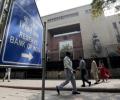
As the MPC is mandated to target CPI inflation rate at 4 plus minus 2 per cent, any measurement error in CPI is likely to have grave consequences for monetary policy.

Only power generation grew faster in 2014 than in earlier years.

To do so, the government will have to tackle a number of broad development challenges successfully, says Shankar Acharya

This time there has been a rather peculiar criticism of the latest GDP numbers.

Recalibrating data of past years using 2011-12 as the base year instead of 2004-05, the Central Statistics Office estimated that India's GDP grew by 8.5% in the financial year 2010-11 and not at 10.3% as previously estimated.

Economic affairs secretary S C Garg said that all macroeconomic parameters are performing well.

Growth of capital goods at 9.6 per cent is inspiring as the investment cycle is expected to rebound in the coming months.

The government propagandists should refrain from premature celebrations and misplaced euphoria: Congress.

If the real economy is indeed looking up, then it no longer needs hand-holding and fiscal laxity

India said its economy grew 7.3 percent in the October-December quarter.

The rate of price rise for consumer foods eased to 4.7 per cent in January, from 4.96 per cent in December.

The manufacturing sector during the fourth quarter recorded a growth rate of 9.3 per cent while the farm sector grew at 2.3 per cent.

The previous high in quarterly GDP growth was recorded in the January-March quarter of 2015-16 at 9.3 per cent.

On the back of strong foreign investor flows, the stock market barometer BSE Sensex today jumped more than 1 per cent to log new lifetime high, while the rupee appreciated 24 paise to trade at 60.65 against the US dollar.

The final agriculture GDP numbers for 2016-17 are expected to be revised up, as rabi production is looking really good.

The final Budget for the fiscal is likely to be tabled in July after formation of the new government.

On overall basis, the inflation in the food segment increased to 4.42 per cent in November as compared to 1.9 per cent in the preceding month.

He cautioned however that these are the early signs and one should not start celebrating.

Retail inflation in March inched up to 8.31 per cent from 8.03 in February, mainly on account of a rise in fruit and vegetable prices.
