
Public-sector banks (PSBs) in India have reported an 11.2 per cent year-on-year rise in net profit, reaching a record 1.98 trillion in FY26, marking their fourth consecutive year of profitability, driven by sustained business growth, improved asset quality, and strong capital positions.

In essence, Tata Sons will continue to be a CIC, whether registered or unregistered. It will have to follow the 90:60 principle.
If it qualifies as belonging to the upper layer, public listing will be one of the regulatory requirements. However, if it qualifies as 'unregistered CIC', it will escape from prudential regulation, explains Tamal Bandyopadhyay.

India's first maritime lender, state-owned Sagarmala Finance Corporation Ltd (SMFCL) hit the ground running with a Rs 4,300 crore disbursement announcement last Tuesday, within months of being registered as a non-banking financial company (NBFC) in June 2025.

The Reserve Bank of India (RBI), in its Financial Stability Report (FSR), cautioned that stress tests indicate two scheduled commercial banks (SCBs) may have to dip into their capital conservation buffers (CCBs), unless stakeholders infuse capital, under a scenario involving a gradual slowdown in domestic GDP growth and a moderate rise in inflation, with limited policy easing space available to the central bank.

The Indian economy is growing at a robust pace, driven by strong domestic demand, low inflation, and the healthy balance sheets of banks, said a Reserve Bank report released on Wednesday.

https://www.rediff.com/business/report/why-ipo-bound-oyo-seeks-to-rename-parent-firm/20250530.htm

The Union Finance Ministry on Tuesday said that aggregate business of public sector banks (PSBs) has shown strong growth of 11 per cent in the first half of the financial year 2024-25 (H1FY25) to touch Rs 236 trillion. The operating and net profit were also robust. At Rs 1.5 trillion, operating profit grew by 14.4 per cent year-on-year (Y-o-Y) while the net profit saw an impressive 25.6 per cent jump at Rs 85,520 crore in the first half of FY25.

Gross bad loans of banks may rise from 6.9 per cent in September 2021 to 8.1-9.5 per cent by September 2022 if the Omicron variant strikes the economy hard, as per the financial stability report of the Reserve Bank released on Wednesday. The report also said that the rising stress level in the retail loan portfolio of banks -- the mainstay of bank credit for many years now -- was led by home loans, which grew in double-digits so far this fiscal. While asset quality improved, with gross non-performing assets (GNPA) and net NPA (NNPA) ratios declining to 6.9 and 2.3 per cent, respectively, in September 2021, the slippage ratio inched up during the same period as private sector banks showed a higher rate of deterioration in asset quality, as per the report.

The recent run on the US-based Silicon Valley Bank (SVB) and the subsequent seizure of its assets by the regulators may have sparked a global wave of risk aversion, particularly for start-ups. However, the Indian banking sector is unlikely to be a victim of any contagion effects, said analysts. he bank, which played a big role in financing start-ups and technology players, faced stress after incurring huge losses on its holdings of US bonds, following the most-aggressive monetary tightening cycle by the Federal Reserve in around four decades.

Banks were earlier required to get a prior approval of the RBI for such investments which are subject to prudential limits.

The Indian financial system's asset quality improved despite the pandemic, but it could be due to special dispensations by the regulator, and banks would likely see increased stress on their books once the schemes expire. According to the annual trend and progress report of the Reserve Bank of India (RBI) released on Tuesday, the data available for this financial year so far indicate that banks' bad debts have moderated while provision coverage ratios (PCRs), capital buffers as well as profitability indicators have improved relative to pre-pandemic levels.
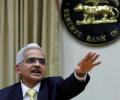
'The banking sector appears to be on course to recovery,' declares the RBI governor.

The bi-annual financial stability report noted that failure of an NBFC with the maximum capacity to cause solvency losses to the banking system will lead to a loss of 2.5 per cent of the total tier-I capital of the banking system.
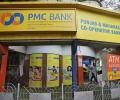
In its EoI document, the bank had said it was open to converting into a small finance bank.

The government is likely to infuse Rs 3,000 crore in seven public sector banks to shore up their Capital Adequacy Ratio (CAR) to 12 per cent to improve the market confidence in the banking sector.

Bad loans, however, continued to rise in the micro, small and medium enterprises category

Besides 15 loan transactions to the Siva group of companies, the former directors also used unique methods to ensure the group did not get into the default list.

Corporation Bank is the biggest beneficiary of this round of capital infusion with Rs 9,086 crore of funding, followed by Allahabad Bank with Rs 6,896 crore.

Fraud-hit Punjab and Maharashtra Cooperative (PMC) Bank on Tuesday invited expression of interest (EoI) from potential investors for investment or equity participation in the bank for its reconstruction. Subsequent to commencement of the normal day-to-day operations, it will be open for the investors to convert the bank into a small finance bank by making an application to the RBI, the lender said.

The capital infusion would help improve the financial health of banks. While some banks would get necessary regulatory capital while others would get it for fueling growth.
The choice clearly is between prompt corrective action and slow but sure destruction, says Tamal Bandyopadhyay.

The 21st meeting of FSDC comes against the backdrop of the economy hitting a six-year low growth rate of 5 per cent in the first quarter of 2019-20. Even some of the macroeconomic data for the second quarter does not portray an encouraging picture of the economy.
The recapitalisation, the finance minister said, will enhance the lending capacity of state-owned banks and help them come out of RBI's Prompt Corrective Action framework.

Mutual funds, bonds, PPFs, equity and real estate are some options which offer varying rates of return.

Pulbic banks have no reason to cheer Budget announcement.

Banks to be permitted to raise long-term funds for lending to infrastructure sector with minimum regulatory pre-emption such as CRR, SLR and Priority Sector Lending.

In advanced economies where the financial system is more matured, the form of shadow banking is more of risk transformation through securitisation.
The need to allow government shareholding in public sector banks to come down below 51 per cent

Your money is protected by the Deposit Insurance and Credit Guarantee Corporation.
