
As the reports trickled that the permission for the use of twin-technology would benefit the aspiring Reliance Communication, an Anil Ambani group company, Cellular Operators Association of India (COAI) shot a letter to the government saying that such a permission was against the existing policy and is tantamount to favouring a few.
New telecom operators who have been given licences to operate pan-India GSM mobile services are all set to fight a bitter battle with the established GSM players like Bharti Airtel, Vodafone and Idea Cellular.
Mobile operators have strongly opposed the decision of telecom regulator Trai to impose penalties on them for unsolicited calls, saying the move is "unfair" and would discourage service providers which cannot be blamed for the nuisance.
Delhi HC has refused to stay the process of spectrum allotment to RCom, giving a major setback to GSM operators.
The battle for spectrum has now spread among the key members of the committee that was set up by the Department of Telecom (DoT) to suggest new subscriber norms for allocation of additional spectrum.

TRAI removed network interconnection charges.

'Everybody has freedom, but you cannot start a fire in a crowded theatre.'

The Aadhaar-enabled payment system, or AEPS, allows consumers who don't have smartphones or debit cards to perform basic banking transactions like cash deposit, cash withdrawal, intrabank or interbank fund transfer, balance enquiry and obtaining a mini statement through biometric authentication at micro-ATMs.
Among other segments, home broadband subscriptions have picked up and the virtual private network service, too, increased by around 15 per cent.
In a strong attack on the telecom tribunal, Cellular Operators' Association of India (COAI) has argued in its petition to the Delhi High Court that the tribunal has erred in law and on facts in ignoring the three cardinal principles of grant of interim injunction.
Upfront payment of Rs 32,000 cr just half of Budget estimate; no takers for 700 & 900 megahertz bands

Department of Telecom had sought the legal opinion of the matter from the government's counsel.
The Cellular Operators Association of India on Wednesday telecom regulator TRAI's order for slashing roaming charges by up to 56 per cent and said the move could lead to increase in basic tariffs.

MAG was constituted by Department of Electronics and IT in February 2014.
After Tata group chief Ratan Tata criticised the spectrum allocation criteria announced by the government, GSM cellular operators on Tuesday took potshots at the guidelines, which they said was 'lenient' towards CDMA operators.

Government's resolution on the contentious issue of spectrum usage fee seems to have found favour with telecom operators with none of them withdrawing their application from airways auction on the last day on Monday.

Telecom Regulatory Authority of India has recommended up 62 per cent reduction in base price of premium 2G spectrum and up to 37 per cent in case of radiowaves freed from the cancellation of 122 licences, compared to the amount fixed for previous auction.
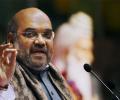
Home minister heads several groups of ministers, including the one to decide the revival package for Bharat Sanchar Nigam and Mahanagar Telephone Nigam. His ministry also takes decisive calls on national security in relation to telecom operations as well as equipment and technology used in the industry.
With even the Airtel chief saying 3G isn't as hot as it was some years ago, Indian telcos will have to follow a different route to make it work.
Continuing with the growth momentum, GSM-based cellular operators led by Bharti added about two million more subscribers in September, taking the total users past the 50-million milestone.

Industry experts say there will be problems, as power supply is a concern for providing uninterrupted service
Faced with the threat of losing tax holiday due to the delay in starting operations, COAI has sought a year's extension upto April 2005 for the unified access service licencees, who got the licences in the first quarter of 2004.
Cellular operators on Tuesday said they were ready to implement the new tariff structure including contentious interconnection user charge from May 1.

Trai said the reports that compensation was not feasible were based on wrong inputs.
Mobile user base, both GSM and CDMA, went up to 3.4 crore during April this year with GSM based cellular operators capturing 2.71 crore subscribers and CDMA based operators like Reliance and Tatas 74.16 lakh.
Telecom Dispute Settlement and Appellate Tribunal on Wednesday sought the views of cellular operators regarding the alleged loss to their revenues on account of limited mobility services.

The uniform SUC, if implemented as per recommendations made by Telecom Regulatory Authority of India, will provide relief for mobile operators such as Airtel, Vodafone and Idea, but will increase rates for broadband wireless access spectrum holders like RJIL.

Delhi High Court says it can do so under the TRAI Act, rejects petitions filed by telecom associations.

Bharti Global is planning to put up more satellites and has set a stiff deadline to launch commercial Internet services by October in the UK, Alaska, northern Russia and northern Europe.

It is learnt that the defence ministry is refusing to let go of its 100 MHz spectrum, which was allotted earlier. In that case, the department of telecommunications (DoT) will be left with only 175 MW of 5G spectrum of the total 300 MHz.
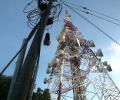
Need for much more investment; sector would like govt help

The freebies are now over, but Jio will need to notch up subscriber numbers and margins to prove its sceptics wrong.

DoT decides not to scrap dual-technology telecom licences

Although the industry is disappointed with the government decision not to lower spectrum prices at a time telcos are saddled with over Rs 4-trillion debt and an estimated Rs 1.43-trillion licence fee dues, the DCC has relaxed the payment structure to offer some relief to the financially stressed sector.

The Cabinet approved giving Bharti Airtel, Vodafone Idea Ltd and Reliance Jio an option to avail of a two-year moratorium on payments they were supposed to make in yearly installments for the spectrum bought in auctions.

Inter-ministerial body Telecom Commission on Tuesday approved hiking foreign direct investment limit in the sector from 74 per cent to 100 per cent.
