
The Tata group on Thursday launched its super app, Tata Neu, bringing all its brands in one platform as it seeks to play a major role in the Indian ecommerce space currently dominated by the likes of Amazon and Flipkart.
India Inc is gearing up for a slugfest this year and from tech to paints, new battlegrounds are emerging, observes Indrajit Gupta, co-founder, Founding Fuel.

Tata Group chairman Natarajan Chandrasekaran on Thursday said the group's recently launched super app Neu is on an open architecture and it will host non-group brands as well. The Tatas finally launched its super app Tata Neu on April 7, after piloting it for months, but the group chairman claimed there was no delay in the commercial launch. Stating that the app has received an overwhelming response in the past seven days of going live, Chandrasekaran said the app is on an open architecture and will host products and services from non-Tata group companies.

India, the world's fifth largest economy in the world, is likely to overtake Japan to become the world's third-largest economy with a GDP of $7.3 trillion by 2030, S&P Global Market Intelligence said in its latest issue of PMI. After two years of rapid economic growth in 2021 and 2022, the Indian economy has continued to show sustained strong growth during the 2023 calendar year. India's gross domestic product (GDP) is expected to grow 6.2-6.3 per cent in the fiscal year ending in March 2024, being the fastest-growing major economy this fiscal year.
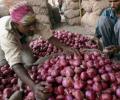
The government on Saturday imposed a minimum export price (MEP) of $800 per tonne on onion exports till December 31 this year with a view to increase availability of the vegetable in the domestic market and contain prices. The decision will come into effect from October 29. Besides, the government has also announced the procurement of additional 2 lakh tonnes of onion for the buffer, over and above the 5 lakh tonnes already procured.

'We look at the opportunities that are going to come in various fields in the next 5 to 10 years, do some research and come up with business plans.' 'Then, we go and seek out founders who will run the actual business.'

Close to six months since the launch of Tata Neu, the super application (app) from Tata Sons Group is all set for a revamp. The highlights include a reimagined rewards programme or NeuPass, a more seamless user experience by increasing the digital maturity of brands, adding more brands to the platform, and hiring category leaders to drive the next phase of growth. When it comes to brands, Titan will join Tata Neu by Diwali. Tata Motors and Air India will be on board after the Festival of Lights.

'Considering Pai is putting his own personal money in Byju's, stakeholders in the company can look forward to more governance and transparency.'

'Byju's financials only reflect the core business. At a group level, they are experiencing substantial losses.'
Shivani Shinde reports. The youngest member of the Tata group, the much-awaited Tata Neu, has finally been launched for people across the country. The 'super app' offers a number of services ranging from financial services to tech, travel and even groceries. The app takes off with a customer base of 120 million, with 2,500 offline stores. According to the Tata group, the app will be a one-stop destination for all consumer needs. The super app also offers a bouquet of financial offers like Unified Payments Interface (UPI), bill payments, loans and insurance. Tata Neu will also provide other services like fashion, gadgets, groceries, travel and health.
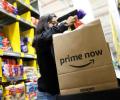
At present, other large players in the grocery and food retail space include Flipkart Supermart, Bigbasket, and Grofers.


Venture capitalists and private equity players have slowed investments in Indian start-ups.

Many small-scale start-ups are operational in this space for some years now. Larger players, too, seem to have realised the potential and are now entering into the fray, mostly through acquisitions.

If you have seen Zwigato, Param Kumar's story will sound familiar. Laid off from his job as a repairman at a Gurugram-based water purifier provider, he now delivers groceries and food for a mobile-based delivery app, in Delhi. Kumar, who started making deliveries last August, told Business Standard that he is working longer hours than his older salaried job as an RO repairman, and has no paid leaves or health insurance. Kumar is part of India's estimated 7.7 million-strong force of gig workers.

The turmoil, if you read the headlines, is about the so-called funding winter. Deep down, though, the question is one of the common direction in which founders and investors need to pull, points out Suveen Sinha.

Online grocers like Bigbasket and localbanya witness surge in sales.

The country's top three venture debt firms -- Alteria Capital, Innoven Capital, and Trifecta Capital -- combined deployed about $300 million (Rs 2,200 crore) in start-ups such as BigBasket, Cure.fit, Ninjacart, Dunzo and Lendingkart till April end, according to the government's Investindia website.

Fairwork focuses on five principles of fair gig work: Fair pay, fair conditions, fair contracts, fair management, and fair representation.
What is aggravating the situation is that e-commerce firms are facing huge shortage of delivery personnel. They have not been able to bring back their staff to work, despite offering higher pay and Covid-related insurance packages.

'One good thing that has come out of all this is that it shown people that online ordering is the way forward.'

However, many of these firms were facing an uphill task of convincing the people on the ground to return to work, as many are apprehensive of their safety.

Globally, the viability of on-demand businesses is being questioned

The groups plan to take on well-entrenched players like Amazon, Flipkart, and Paytm by merging their offline businesses with e-commerce initiatives.
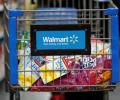
The department for promotion of industry and internal trade has rejected Walmart-backed Flipkart's proposal seeking approval for entry to the food retail sector, citing a regulatory issue, an official said on Monday. The government permits 100 per cent foreign direct investment in food retail for food produced and manufactured in India.

What entrepreneurs do not look is that for one success story like Snapchat, there are hundreds that fail.

According to experts, this will have major impact on new investments by Chinese players in companies, such as Paytm, Ola, BigBasket, Byju's, Dream11, MakeMyTrip, and Swiggy, when they go for follow-up funding. Chinese investors, such as Alibaba, Tencent, and Xiaomi, are active in the Indian start-up space, and have collectively invested billions of dollars.

The move is significant since it signals the growing importance of foods in Marico's overall strategy. It also comes six months after Marico stepped into honey, a Rs 1,500-crore category dominated by players such as Dabur.

Reliance Retail has bought a 25.8 per cent stake in Dunzo, India's leading quick commerce player, for $200 million (around Rs 1,488 crore) as it looks to expand its presence in online grocery delivery business. Dunzo has raised $240 million (about Rs 1,787 crore) in its latest funding round that was led by Reliance Retail Ventures Ltd (RRVL) - the retail arm of Reliance Industries, the two firms said in a statement. Existing investors Lightbox, Lightrock, 3L Capital and Alteria Capital also participated in the funding round.

Walmart, the world's largest retailer, is tripling its sourcing from India to about $10 billion a year by 2027, said Judith McKenna, president, and chief executive officer of Walmart International, the segment which includes the company's operations outside the US. "To achieve this, we are growing our sourcing team in India," said McKenna, during a fireside chat with YourStory founder Shradha Sharma at Converge@Walmart, the flagship event of Walmart Global Tech India. "Walmart has a 20-year history of sourcing from India and already exports more than $3 billion worth of Made-in-India goods each year to 14 markets worldwide." McKenna said the company has expertise in processes such as international standards and demand forecasting that businesses need to get ready to export.

In 2020-2021, the amount of foreign direct investment into India from China and Hong Kong plummeted to just $200 million -- its lowest in the recent past. In the first half of 2021-2022, FDI investments through these two nations stood at just $36 million.

After BigBasket, another online grocery retailer, MyGrahak, is scouting for private equity (PE) investment to fund its expansion plans.

The group began to outperform the broader market only with the onset of the pandemic in March 2020 while earlier it was largely keeping pace with the Sensex. The group's market cap is up 164.4 per cent since the end of March 2020 against a 105 per cent rally in the Sensex.
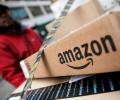
E-commerce companies are seeing an increase in demand for products such as fresh fruits and vegetables, milk, flour, rice, and lentils, and personal hygiene items like sanitisers and soaps and household cleaning products. Other products include instant noodles, baby food and Ayurvedic items. "There is even a huge spike in pet food," said a person.

Domino's India data that included sensitive customer information such as their names, phone numbers, and credit card details has allegedly been breached and put on sale on the dark web. According to tweets by Israel-based Co-Founder and Chief Technology Officer of cybercrime intelligence firm Hudson Rock, Alon Gal, the data is worth 13 terabytes (TB). He tweeted on Sunday that the data includes as many as 180 million order details, including 1 million credit card details. The data, said Gal, was up for sale on the dark web. The threat actor, he said, was asking for $550,000 for the data.

There is a lot of police action on the ground and even inter-state movement has been stopped, because of which deliveries of essential items via platforms, such as Flipkart, Amazon, Grofers, and Milkbasket, aren't happening. Food-delivery firms -- Swiggy and Zomato -- are facing similar challenges, according to the sources.

Most firms operating in the space claim that they have seen at least a two-fold rise in orders as compared to other times.
Sources said a merger could benefit both as Grofers' private labels business would be a draw for Zomato, as well as its experience in the online grocery delivery space.

India is currently home to 52 unicorn startups and one of the fastest-growing startup ecosystems.
Over the last 12 months, thanks to bold bets by venture capital firms like Sequoia, SoftBank Vision Fund, and foreign strategic investors like Naspers, pipeline of start-ups with potential to achieve $1 bn in valuation is at an all-time high.
