
While consumers have enjoyed lower fuel prices, producers have cut spending and thousands of jobs

Reliance Industries has seen crude oil production falling by more than 31 per cent from its MA oil field in the predominantly gas-rich KG-D6 block off the east coast.

The reference case forecast takes into account the dire state of the world economy and expects global demand to fall by 900,000 barrels per day (bpd) in 2009. It also does not foresee any further compliance by OPEC countries with the quota reductions announced last December. Dated Brent was expected to have average $45 per barrel in the first quarter, rising to $50.4 per barrel in the second and $51.8 per barrel in the third, then up to $53.4 per barrel.
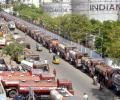
India's imports from Iran rose to 250,200 barrels per day
The refinery is likely to be commissioned before December. The commissioning comes at a time when margins in the business are falling sharply and demand for fuel across the world is dropping due to a global slowdown. Demand for fuel from the US and Europe, two of Reliance's major markets, has slowed with US consumption falling to their lowest in the last three years.
The field is producing 18,000 to 20,000 barrels per day of oil as against 40,000 bpd normal production. Gas output is restricted to 2.5 million standard cubic meters per day as opposed to 5.5 mmscmd in normal times. Panna-Mukta oil and gas field was shut on June 3 morning for maintenance work to prepare for the forthcoming monsoon season. However, when the facility was being restarted that evening, an explosion occurred at Panna process platform killing one.
The field pumped about 5,000 barrels of crude oil on the restart as the company tested equipments and systems. Output may rise to 10,000-12,000 barrels per day (bpd) by the month-end, when the field would be shut again for 45 days to hook up more oil wells.
Essar Oil announced on Friday it will spend about $6 billion (Rs 24,000 crore) to more than triple its refining capacity in three years, and that it had shelved a plan to delist the company's shares from the stock market. The company, owned by Mumbai-based Ruias, plans to expand capacity from the current 10.5 million tonnes per annum to 34 million tonnes per annum by 2010.

Ajit Shukla, an ex-IITian who is spearheading a new political party in Uttar Pradesh led by former IITians -- the Bharat Punarnirman Dal.
Mukesh Ambani-controlled Reliance Petroleum Ltd will raise $1.5 billion (nearly Rs 6.9 billion) through Syndicated Term Loan Facility to finance its new 580,000 bpd refinery and a 0.9 MT polypropylene unit.\n\n

Oil Minister M Veerappa Moily has suggested pricking the ballooning oil bill with everything from a street theatre campaign encouraging lower fuel use, to shutting fuel stations, to increasing imports from Iran.
India will receive its first shipment of oil from Russia's Sakhalin-I fields, where it is investing more than $2.7-billion, from the second quarter of 2006.
US-led forces have secured 80-90 per cent of Iraq's southern oil production capacity and aim to get Iraqi oil workers back on the job soon, a senior US army officer said on Friday.

Her husband suffers from depression and Tess Holliday had no qualms accepting that on social media.

India on Tuesday pitched for a stake in vast oil and gas fields as well as LNG terminals in the frozen Artic of Far East Russia as it looked to import more oil from the former Soviet republic as part of a strategy to diversify its energy basket.
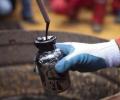
The Saudi and Iraq offer to replace Iranian crude supplies comes with a catch: Higher prices for the same quality of crude. The new government will face a tough decision over fuel price hike, says Aveek Sen.
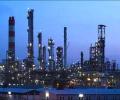
These refineries, commissioned mostly in the 1950s and 1960s during India's early industrialisation push, are inefficient and costly to maintain compared to their modern counterparts on the coast mainly operated by private companies.

Oil and Natural Gas Corp, which had last year firmed up an investment of Rs 34,012 crore (USD 5.076.37 billion) in bringing to production 10 oil and gas discoveries in its Bay of Bengal block KG-DWN-98/2 (KG-D5), plans to invest another Rs 21,528.10 crore (USD 3.2 billion) in developing the ultra-deepsea UD-1 find.

India is the second largest buyer of Iranian crude, after China.

India is the 4th largest oil consumer after the US, China and Japan.
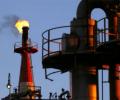
Oil has slumped from above $115 in June 2014 as shale oil from the United States has flooded the market

OVL, the overseas investment arm of state-run explorer Oil and Natural Gas Corporation, holds 40 per cent stake in the San Cristobal oil project in Venezuela.
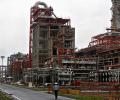
The Rs 3-trillion West Coast or Nanar refinery has all the potential to become India's flagship petrochemicals project, with the planet's largest oil producer Saudi Aramco as its biggest shareholder. Yet the locals don't see the plant as a harbinger of better times.

While India is catching China in motorbike sales, it lags far behind in cars, which use more petrol per journey.

Oil price have started rising as President Barack Obama's efforts to win backing for a military strike against Syria cleared its first hurdle.

India's network has expanded at a compound annual rate of around 4% which has added more than 4.8 km of additional roads since 1951, but even so the network remains badly underdeveloped

Brent hit a session high of $114.69 a barrel, its loftiest since September last year.

India-Israel relations are at a crossroads. Simply chanting old hackneyed mantras on terrorism, secularism, democracy, et al, won't suffice. There is danger of stagnation setting in, says Ambassador M K Bhadrakumar.

'As matters stand, Russia and Saudi Arabia, two of the world's biggest oil producers, are set for a hard landing as they didn't diversify their economies as much as they should have when the oil prices were booming.'

The known unknowns in Prime Minister Modi's Saudi visit assume great significance, says Ambassador M K Bhadrakumar.

HPCL is now ready to increase the stake of the state government up to 49 per cent.
 © 2026 Rediff.com - Advertise with us - Disclaimer - Privacy Policy - Sitemap - Feedback - About us - Terms of use - Grievances