
The chairman of India's Atomic Energy Commission makes a case for nuclear energy saying all other forms of power gerenration will not be able to meet the country's staggering demand.

'Uranium supply is going to come under increasing pressure.'
Atomic Energy Commission Chairman Anil Kakodkar on Saturday met representatives from various NGOs in Meghalaya, in an attempt to acquire their consent for uranium mining in the state.In view of the opposition to uranium mining by various NGOs and at least two political parties the Hill State People's Democratic Party and Khun Hynniewtrep National Awakening Movement the state government had earlier constituted two expert committees to study the possible impact of mining.
India will now develop its own stockpile of nuclear fuel to fulfil its energy needs, taking advantage of the guarantees given in the Indo-US civil nuclear agreement, Atomic Energy Commission Chairman Anil Kakodkar said on Thursday.

"We have the technical expertise and capability to build nuclear-powered aircraft carriers and warships of global standards," Kakodkar said, on the sidelines of a function in Mumbai last night.
India does not need to carry any more nuclear tests, Atomic Energy commission chief Anil Kakodkar said on Wednesday in the backdrop of the controversy over whether the 1998 Pokhran thermo-nuclear explosion was a fizzle.
Last week, the third round of talks in Vienna failed to ready the agreed text and the next round is scheduled to begin on Wednesday. Originally, the third round was considered to be the final round but there was no agreement on the issue of India's right to hold its strategic reserve to cater lifetime supply to its civilian nuclear plants.
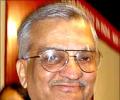
Dismissing a top nuclear scientist's contention that Pokharan II was not a complete success, Atomic Energy Commission chief Anil Kakodkar on Friday said the tests in 1998 achieved '100 per cent desired results'.Speaking at a function organised by the Raja Ramanna Centre for Advanced Technology in Indore, Kakodkar said, "Pokhran II tests were a complete success and they achieved 100 per cent desired results."
Atomic Energy Commission chairman Anil Kakodkar on Tuesday expressed optimism about clinching an agreement with the International Atomic Energy Agency and implementation of the Indo-US nuclear deal.

Nuclear tests of 1998 have given us capability to build deterrence both in fission and fusion categories, Anil Kakodkar, Chairman, Atomic Energy Commission, said on Thursday.
Official sources said Kakodkar will meet Chief Minister Donkupar Roy and other government officials, besides conveying the Centre's views to the anti-mining groups, including political parties in the ruling coalition like the Hill State People's Democratic Party and Khun Hynnieutrip National Awakening Movement.
There was no question of India accepting outdated technology under the proposed Indo-US nuclear energy cooperation agreement, Atomic Energy Commission Chairman Anil Kakodkar on Wednesday said.
Kakodkar took over as Chairman, AEC from Dr R Chidambaram in November 2000 and was the first chairman to get three extensions -- in 2003, 2005 and 2007 -- in the history of India's nuclear programme.
Atomic Energy Commission (AEC) Chairman Anil Kakodkar has said work on India's nuclear programmes will continue despite media reports of the country's nuclear power plants being placed on alert and being made more secure to prevent a terror strike.
India must explore uranium aggresively: Atomic energy chief

In a case of sabotage, Atomic Energy Commission chief Anil Kakodkar on Sunday said somebody "deliberately" put radioactive tritium in a water cooler at the Kaiga Nuclear Power Plant that exposed about 50 workers to increased level of radiation.
Referring to global energy needs, Kakodkar said nuclear power had the pontential to meet these requirements in a sustainable manner and at the same time keep carbon dioxide emissions at the lowest possible levels.
"India is capable of indigenously building the most viable commercial nuclear reactors for producing 220 MW and 540 MW power. Small reactors are the best bet to export," he told media persons at the Koodamkulam Nuclear power plant site near Tirunelveli replying to a question on feasibility of exporting nuclear reactors to countries like Egypt.
DAE officials, who had marathon discussions for the last two days in Mumbai on the issue of safeguards to be discussed with the IAEA, received confirmation of an appointment with ElBaradei on Sunday night to initiate negotiations, the DAE sources said.
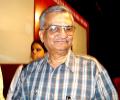
Dr Kakodkar's strategic stubbornness ultimately got India what it wanted though the negotiations with the US went to the wire, notes Shivanand Kanavi.

'Pakistan's is the only military-controlled nuclear weapons programme in the world.' 'As people get radicalised, the risk of a brigadier or pilot taking matters into their own hands is a real concern.'
Notwithstanding the Left parties' threat to the government not to carry forward the safeguards talks with IAEA beyond December, India opened the second round of discussions with the nuclear watchdog.

UN atomic energy chief Mohammed El-Baradei began a three-day visit to India as the ruling United Progressive Alliance-Left alliance appeared headed for a break-up over the India-United States civil nuclear energy pact.
He will largely play a behind-the-scenes role and will sit in on the high-level meetings between the US and Indian teams so as to ensure that India's strategic and nuclear establishment's interests are not compromised
Atomic Energy Commission Chairman Anil Kakodkar on Friday expressed concern at the insertion of new clauses of an "intrusive" nature in the bill passed by the US Senate to implement the civil nuclear deal with India.
He was responding to a query on NSG guidelines that restrict the export of reactors by members of the grouping, including the US, France, Russia, Australia and Japan.
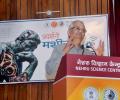
'Why should we disclose classified information to satisfy those who doubt our Hydrogen Bomb capability?'
Breaking his silence, Chairman of Bombay Indian Institute of Technology board of governors Anil Kakodkar on Friday said he had resigned because he did not want to be part of the selection process of IIT directors which was "too casual" and "running a lottery".
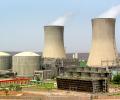
'Chinese are going bang, bang, bang building 30-35 reactors.' 'We should announce a programme of 50 new reactors and show that we mean business on the ground and not just announcements.'
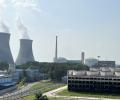
Ushering in reforms, Union Finance Minister Nirmala Sitharaman on Saturday proposed to open up the nuclear power sector for private players and announced a Rs 20,000 crore Nuclear Energy Mission for research in the field, with an aim to set up five small and modular reactors by 2033.
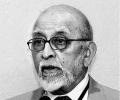
M R Srinivasan focused on the peaceful use of nuclear power at a time when the popular view among the 'hawks' was that India should build a nuclear arsenal as a deterrent.
K Santhanam, a retired Defence Research and Development Organisation scientist, on Monday accused former Atomic Energy Commission chief Anil Kakodkar of 'ignoring facts' about the yield of the nuclear tests done at Pokhran in May 1998, calling him 'a liar' motivated by institutional loyalties.
Kakodkar met the prime minister on Wednesday and briefed him about concerns on the nation's security as well as the country's three-stage nuclear power programme following the passage of US Congress bill on December 8.
Had it not been for the global concern with respect to 'climate change', the nuclear states with a large stockpile of weapons would not have allowed other countries to adopt nuclear energy, said Dr Anil Kakodkar, member of the Atomic Energy Commission.
"If we remain dependent on foreign technologies, we can never become world leaders and we cannot survive the global competition unless we achieve global leadership at least in some areas where we have strength," Kakodkar said at the convocation of Pt Ravi Shankar Shukla University in Raipur.
Kakodkar had come to inaugurate the fourth Asian Particle Accelerator Conference at the Raja Ramanna Centre for Advanced Technology near Indore.
Without giving the location of the reactor, he said it would cost Rs 5 to 6 crore per MW.
Chairman of Atomic Energy Commission Anil Kakodkar has said India's role in the global nuclear renaissance is going to be very crucial.
India currently has a total nuclear power generation capacity of about 3,800 MW and plans to scale it up to 20,000 MW by 2020.
There was a huge potential in n-power generation and the Nuclear Power Corporation of India, now being expanded, was capable of producing 1,000 MW on its own.
