
India's duopoly in the domestic skies -- where IndiGo and Air India collectively control over 90 per cent of the market -- is highly skewed, leaving very little room for new players

In a December 2012 interview, Ratan Tata, then preparing to step down as chairman of Tata Sons, expressed doubts about the Tata group re-entering the aviation sector, calling it a space plagued by "destructive competition". But beneath that frustration lay nearly two decades of failed attempts to conquer the Indian skies. In 1994, Tata, along with Singapore Airlines, had plans to launch a joint venture (JV) airline in India.
Air India Express and AirAsia India have moved to a unified reservation system, whereby passengers can make bookings for both airlines through an integrated website. The move is part of the ongoing process of merging AirAsia India with Air India Express. The combined entity will focus on leisure-oriented and price-sensitive markets.

Sunil Bhaskaran, AirAsia India's chief executive officer (CEO) and managing director (MD), is the front-runner to head the low-cost carrier that will take birth after the merger of Air India Express and AirAsia India, sources said. In a show of confidence, the airline's board extended Bhaskaran's tenure by three years -- until March 2025 -- in a meeting held earlier this year, according to the documents reviewed by Business Standard. Moreover, AirAsia India's board of directors has increased Bhaskaran's salary twice in 2022 -- first in January by 5 per cent and then in June by 7 per cent, the documents showed.

Tatas-owned Air India plans to acquire no-frills carrier AirAsia India and has sought approval from the Competition Commission for the proposed deal. AirAsia India is majority-owned by Tata Sons Private Ltd with a shareholding of 83.67 per cent and the remaining stake is with AirAsia Investment Ltd (AAIL), which is part of Malaysia's AirAsia Group. Full service carrier Air India and its low-cost subsidiary Air India Express were acquired by Talace Private Limited, a wholly-owned subsidiary of Tata Sons Private Ltd, last year. Besides, Tatas operate full service airline Vistara in a joint venture with Singapore Airlines.
Tata Sons is all set to acquire a residual stake of 16.33 per cent in AirAsia India from its joint venture (JV) partner AirAsia Berhad for $19 million (or Rs 142 crore) by early next year. The valuation is in accordance with the previous transaction under which AirAsia Berhad had sold its 32.6 per cent stake, said a banking source. Tata Group had increased its stake in AirAsia India at a valuation of $115 million.

Tata group-owned AirAsia India's inability to get approval for international flights is hurting UDAN, the Indian government's regional air connectivity project that also aims to link cities in Northeast India and Odisha to places abroad. Sources said the civil aviation ministry is waiting for the low-cost airline to come under the full ownership of Tata Sons and become part of Air India, the former state-owned carrier now owned by the private conglomerate, before allowing it to operate international flights. Tata owns 84 per cent stake in AirAsia India and it is understood that the group will complete the process of buying rest of the stake by July's end.

Tata Sons will increase its stake in budget carrier AirAsia India (AAI) to 83.67 per cent by acquiring an additional 32.67 per cent for $37.66 million from AirAsia Investment Ltd (AAIL), according to a regulatory filing. Currently, AAIL, which is a wholly-owned subsidiary of Malaysia-based AirAsia, holds 49 per cent stake in the Bengaluru-based AirAsia India. In a regulatory filing to stock exchange Bursa Malaysia, AirAsia said, "The board of directors of AirAsia wishes to announce that its wholly-owned subsidiary AAIL and Tata Sons Pvt Ltd, India, on December 29, entered into a share purchase agreement."
Tata Group-owned AirAsia India, which is in the process of being merged with Air India Express, has taken short-term loans worth Rs 630 crore during the last six months to deal with cash crunch. AirAsia India has been making losses since its first commercial flight on June 12, 2014. Its net loss increased by 42 per cent to Rs 2,178 crore in FY22.

AirAsia recently said it would set up a 49:30:21 joint venture with the Tata Sons and Telestra Tradeplace of Indian investor Arun Bhatia to launch a new Indian airline.

With cash shortage and plans going awry, the AirAsia owner is looking to cash out of the venture he built with Ratan Tata in 2013.
Tata Group-owned Air India shaved off its losses by 60 per cent to Rs 4,444.10 crore in FY24 over the previous year, according to the Tata Sons annual report for 2023-24. The airline had reported a loss of Rs 11,387.96 crore in FY23, the annual report said.

One thing is certain: The part-Goan, part-Malayali group CEO of Air Asia is not your usual boardroom CEO, and he cultivates the maverick businessman image, buying race car teams and football clubs and taking off-beat bets with his mentor and now buddy Richard Branson of Virgin.

With its nominees on the board, Tata Sons will have the controlling stake of 51%.

AirAsia's rival airlines in India have kept themselves super-busy in the past few months -- by moving court against the former's launch, adding flights on the routes where AirAsia is operating, and engaging in a price war.

The trails of mega-mergers, tailwinds of expanding fleets, flights and airports will dot the fast-growing Indian aviation firmament in 2025, though the dark clouds of supply chain woes will persist longer. Also, new airline takeoffs, the future trajectory of revised norms to tackle pilot fatigue and efforts to reduce carbon emissions will be on the radar.

"We are waiting for any input from any quarter," Civil Aviation Secretary R N Choubey said, adding, "We have not received anything so far".
AirAsia India on Monday moved closer to getting off the ground by appointing S Ramadorai as its Chairman, ending months-long suspense and having in place the entire top management team.
At the heart of the current controversy is the government's FDI rule

'JRD Tata was a visionary who established civil aviation in India'.
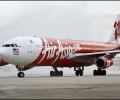
In the initial phase, it would concentrate on destinations in south India, and on providing connectivity to small towns.
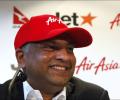
Tony Fernandes had blamed Indian domestic carriers for preventing AirAsia's India launch earlier, too, but this was the first time he named an airline.
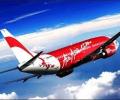
The Federation of Indian Airlines had challenged the aviation regulator's decision this week to issue an operating permit to AirAsia India.

AirAsia India began operations in June 2014.

Due to the group's presence across multiple businesses, it is in a unique position in the aviation industry to bring the best of talents.

Company chief Tony Fernandes said the name of Chairman for AirAsia India board would also be disclosed soon

In an email, a SpiceJet spokesperson said: "A few foreign airlines/investors have evinced interest in SpiceJet. It will be very premature to comment on the possibilities of any fresh equity issuance to such interested parties."

Thai AirAsia operates a daily flight between the Indian and Thai capitals, besides a weekly flight between Kolkata and Bangkok.

The Foreign Investment Promotion Board, headed by DEA Secretary Arvind Mayaram, approved the proposal at its meeting in New Delhi.
Around 600 non-flying staff of Air India and Vistara are likely to be impacted by the two airlines' mega-merger, and efforts will be made to provide job opportunities to the affected employees within Air India group and Tata companies, sources said on Wednesday. Tata Group-owned loss-making full-service carriers -- Air India and Vistara -- together have more than 23,000 employees.
This is the first time that AirAsia chief has raised concerns about the dual airline strategy of the Tata group, his partner.
Ending its uncomfortable journey in India after eight years, Malaysia-based AirAsia Group on Wednesday said it has exited AirAsia India by selling its remaining 16.67 per cent stake to Tata Group-owned Air India for Rs 155.64 crore. Later in the day, Air India said it has begun the process of creating a single low-cost carrier subsidiary by merging AirAsia India and Air India Express. A working group consisting AirAsia India CEO Sunil Bhaskaran and Air India Express CEO Aloke Singh has been formed for the two carriers' integration, which is expected to take approximately 12 months, it added.

AirAsia is facing a legal challenge from Bharatiya Janata Party MP Subramanian Swamy, whose petition comes up for hearing at the Delhi HIgh Court on Wednesday.
It and Vistara both book slots here; former also likely to launch Mumbai flights from early 2015.

Most airlines have fattened their profits, turned the corner, or cut their losses, except AirAsia India.
It will focus on the under-utilised airports instead of offering services in main hubs such as Mumbai and Delhi.
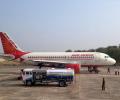
Management and leadership changes, in addition to synchronising operations between all its airlines, are showing visible results for Air India. Data from the Directorate General of Civil Aviation (DGCA) show that there has been a marked improvement in key operational parameters of Air India after the Tata group took complete control of the national airline in January. One of the most dramatic improvements has been noticed in Air India's passenger load factor (PLF) - a crucial metric of capacity utilisation of an airline's fleet that shows how many seats it has been able to fill on every flight.
AirAsia's competitors are offering more reliable services.

AirAsia founder Tony Fernandes began talks with bankers to take Asia's number one budget airline private after a plunge in its stock price put $200 million worth of loans borrowed against AirAsia's shares at risk.
No-frills carrier AirAsia India on Monday offered rock-bottom fares, starting at as low as Rs 1,299 for domestic flights, as part of the parent AirAsia's global sale offer for a limited period.
 © 2026 Rediff.com - Advertise with us - Disclaimer - Privacy Policy - Sitemap - Feedback - About us - Terms of use - Grievances