
For Swara Bhaskar, this Diwali has brought multiple joys.

BCCI banned the display of fireworks during the World Cup games in Delhi and Mumbai due to worsening air quality.

The top Assam cop further said that they (accused) have also given logistic support to the jihadi terrorists who came here from Bangladesh.

The city recorded a minimum temperature of 14.6 degrees Celsius, a notch above normal, according to the India Meteorological Department.

During a hearing on Friday, the bench noted that Mumbai was witnessing a decline in the bursting of firecrackers.
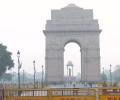
According to forecasting agencies, the city is set to record its best air quality for the day after Diwali since 2015 on Tuesday.
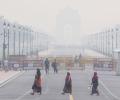
The capital witnessed a clear morning on Friday with the minimum temperature settling a notch below normal at 14.6 degrees Celsius.

After Bangladesh, Sri Lanka were forced to cancel their opening training session in the national capital on Saturday due to "severe" air pollution.
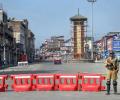
A change in the name of the Al Qaeda in the Indian Subcontinent (AQIS) magazine 'suggests a refocusing' of the terror group from Afghanistan to Kashmir, a United Nations report has said.
Officials at the India Meteorological Department said winds gusting up to 20 kmph on Sunday and 25 kmph on Monday led to a marked improvement in the air quality and improved visibility.

Builders in the city must engage only the vehicles fitted with a tracking system for the transportation of construction materials, the guidelines said.

India captain Rohit Sharma expressed deep concerns about the vitiated air quality in Indian cities.

Health expert termed the problems caused due to the rise in pollution as a "medical emergency".
According to the Central Pollution Control Board's mobile application SAMEER, the city recorded an air quality index of 168, which falls in the 'moderate' category, much better than Monday's AQI of 221, which falls in the 'poor' category.

The eastern and northern parts of Delhi witnessed rain and hailstorm, IMD said.
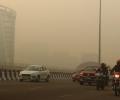
Authorities on Friday had advised people to limit outdoor activities and told government and private offices to cut vehicle use by at least 30 per cent as air quality in Delhi-NCR inched towards the emergency level amid a rise in emissions from farm fires and unfavourable meteorological conditions.

The minimum temperature in the national capital on Saturday settled at 10.2 degrees Celsius, three notches above the season's average, it said.

The air quality in the capital has remained very poor or severe on most of the days in November so far.

Despite legal deterrent in place to discourage people from doing so, by dusk, residents in many neighborhoods, including some areas in south Delhi and northwest Delhi, had started bursting crackers.

The overall Air Quality Index (AQI) of Delhi stood at 398 at 11 am, worsening from 357 at 4 pm on Friday. It was 354 on Thursday, 271 on Wednesday, 302 on Tuesday and 312 on Monday (Diwali).
At 9 am on Monday, the air quality index (AQI) in the national capital stood at 207 against an AQI of 254 at the same time on Sunday.
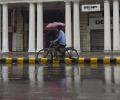
The India Meteorological Department on Wednesday issued an orange alert for Delhi, predicting 'heavy' to 'very heavy' rainfall in parts of the capital with winds gusting up to 60 kilometers per hour.

According to Central Pollution Control Board's (CPCB) Sameer app, the city's air quality index (AQI) stood at 449 in the severe category at 8 am on Saturday. It was 462 on Friday.

Thirteen cities of the country had an average Air Quality Index above 400, which falls in "severe" category, with seven of them in Uttar Pradesh, five in Haryana and one in Bihar, according to the Central Pollution Control Board.

Delhi Chief Minister Arvind Kejriwal announced that primary schools will be closed from Saturday in view of spike in pollution levels in the national capital.

A division bench of Chief Justice D K Upadhyaya and Justice G S Kulkarni said while it was not going to order a ban on bursting of firecrackers, a balance needs to be struck considering the deteriorating air quality index (AQI) in the metropolis.

Hailstorms were reported at various parts of the national capital including Palam, Chilpighat and Ayanagar, the IMD said.

Delhi's air quality was again in the severe category with the 24-hour average AQI recorded at 403 after remaining in the 'very poor' category till Tuesday morning, when the AQI was recorded at 396.

Assam has become a hotbed of "jihadi activities" with five modules having links with Bangladesh-based terror outfit Ansarul Islam busted in five months, Chief Minister Himanta Biswa Sarma said on Thursday.

Skies over Delhi hung heavy with smoke and its air quality inched towards "severe" category on Diwali night as people burst firecrackers in a blatant disregard to the government's ban against it, imposed amid an increase in the contribution from farm fires.

According to the Central Pollution Control Board (CPCB), the 24-hour average concentration of lung-damaging fine particles known as PM2.5 in Delhi-NCR shot up from 243 micrograms per cubic metre at 6 pm on Thursday (Diwali day) to 410 micrograms per cubic metre at 9 am on Friday, around seven times the safe limit of 60 micrograms per cubic metre.

The Supreme Court on Friday agreed to list for hearing on November 10 a PIL seeking issuance of fresh guidelines on stubble burning to curb rising air pollution in Delhi and the national capital region (NCR).

Green think tank Centre for Science and Environment (CSE) said the ongoing smog episode is a public health emergency.
You can have a traditional Diwali celebration with your family at these special spots.

Delhi's overall air quality index (AQI) stood at 463 at 11.30 am, according to the System of Air Quality and Weather Forecasting and Research (SAFAR).

The air quality index of neighbouring areas of Faridabad, Ghaziabad, Gurgaon and Noida was recorded at 312, 368, 301 and 357, respectively.
Don't ignore symptoms like coughing, wheezing or shortness of breath, warns Dr Sandeep Tilve.

Amid a spike in pollution levels in Delhi-NCR, the Supreme Court on Tuesday directed Punjab, Haryana, Uttar Pradesh and Rajasthan to ensure crop residue burning was stopped "forthwith", saying it cannot let "people die" due to pollution.
This is the third time this season, after December 8 and January 1, that visibility has dropped to zero metres in the city.

A thin layer of toxic haze hung over Delhi in the morning and the overall air quality index stood at 313 at 9 am. It continued its upward trend and was recorded at 337 at 1 pm.
