It recorded total income of Rs 54,606 crore (Rs 546.06 billion) and net profit of Rs 9,810 crore (Rs 98.10 billion) on stand-alone basis.

The most common complaint of financial consumers is cumbersome processes, complicated products, usurious charges, and mis-selling of products, which finally don't deliver what is promised or as expect, notes Debashis Basu.

The collective headcount of the five banks stood at 1,99,555 as on March 31, 2013.

Combined profit before tax of 81 firms down 37.5% y-o-y, worst show in at least 3 years.

The Board of Control for Cricket in India's four-member working group, formed to study the Justice Lodha panel's verdict relating to the spot-fixing scandal in the sixth edition of the Indian Premier League in 2013, on Monday met for the first time to discuss the way forward for the cash-rich league's next edition and said the sponsors are fully behind the Board.

Their return on assets and fee income could be hit as the Reserve Bank might tighten other norms.

Ajit Mishra, vice president, Research, Religare Broking, answers readers' queries on stocks they own or want to buy.

A look at six indicators shows all of them have collapsed from positive growth in April to contraction in September.

The fall was led by banking stocks, with IndusInd Bank, Kotak Bank, Federal Bank, Axis Bank, ICICI Bank, HDFC Bank and SBI declining up to 2.36 per cent.

With growing capital markets and business friendly climate, nearly 1.4 lakh investor accounts were opened on an average every month in the last one year.

NTPC was the biggest loser in the Sensex pack, tumbling 2.25 per cent, followed by Tata Motors, Bharti Airtel, PowerGrid, HDFC, Reliance Industries, Hero MotoCorp and M&M that shed up to 1.85 per cent.

Banking shares are down up to 11% after the Reserve Bank of India has increased the policy repo rate by 25 basis points from 7.25% to 7.5% with immediate effect.
The aggregate numbers suggest an improvement in the operational performance of these companies.

By becoming associate sponsor, STAR Plus brand will get assured mileage on broadcaster SET Max.

Among sectoral indices, telecom led the chart, spurting 3.08 per cent, followed by oil and gas.

The index widened its loss towards the fag-end on emergence of intense selling in heavyweights like ITC, RIL and ICICI Bank. In percentage terms, however, Sun Pharma was the biggest loser with 9.39 per cent drop. Intra-day, the pharma major's shares tanked over 20 per cent.
The Budget should serve as a trigger to kick-start the investment cycle in the economy, says Rana Kapoor managing director and chief executive office of Yes Bank.

YES Bank raises base rate; HDFC Bank, Axis hike deposit rates.

Rather than focusing on profits, market should look at the inherent strength of the balance sheet whether it can withstand difficulties, he said.

Gujarat and Jharkhand are most favourably placed in terms of smaller share of public sector employees and lower liability on pension, wages and salaries.

Fruits, vegetables and eggs continued to witness deflationary trend during January this year, with their prices declining 4.18 per cent, 13.32 per cent and 2.44 per cent, respectively.

Gaurav Garg, Head of Research, CapitalVia answers readers' stock market queries.
Time opportune, with market buoyancy and entry of new entities

'The move towards fiscal consolidation had to be diluted because of the relief to farmers as the government wants to appease the voters.'

Among top losers that dragged down key indices were Infosys, TCS, Reliance, SBI, Tata Steel and ITC, falling up to 2.15 per cent.

Sector-wise, banking, IT, pharma and realty indices drove the market momentum.

Bad loans of PSBs are at Rs 20 trillion. Most of it is, I sense, due to corruption and behest lending. Nobody pays a price for this charade. Not the promoters, the bankers, RBI officials, finance ministry bureaucrats or politicians, points out Debashis Basu.

Top gainers in the Sensex pack were TCS, Bharti Airtel, Infosys, Axis Bank, L&T, ITC, PowerGrid, HCL Tech and Tata Steel, ending up to 2.39 per cent.

From promoters losing their firms to consumers realising there are no free lunches, 2019 was a year of getting real,says Shailesh Dobhal.

In the Sensex pack, Axis Bank, HCL Tech, M&M, TCS, HDFC, Kotak Bank, PowerGrid, Hero MotoCorp and Vedanta were among the top gainers, rising up to 1.91 per cent. Sun Pharma was the biggest loser, cracking 5.78 per cent.

The organised market is likely to grow to Rs 4.8 trillion by 2016-17.

The move comes after CBI gets sanction to prosecute him in Aircel-Maxis case

Private lenders like Federal Bank and Axis Bank have set up branches that have special areas for children, with books, toys and video games to keep them engaged while their parents are busy doing banking transactions.

The IRP has admitted 33 claims from banks worth Rs 8,462 crore, and is verifying Rs 15,044-crore claims from operational creditors and staff.

The biggest gainers on both bourses were Bharti Airtel, HDFC duo, L&T, Bajaj Auto, Kotak Bank, Reliance Industries, Axis Bank, ICICI Bank, SBI, ITC and Bajaj Finance, rising up to 4 per cent.
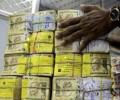
Banks offering a higher rate on savings bank deposits have seen robust growth in the past year but the momentum might get slower as interest rates turn more benign.
Axis Bank emerged as the biggest gainer in the Sensex pack, surging 6.62 per cent, followed by SBI at 5.88 per cent.
Losers included Bharti Airtel, SBI, Wipro, Vedanta, Maruti Suzuki, ICICI Bank, Axis Bank and Reliance Industries, falling up to 2.18 per cent.

The Securities and Exchange Board of India does not seem to have understood the enormity of what funds have been up to. If Sebi does not crack down on mutual funds using cooked-up credit ratings to hide behind promoter funding, this is bound to grow into a systemic menace, says Debashis Basu.But MFs decided to become lenders without the legal backing to secure themselves, or the skillset to assess lending risk. If Sebi does not crack down on mutual funds using cooked-up credit ratings to hide behind promoter funding, this is bound to grow into a systemic menace, says Debashis Basu.
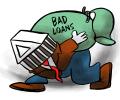
Why do we need a bad bank, owned by the banks themselves when there are at least 28 ARCs around, asks Tamal Bandyopadhyay.
