
The overall inflation went up marginally to 5.25 per cent for the week ended November 29 despite a sharp 9 per cent fall in vegetable prices.
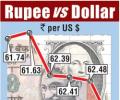
The previous bout of Fed withdrawal fears had threatened to spark a crisis of confidence in India -- sending the rupee to a record low of 68.85 in late August and leading to steep falls in bonds and stocks.
The inflation rate slipped to 4.96 per cent during the week ended October 25 due to decline in prices of food items like wheat, jowar, bajra, maize, tea, vegetables and fruits.

Top gainers from the Sensex pack are Infosys, Cipla, NTPC, ITC and Lupin

The broader markets ended negatively with mid-caps and small-caps shedding 0.5 per cent on the BSE.

Vegetable prices which had witnessed a 21.16 per cent contraction in June, shot up by 21.95 per cent in July.

Total debt for listed Indian companies excluding financials fell only 4 per cent to $368 billion in the year ended in March 2015.

Prices of food articles contracted by 3.47 per cent in June on a yearly basis. Vegetable inflation stood at (-)21.16 per cent.

Sensex has shed over 150 points in afternoon trade.
Brokers said a flurry of buying by investors in blue-chips mainly influenced the sentiment.

Overall slowdown in the economy and growing volumes of unbranded generic medicines in the domestic market are behind poor sales.

RBI may hold rates in Apr; to go for 25 bps cut by June: DBS
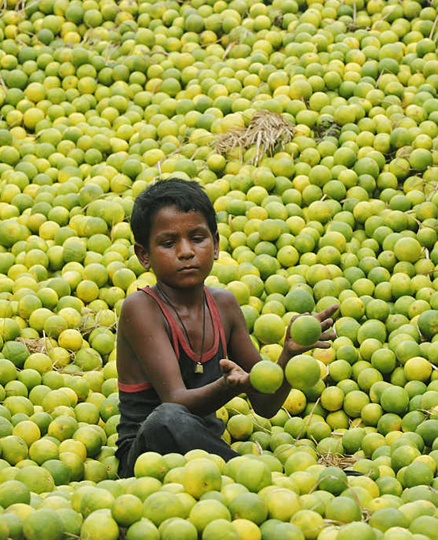
In October, CPI inflation was 5 per cent.

Vidarbha had given as many as 44 seats to the BJP in 2014. The Congress and NCP, plus independents and smaller parties, snatched 19 seats from the BJP, reports Abhishek Waghmare.

The 30-share Sensex ended down 245 points at 28,799 and the 50-share Nifty closed down 81 points at 8,750

.jpg)
Chidambaram further said government has taken a number of fiscal and administrative measures from time to time to contain inflation especially food.

In fuel and power segment, inflation saw a sharp surge to a near double digit inflation at 9.99 per cent, against 4.37 per cent in July.

Onions had the highest inflation rate among all major commodities.
RBI has kept interest rate unchanged at 8 per cent since January
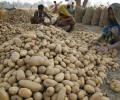
From output surge to lack of cold storage, not much attention has been given to the potato farmers. The export market, too, is bleak, due to unsuitable domestic varieties and an underdeveloped food processing value chain.

The RBI, which has been keeping rates at an elevated level citing high inflation, wants it to come down to 6 per cent by January 2016.
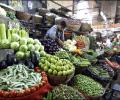
In February last year, it was (-)2.17 per cent.

Away from limelight, Jeevika Didis are silently fighting the coronavirus in rural Bihar.

CPI inflation is on the decline since July.

The survey showed firms' confidence regarding future business grew at the slowest pace in a year last month.

There are glaring anomalies with Indian data and that could lead to wrong policy prescriptions.

The party said its government has taken a number of initiatives since its formation including tough action against hoarders and limiting export prices of essential commodities like onion, rice and wheat.
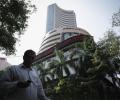
PSU bank shares were the top gainers on hopes of a rate by the RBI on easing consumer inflation

Pulses cropping has jumped to 39.4 per cent above 2015 levels.

Vegetables and fruits have weights of 1.74 per cent and 2.11 per cent, respectively, in the wholesale price index.
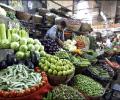
Industrial output had slowed to 5-month low of 2.1% in March.

The rupee bounced back by 26 paise to end at 59.93 against the American currency on Friday as exporters and some banks sold dollars.
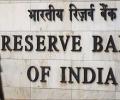
More rate cut by RBI unlikely this fiscal, say Ind-Ra

Concerns related to capital outflows in the aftermath of the first US interest rate hike in nearly a decade predominantly weighed on the rupee trade.

In its mid-quarter review of monetary policy, RBI on Wednesday kept all key interest rates unchanged notwithstanding persistent high inflationary pressure.
 © 2026 Rediff.com - Advertise with us - Disclaimer - Privacy Policy - Sitemap - Feedback - About us - Terms of use - Grievances