
The wholesale price-based inflation had shot passed 10 per cent in May putting more pressure on the Central Bank to hike the policy rates.

Inflation declined to 5.30 per cent for the week ended November 25 from 5.45 per cent in the previous week, mainly because of fall in the prices of food items.
As per data released by the government on Thursday, pulses became over 9 per cent cheaper year-on-year during the period under review.
Food inflation, as measured by the Wholesale Price Index, stood at 9.13 per cent during the previous week.
It was almost 23 per cent during the second week of June, 2010.
Inflation rose to 4.96 per cent for the week ended July 1 from 4.84 per cent
Inflation declined marginally to 8.23 per cent in January from 8.43 per cent in the previous month, as prices of certain commodities like wheat, pulses and sugar eased, although essential items like onion and other vegetables continue to remain dearer.

Hardening prices of manufactured items during the month may refrain the Reserve Bank of India from cutting rates in its policy review on February 8.
Inflation based on the wholesale price index rose to 4.24% during the week ended October 1 from 3.97 per cent a week ago

Though retailers attribute the price rise to traffic restrictions imposed within the city in view of the Commonwealth Games, officials and wholesale traders disagree.
The latest numbers are the highest level of food inflation since the week ended March 26 when it had stood at 9.18 per cent.
An appropriate policy response always warrants a correct diagnosis of the problem. That is why the recent trend in inflation and its causes, and the inflation outlook take on exceptional importance ahead of the RBI's policy review on January 25.
Inflation shot up to 8.43 per cent in December, from 7.48 per cent in the previous month, as prices of certain food and non-food items continued to show an upward trend.

This is the lowest rate of price rise in food items in the last 18 months, when separate data for food inflation first started coming in.

Wholesale price inflation declined to 7.48 per cent in November from 8.58 per cent in October, mainly boosted by lowering of pressure on certain food items.

The rise in overall inflation for the second month in a row may prompt the central bank to go for another round of policy rate hikes in its policy review meeting, scheduled for May 3.

The present monthly inflation measurement system, based on the wholesale price index, reflects the price variations of 435 items.

Food inflation stood at 20.18 per cent in the comparable period last year.

Overall inflation rose marginally to 8.31 per cent in February, 2011, from 8.23 per cent in the previous month.

Last date for submitting the offer is August 27.

Wholesale prices too rose at the same pace to 45-55 per kg in the national capital and other states.

Wholesale price-based inflation, which dipped to sub-zero levels following the impact of the global crisis, has started firming up and rose to 7.3 per cent in December, 2009.

The rate of price rise in food items stood at 17.14 per cent in the corresponding week of 2010.

The NSE index Nifty ended above the 10,500-mark.
The Reserve Bank on Thursday said the country's wholesale price-based inflation and industrial production data should be improved and employment data availed for effective monetary policy management.

The chances of ending the current fiscal year at anywhere near the 5.5 per cent that RBI officially targets seem bleak indeed.
The empowered group of ministers on fuel pricing is to meet this week to take a view on the price of diesel.

Though onion prices have begun downhill journey in major cities, citizens across the country continued to be battered by high rates of other important vegetables--tomato and garlic-- whose rates have soared astronomically across the country.

After government's measures like export ban and import from Pakistan, average wholesale prices of onion in Nashik district's various Agriculture Produce Market Committee (APMC) markets have come down by around 45 per cent to Rs 2,071 a quintal in the last three days.
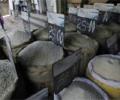
As per data released by government on Thursday, price of pulses became cheaper by 5.63 per cent year-on-year.

Indian households database Consumer Pyramids answers why two years of high inflation did not matter to the consumers of the country.
Food inflation surged to a four-and-a-half month high of 9.90 per cent during the week ended July 30 on the back of costlier onions, fruits, vegetables and protein-based items.

Food inflation, measured by the Wholesale Price Index, was 7.33 per cent in the previous week.

The common man's main grouse is high inflation numbers. But there are other anomalies as well that need to be addressed.

Meanwhile, inflation of non-food articles was at 15.50 per cent for the week ended July 9, compared to 15.20 per cent in the previous week.

The broader markets ended in line with the benchmark indices- BSE Midcap and Smallcap indices ended higher by 1.3% and 0.9% each.

In the month of May wholesale price inflation entered double digits and stood at 10.16 per cent.

The government's annual Economic Survey on Friday strongly defended new farm laws, saying they herald a new era of market freedom which can go a long way in improving lives of small and marginal farmers in India. These legislations were designed "primarily" for the benefit of "small and marginal farmers", which constitute around 85 per cent of the total number of farmers and are the biggest sufferer of the "regressive" APMC-regulated market regime, the survey said. The pre-budget document defended the farm laws in the backdrop of long-running farmers' agitation at various borders of the national capital seeking repeal of these legislations expressing concern that they are pro-corporate and could weaken government regulated mandis, also called Agriculture Produce Marketing Committees (APMCs).

In a major decision to bring petroleum products in line with market rates, the government on Friday freed petrol from all pricing controls and hiked diesel prices by Rs 2 a litre.

Food inflation, as measured by the Wholesale Price Index, stood at 9.01 per cent in the previous week, while it was over 21 per cent in the first week of June last year.
 © 2026 Rediff.com - Advertise with us - Disclaimer - Privacy Policy - Sitemap - Feedback - About us - Terms of use - Grievances