
It would not be surprising if India, the world's largest producer of milk, has to resort to imports to meet the elevated summer demand, states Surinder Sud.
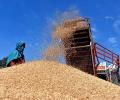
The government has no plans to import wheat as it has sufficient stocks to meet the country's requirements, official sources said. The Food Corporation of India (FCI) has enough stock for public distribution, they added. "There are no plans to import wheat into India. "The country has sufficient stocks to meet our domestic requirements," a source said.

Edible oil prices in the major retail markets across the country have declined by Rs 5-20 per kg after various measures, including an import duty cut, by the government, Food Secretary Sudhansu Pandey said on Friday. The official said that branded oil makers have also revised the rates for new stock. Domestic edible oil prices have soared in tandem with the global prices which shot up due to reduced availability of edible oils for food use following diversion for biofuel in Indonesia, Brazil and other countries.

Fitch Ratings on Thursday slashed India's GDP growth projection for FY23 to 7 per cent, saying the economy is expected to slow against the backdrop of global economy, elevated inflation and high interest rate. In June, it had forecast 7.8 per cent growth for India. "We expect the economy to slow given the global economic backdrop, elevated inflation and tighter monetary policy. "We now expect the economy to grow 7 per cent in the financial year to end-March 2023 (FY23) from 7.8 per cent previously, with FY24 also slowing to 6.7 per cent from 7.4 per cent before," Fitch said in its September edition of the Global Economic Outlook.

As many as 34 new drugs were added to and 26 dropped from an updated list of essential medicines on Tuesday, with the government saying this will reduce "patients' out-of-pocket expenditure". The National List of Essential Medicines (NLEM 2022) has 384 drugs, up from 376 in 2015. "Drafting this list is a lengthy process, and around 350 experts from across India have held over 140 consultation meetings to draft the NLEM 2022," Union Health Minister Mansukh Mandaviya said.

The wholesale price-based inflation eased to 10.66 per cent in September, helped by moderating food prices even as crude petroleum witnessed a spike. WPI inflation remained in double-digit for the sixth consecutive month. In August, it was 11.39 per cent. In September 2020, inflation was 1.32 per cent. "The high rate of inflation in September 2021 is primarily due to rise in prices of mineral oils, basic metals, non-food articles, food products, crude petroleum & natural gas, chemicals and chemical products etc. as compared the corresponding month of the previous year," the commerce and industry ministry said in a statement.

The wholesale price-based inflation surged to more than a decade high of 14.23 per cent in November, mainly due to hardening of prices of mineral oils, basic metals, crude petroleum and natural gas. WPI inflation has remained in double digits for eight consecutive months beginning April. Inflation in October this year was at 12.54 per cent, while in November 2020 it was at 2.29 per cent. "The high rate of inflation in November 2021, is primarily due to rise in prices of mineral oils, basic metals, crude petroleum & natural gas, chemicals and chemical products, food products etc as compared to the corresponding month of the previous year," the commerce and industry ministry said in a statement on Tuesday.

Equity benchmark Sensex rallied 936 points on Monday, helped by heavy buying in banking and IT counters along with decline in oil prices amid hopes of headway in renewed diplomatic talks between Russia and Ukraine. A fresh round of talks is expected on Monday between Ukrainian and Russian officials. Rising for the fifth straight session, the BSE Sensex jumped 935.72 points or 1.68 per cent to settle at 56,486.02.

From the 30-share pack, Infosys, Tech Mahindra, TCS, HDFC, HDFC Bank, Wipro and HCL Technologies were among the major laggards in early trade. Nifty tumbled 314.95 points to 17,160.70.

Asian Paints was the top loser in the Sensex pack, shedding 2.66 per cent, followed by Axis Bank, HUL, Wipro, M&M, HDFC and Bharti Airtel. On the other hand, TCS, Infosys, L&T, Tech Mahindra and HDFC Bank were among the gainers.

The rupee depreciated 6 paise to 77.50 against the US dollar in the opening trade on Wednesday as a surging American currency in the overseas markets and persistent foreign fund outflows weighed on investor sentiment. Besides, rising global crude prices impacted the domestic unit, forex traders said. However, a higher opening in the domestic equity market restricted the rupee's fall, they added.

The rupee on Tuesday recovered from its all-time intra day low of 77.79 to close higher by 7 paise on a stellar rally in domestic stock markets. After opening lower at 77.67, the local unit plunged further to its all-time intra-day low of 77.79 due to a spike in crude oil prices and disappointing macroeconomic data. However, a strong rally in domestic equities helped the rupee rebound and close at 77.48 (provisional), showing net gains of 7 paise over the last close of 77.55. The forex market was closed on Monday on account of Buddha Purnima.

The RBI's rate-setting panel MPC on Monday began its three-day deliberation amid expectations of another round of hike in benchmark interest rates to contain inflation that continues to remain above the central bank's upper tolerance level. RBI Governor Shaktikanta Das will announce the decision of the Monetary Policy Committee after deliberations on Wednesday. Das has already indicated that there may another hike in the repo rate, though he refrained from quantifying it.

The wholesale price-based inflation rose to 2.03 per cent in January, 2021, even as food prices cooled. The WPI inflation was 1.22 per cent in December, 2020 and 3.52 per cent in January last year. While food articles saw softening in inflation in January, manufactured items witnessed hardening of prices, as per data released by the Commerce and Industry ministry.

However, WPI inflation remained in double digit for the third consecutive month in July, mainly due to a low base of last year. WPI inflation was (-) 0.25 per cent, in July 2020. "The high rate of inflation in July 2021 is primarily due to low base effect and rise in prices of crude petroleum and natural gas; mineral oils; manufactured products like basic metals; food products; textiles; chemicals and chemical products etc as compared the corresponding month of the previous year," the commerce and industry ministry said in a statement.

The wholesale price-based inflation rose for the second consecutive month in February to 4.17 per cent, as food, fuel and power prices spiked. The WPI inflation was 2.03 per cent in January and 2.26 per cent in February last year. After witnessing months of softening of prices, the food articles in February saw 1.36 per cent inflation. In January it was (-) 2.80 per cent.

Snapping the two-month easing trend, WPI inflation rose in August and remained in double-digit for the fifth consecutive month. In July 2021, WPI inflation stood at 11.16 per cent. In August 2020, WPI inflation was at 0.41 per cent. "The high rate of inflation in August 2021 is primarily due to rise in prices of non-food articles, mineral oils; crude petroleum and natural gas; manufactured products like basic metals; food products; textiles; chemicals and chemical products etc as compared the corresponding month of the previous year," the commerce and industry ministry said in a statement.

Equity benchmarks Sensex and Nifty halted their five-day rally on Tuesday and settled deep in the red, mirroring weak global markets, with decline in index heavyweights Reliance Industries, Infosys and HDFC Bank. Despite opening with gains of over 200 points, the 30-share Sensex turned highly volatile and tumbled 709.17 points or 1.26 per cent to close at 55,776.85. During the day, the benchmark index plunged 1,067.07 points or 1.88 per cent to 55,418.95. The broader NSE Nifty also declined 208.30 points or 1.23 per cent to close at 16,663.

Don't be surprised if growth in the second half of the financial year drops below 4%, which is where it was in the year before the pandemic, warns T N Ninan.

ITC was the top gainer in the Sensex pack, rising around 3 per cent, followed by HDFC Bank, PowerGrid, ICICI Bank, IndusInd Bank and NTPC. Nifty surged 176.80 points to a new lifetime closing high of 18,338.55.

In the national capital, onion prices were ruling at around Rs 40 per kilogram.

The cooking oil national industry body -- Solvent Extractors' Association (SEA) of India has suggested immediate initiation of government to government (G2G) dialogue with Indonesia on the proposed palm oil export ban from April 28 by them as it would have an adverse repercussions in India. Indonesia, which is the world's largest producer of palm oil and meets nearly 50 per cent of the total palm oil requirement in India annually, had announced to ban exports till further notice apparently to contain edible oil prices in their domestic market. "We have suggested our government initiate dialogue with Indonesian counterparts at the highest diplomatic level on the cooking oil export ban.

Already retail inflation has risen to 6.07 per cent in February, crossing the upper band of the Parliamentary mandate. This is the second consecutive month in 2022 when retail inflation has crossed the 6 per cent mark having hit 6.01 per cent in January.

The wholesale price-based inflation spiked to 12.54 per cent in October, mainly due to rise in prices of manufactured products and crude petroleum. WPI inflation has remained in double digit for the seventh consecutive month beginning April. Inflation in September this year was at 10.66 per cent, while in October 2020 it was at 1.31 per cent.

The real requirement for the finance minister's explanatory speech is to explain the measures taken in the Budget to influence inflation and growth not just through the announcement of a deficit goal, but more broadly through the impact on money supply, consumer demand, foreign trade and investment, explains Nitin Desai.

Retail sales of passenger vehicles grew last month but the sales of two-wheeler and commercial vehicles remained low compared to the pre-COVID month of May 2019, according to automobile dealers' body FADA. On Monday, FADA said that overall auto retails stood at 16,46,773 units in May, down from 18,22,900 units in May 2019. "May 2022 retails when compared to May 2019 reveal that sales are still not on a growth trajectory as overall retails were down by 10 per cent.

Inflation data and global trends would be the major driving factors for the equity markets this week which after a record-breaking run took a breather in recent trades, analysts said. The overall market sentiment remains positive, supported by improving economic data and earnings but higher valuations can trigger bouts of profit booking, they said further. During the last week, which the 30-share BSE benchmark rose by 175.12 points or 0.30 per cent.

Former RBI governor Raghuram Rajan on Monday said the central bank will have to raise interest rates to tame inflation and the hikes need not be considered by politicians and bureaucrats as some "anti-national" activity. Known for his frank views, Rajan also said it was important to remember that the "war against inflation" is never over. "Inflation is up in India. At some point, the RBI will have to raise rates, like the rest of the world is doing," he said in a LinkedIn post.

Finance minister Nirmala Sitharaman on Wednesday exuded confidence that inflation would further decline and the government is on track to meet its budgetary target for deficit and said that there is no fear of stagflation in India. Replying to the debate on first batch of Supplementary Demands for Grants 2022-23 in Lok Sabha, the finance minister said inflation has come down and it is now in the tolerable band of the RBI. Inflation has been declining since April 2022 and it is declining further, she said.

The government on Tuesday imposed restrictions on sugar exports from June 1, a move aimed at increasing availability of the commodity in the domestic market and curbing price rise. "Export of sugar (raw, refined and white sugar) is placed under restricted category from June 1, 2022 onwards," the Directorate General of Foreign Trade (DGFT) said in a notification. However, it said that these restrictions would not be applicable on sugar being exported to the EU and the US under CXL and TRQ. A specified amount of sugar is exported to these regions under CLX and TRQ.

The annual rate of inflation based on monthly wholesale price index (WPI) was up at 1.32 per cent in September as compared to 0.16 per cent in the previous month.
This could be the reason why Prime Minister Narendra Modi mentioned tomato, onion, and potato as his government's 'TOP' priority, in an election rally on February 5 in poll-bound Karnataka.

The annual rate of inflation based on monthly wholesale price index (WPI) was 1.22 per cent in December as compared to 1.55 per cent in the previous month. It was 2.76 per cent in December 2019. The decline last month was mainly due to lower increase in food prices, data released by the Ministry of Commerce and Industry showed on Thursday. The food inflation for December dropped to 0.92 per cent as compared to 4.27 per cent in the previous month.

Food prices, which have contributed to a large part of inflation over recent years, have remained benign, despite unseasonal rain.

'The availability of vegetables has gone down due to fewer arrivals in wholesale mandis. Their supply was disrupted because of low yields and high spoilage,' says Shyam Bhimraoji Karlekar, chairman, APMC Wardha, one of the largest sellers of vegetables in Maharashtra.
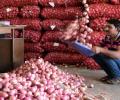
Vegetable inflation softened to 24.76 per cent in June, down from 33.15 per cent in the previous month. Inflation in potato was (-) 24.27 per cent, against (-) 23.36 per cent in May.

Among food articles, vegetable prices surged by 69.69 per cent mainly on account of onion, which witnessed 455.83 per cent jump in prices, followed by potato at 44.97 per cent.

The wholesale price index's annual rise compared with a 7 per cent jump forecast by economists in a Reuters poll.

Spiralling prices pinched the pocket of consumer as edible oil, fuel and many other commodities turned dearer this year amid pandemic-induced disruptions but the inflationary pressure is anticipated to ease, though marginally, in the coming months. As consumers, at retail as well as wholesale levels, are willy-nilly learning to live with the new normal of curbs to contain the spread of coronavirus infections, experts are of the view that elevated inflation is likely to stay longer. After dealing with the devastating blows from the second COVID wave, especially during the April-June period, the economy is well on the revival path but the emergence of Omicron might unsettle the recovery trajectory in the short term.

Moody's Investors Service on Thursday slashed India's economic growth projection to 8.8 per cent for 2022 from 9.1 per cent earlier, citing high inflation. In its update to Global Macro Outlook 2022-23, Moody's said high-frequency data suggests that the growth momentum from December quarter 2021 carried through into the first four months this year. However, the rise in crude oil, food and fertilizer prices will weigh on household finances and spending in the months ahead.
 © 2026 Rediff.com - Advertise with us - Disclaimer - Privacy Policy - Sitemap - Feedback - About us - Terms of use - Grievances