
Seropositivity was the highest in the age group of 18-45 years (43.3 per cent), followed by those between 46-60 years (39.5 per cent) and it was the lowest among those aged above 60 (17.2 per cent).
The presence of the new UK variant of the coronavirus has been reported by several countries, including Denmark, the Netherlands, Australia, Italy, Sweden, France, Spain, Switzerland, Germany, Canada, Japan, Lebanon and Singapore.
"We not only uncovered that these stem cell-derived heart cells are susceptible to infection by novel coronavirus, but that the virus can also quickly divide within the heart muscle cells," said study co-author Arun Sharma from the Cedars-Sinai Board of Governors Regenerative Medicine Institute in the United States. "Even more significant, the infected heart cells showed changes in their ability to beat after 72 hours of infection," Sharma said.
With Omicron, the new variant of SARS-CoV2, the third wave of coronavirus could hit the peak by February with cases likely to be reaching up to 1-1.5 lakh a day in the country, but it will be milder than the second wave, Manindra Agarwal, IIT scientist involved in the mathematical projection of trajectory of COVID-19, said.

The new test it will enable rapid testing amongst more people easily.

The phase 3 trial findings indicate that Covaxin induces a robust antibody response with no severe vaccine-related adverse events or deaths reported among the trial participants, the authors of the study said.
The results were the same in seniors, with a median age of 76, and caregivers, with a median age of 48, and old alike, according to the researchers.

These include the 25 cases which were announced till Thursday. "All the 29 persons are in physical isolation in health facilities," an official said.

'I can say with confidence that any future SARS-CoV-2 vaccine, developed anywhere in the world, would have to be manufactured in India, if it is to be affordable and of high quality.'

... 'Or any country which has reasonable vaccine coverage.' 'The emergence of Omicron clearly proves that if we allow a virus to circulate in an unvaccinated population, it would take a form which could be a Variant of Concern, or a new variant.'

Lower levels of ACE2 gene expression in nasal epithelium, the first point of contact for SARS-CoV-2 and the human body, may explain why children have a lower risk of Covid-19 infection and mortality, according to a study. The researchers found that ACE2 gene expression in nasal epithelium was lowest in younger children and increased with age.

"A recent risk assessment of the situation in India conducted by WHO found that resurgence and acceleration of COVID-19 transmission in India had several potential contributing factors, including increase in the proportion of cases of SARS-CoV-2 variants with potentially increased transmissibility; several religious and political mass gathering events which increased social mixing; and, under use of and reduced adherence to public health and social measures. The exact contributions of these each of these factors on increased transmission in India are not well understood," it said.

All these people have been kept in single room isolation in designated healthcare facilities by respective state governments, the ministry had said earlier.
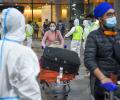
Till January 11, the number of people affected by this strain of the coronavirus was 96.

The countrywide vaccination drive was rolled out on January 16 with healthcare workers getting inoculated and vaccination of the frontline workers started from February 2.
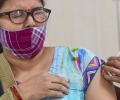
'Vaccination of all remaining unvaccinated at-risk people and consideration of a booster dose for those 40 years of age and over, first targeting the most high-risk / high-exposure may be considered,' the Indian SARS-CoV-2 Genomics Sequencing Consortium (INSACOG) said in its weekly bulletin dated November 29.

Russia's Sputnik V vaccine and its one-shot version Sputnik Light booster demonstrates high virus-neutralising activity (VNA) against the highly-contagious Omicron variant of COVID-19, providing a strong defence against severe disease and hospitalisation, according to a study.

As worries over India's COVID-19 spike mount -- the country added 75,809 cases on Tuesday to take its tally to 42,80,422 -- scientists are grappling with the pivotal issue of antibodies and trying to understand how they impact on the progression of the disease.

People having blood group of A, B and those with Rh factor positive are "more susceptible to COVID-19 infection" compared to those having O or AB group and Rh negative, according to a new study conducted by doctors at a Delhi hospital.
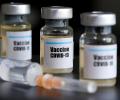
The Gam-COVID-Vac, called Sputnik V, is a two-part vaccine that includes two adenovirus vectors -- recombinant human adenovirus type 26 (rAd26-S) and recombinant human adenovirus type 5 (rAd5-S).
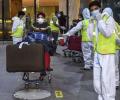
Passengers should undergo RT-PCR test and be isolated in a separate unit of an institutional facility if found positive
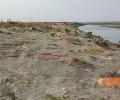
About 3.2 million people could have died from Covid in India by September last year, six-seven times higher than reported officially, according to a study based on one independent and two government data sources.

The arrival of summer in India may have raised hopes that hot and humid weather could slow the COVID-19 progression but virologist Naga Suresh Veerapu believes that outbreak and pandemic occurrences often do not follow seasonality.
Their close contacts have also been put under quarantine. Comprehensive contact tracing has been initiated for co-travellers, family contacts and others. Genome sequencing on other specimens is going on, the ministry said.
All these persons have been kept in single room isolation in designated health care facilities by respective state governments.
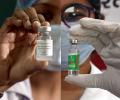
The study by a group of doctors showed that after two shots of the vaccines, 98 per cent recipients of Covishield showed antibody response, while the same was 80 per cent among Covaxin recipients. Sohini Das and Ruchika Chitravanshi report.

The rapid surge in cases during Delhi's fourth COVID-19 wave was mainly driven by the Delta variant, which likely has immune-evasion properties and counted for 60 per cent of the cases in April, according to a new study.

The ministry said the mutated UK strain was detected in eight samples at the National Centre for Disease Control, one at the National Institute of Biomedical Genomics, Kalyani (near Kolkata), one at the National Institute of Virology Pune, seven at the National Institute of Mental Health and Neuro-Sciences Hospital Bengaluru, two at the Centre for Cellular and Molecular Biology in Hyderabad and one at the Institute of Genomics and Integrative Biology, Delhi.

Chebrolu said she was inspired to find potential cures to viruses after learning about the 1918 flu pandemic and finding out how many people die every year in the US despite annual vaccinations and anti-influenza drugs on the market.

There is no change in treatment guidelines due to this mutation and the vaccines that are being developed, particularly those in the country, will not be impacted, NITI Aayog member (health) Dr V K Paul said.
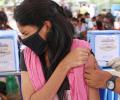
If booster shots are given on priority, the pace of vaccination may slow further. In the worst case scenario, the country will take till mid-March to vaccinate its entire adult population partially.

Nasal droplets fall within 2 metres from a COVID-19 infected person and the aerosols can travel in air up to 10 metres, the Office of the Principal Scientific Adviser said on Thursday, adding that proper ventilation can decrease the risk of transmission.

Adjuvants may be added to a vaccine to produce more antibodies and longer lasting immunity thus minimising the dose of antigen needed.

The COVID-19 patients at high risk of hospitalisation or those with severe disease should be given a combination of two antibody treatments, according to latest World Health Organization guidelines published in The BMJ on Friday.

The study estimates that the risk of reinfection with the Omicron variant is 5.4 times greater than that of the Delta variant.
These 51 cases were detected from over 45,000 samples sequenced so far in the country.
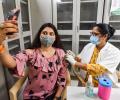
Vaccines Covishield and Covaxin work against SARS-CoV-2 variants Alpha, Beta, Gamma and Delta, while effectiveness tests against the Delta Plus variant is ongoing, the government said.

The country saw a reduction in the number of swine flu cases due to masks and sanitation practices.
All these people have been kept in single room isolation in designated healthcare facilities by respective state governments and their close contacts have also been put under quarantine, the ministry said.

'If your oxygen saturation is okay and is maintained after the six-minute walk test -- which has been described all over the world -- and you do not have an unrelenting fever, then you can even be managed at home.'
 © 2026 Rediff.com - Investor Information - Advertise with us - Disclaimer - Privacy Policy - Sitemap - Feedback - About us - Terms of use - Grievances