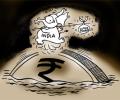
The Indian rupee on Wednesday ended unchanged against the US dollar at 61.41 ahead of the outcome of US Federal Reserve's policy meeting.

Profit-taking at higher levels saw the index pare gains, and slip into negative zone in early noon deals. A fresh round of selling in late trades saw the index drop to a low of 19,634 - down 570 points from the day's high. The Sensex finally ended with a loss of 114 points at 19,724.

As FY20 Budget fiscal measures need to be better understood, a reversal of the stance back to neutral will allow MPC flexibility to respond to incoming data.

While global uncertainty has led to a rise in prices in 2016, there is still a lot of doubt regarding its future.
Who benefits, who loses from the rising rupee, while a boon for travellers and students, exporters may find themselves facing a greater disadvantage.
The analysts believe that the rate cut would put downward pressure on the US dollar, thus boosting the gold prices in the non-dollar currency markets.

Sectorally, metal and banking stocks rallied the most, while FMCG and realty stocks came under selling pressure.

Smuggled gold, which is selling sharply lower than the spot market price, is also responsible for discounts not ending. Some consumers are selling high amounts of gold.

From the 30-Sensex pack, 26 stocks ended with gains led by Tata Steel and ICICI Bank

Tata Motors was the top gainer on better-than-expected June quarter revenues
There are more near-term global draggers in store for the domestic stock market, as the central banks across the US, Japan and Europe are likely to further hike their benchmark interest rates
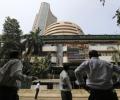
After turning net buyers for the fifth straight month till June, foreign portfolio investors (FPIs) withdrew a net of Rs 11,743 crore ($1.7 billion) in July. This was their highest outflow since October 2018.
Amid slowing growth and low interest rates, investors will need to focus on stock-picking, suggests John Remmert.

Since 2005, in 8 out of 10 years (except in CY11 and CY14) the benchmark indices have given positive returns in December.

The rupee had advanced 7 paise to end at 65.51 on Thursday.

'The first half of 2019 could be volatile.' 'In the second half, volatility inducing events should be largely behind us.'
Chairman of the US Federal Reserve Alan Greenspan has strongly defended free trade in goods and services, now under attack by John Kerry and John Edwards
A three-member delegation of the Indian Banks' Association met senior executives of the US Federal Reserve and New York Banking Department to explore the prospects for increased presence of Indian banks in the United States.

The government on Tuesday slashed the import tariff value on gold and silver to $59 per 10 grams and $ 470 per kg respectively, following weak global cues.
With US Fed increasing interest rates to 3%, equity money flows into emerging markets like India could be impacted in the medium term.
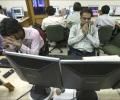
Monday saw the Sensex post its weakest closing since July 11 when it settled at 36,265.93. In the previous four sessions the index had lost 1,249.04 points.
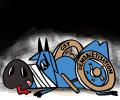
'The Indian economy is in slowdown and growth may stay slow,' notes Devangshu Datta.

Snapping their three-day falling trend, gold prices surged by Rs 375 to trade at Rs 26,375 per 10 grams at the bullion market.

The noble metal costs Rs at 26,755 per 10 gms.

ICICI Bank and SBI were among the top Sensex gainers along with FMCG majors ITC and HUL.
Jewellery stores remained deserted as buyers deferred their non-essential purchases awaiting softness in gold prices.
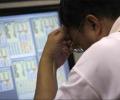
After a volatile session, Sensex closed the day 563 points lower
Amid increasing calls for protection of American industries and banning outsourcing of IT services to countries like India, China and Brazil, Chairman of the US Federal Reserve Alan Greenspan.

They have put in $14 billion so far in 2014 but this could get slower if the US Fed raises rates; however, there are expectations on compensatory flows.

In the first eight months of 2019, 70 per cent stocks in the BSE 500 universe were down. These stocks account for 94 per cent of India's total market capitalisation.

Financials were among the top losers along with Sun Pharma and index heavyweight Reliance Industries
 © 2026 Rediff.com - Advertise with us - Disclaimer - Privacy Policy - Sitemap - Feedback - About us - Terms of use - Grievances