
Given the developments, analysts do not foresee a quick recovery.
An action on the rate front is unlikely to figure in Rajan's plan for the moment.

IT shares lost ground tracking a sell-off in tech stocks on Nasdaq on Friday

EM asset classes could rally if the pace of US Federal Reserve rate increases moderates.

The minister, who will also be meeting foreign institutional investors whose money is key to funding CAD in the afternoon, did not speak to reporters waiting outside.

Dealers expect prices to fall further, owing to an impending rate hike in the US

Experts suggest domestic factors rather than the Greece crisis would determine the course of the Indian equities.

Externally, the global economy is stabilising, with better growth is expected this year.

Market recovery on the cards in 2014 as investors are likely to chase higher yields

He added that the risks can increase if the Chinese slowdown gathers more speed.

For the year as a whole the price is expected to average $1,270, which compares with the year-to-date average of $1,289.

RBI's fifth bi-monthly monetary policy meet due tomorrow also kept the investors on their toes.

Rumours about a spike in taxes for equity investors are flying thick and fast.
Joydeep Ghosh takes stock of personal finances after the life-altering surprises of 2016.
Sensex in green, midcaps, smallcaps fail to show up; bluechips rule.

The belief that the Fed knows something that lesser mortals don't is common.

Sanjay Mathur, managing director and head of economics research for Asia Pacific (ex-Japan), Royal Bank of Scotland, tells Business Standard that in the emerging market pack, India needs to learn lessons from Korea and Taiwan, which have managed their economic situations well.
Decline in the rupee coupled with a slide in the crude oil prices have dented the sentiments.

Hawkish tone likely to guard rupee from further slide

'Everyone is still trying to understand the quantum of impact demonetisation will have on the economy.'

India's macroeconomic environment is improving, but it is still not past the point where it can ignore the developments in the global markets
India has always been a good bet in relative terms during crises/turbulent times in emerging markets (EMs).

So, what does 2016 have in store for the Indian markets? Will they be able to take a giant leap forward in the leap year, and what are the key risks?

Overall market benchmark Sensex is headed for its worst performance in four years with a decline of 1,650 points

Sensex seems to be under pressure on weak cues.

'Focus on companies with healthy balance sheets and return ratios.'

The road ahead for the markets in the short term will depend on external factors rather than domestic developments.

'...and defensive until the global macro headwinds turn more benign.'


'The Chinese devalued the yuan initially but then stopped'.

The RBI cut rates for third time in 2015 due to favourable economic conditions.

RBI might not cut rate on June 2 but will surely cut soon.

More than half the Sensex companies have declared their results for the third quarter and there are more positive surprises than disappointments.

Sensex closed over 118 points down on Thursday.

Indian markets rose 19 per cent in the first half of this financial year, the best performance by any market during this period, globally.

You can use gold as a financial instrument to diversify your portfolio into hedging against uncertainties in the market, but for ambitious returns, you must explore opportunities in other asset classes such as equities, debts and real estate, says Adhil Shetty, CEO, BankBazaar.com.
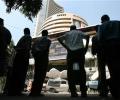
The 30-share Sensex ended up 12 points at 28,517 while the 50-share Nifty ended nearly unchanged at 8,660.

According to him, since India has a low fiscal deficit, a low current account deficit and lower inflation, there is no need for being too dependent on foreign money for growth.

Global markets could correct 5-10 per cent. If that happens, Indian markets will correct about 10 per cent

NRIs still send largest remittances than counterparts elsewhere.
