
'Macro headwinds are rising for Indian equities in the form of rising commodity prices, especially oil, depreciating rupee, fiscal challenges, election-related uncertainty and upside risks to inflation'

'China's economy continues to slow and the US Fed may still hike rates before the end of the year.'

Despite the rally, on the basis of valuations, Indian markets aren't too expensive, says Christopher Wood, managing director and equity strategist at CLSA.

RBI will review the monetary policy again on September 29.

A delay in US Federal Reserve's quantitative easing tapering, coupled with better-than-expected September quarter earnings, ensured FIIs kept foreign money flowing into Indian equities.

Most markets have seen significant erosion in investors' wealth this year

India Ratings has in its latest report has maintained a bearish outlook for gold prices for the current financial year.

The RBI's next policy review is set for Sept. 29.

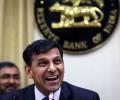
According to HSBC, the 'storm has abated' for the Indian markets as the US Fed has deferred tapering of its quantitative easing stimulus, and as the new Reserve Bank of India Governor Raghuram Rajan has taken steps to contain the rupee fall.

Broader market outperformed the frontline indices and also hit their respective all-time highs
Robust foreign capital inflows into upbeat domestic equity markets on the back of better macro fundamentals helped the rupee to gain

Some analysts believe that markets are expected to remain unclear and would have to wait until tomorrow's US non-farm payrolls data.

The rupee weakened to 62.58 against the US dollar in the early trade on Thursday.
Of the 30-share Sensex pack, 15 today closed in the red

The US Fed's rate cycle is set to turn later this year, but India is in a much better position than it was in 2013.

'One way to deal with these is to address these quickly and have rapid reaction teams in New Delhi, the state capitals and wherever possible.'

If indeed we want the board to manage the RBI, probably the government should take a close look at the US Federal Reserve system which has a two-part structure - a central authority in Washington, DC, and a decentralised network of 12 Federal Reserve Banks located throughout the country, says Tamal Bandyopadhyay.
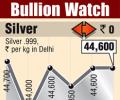
However, FII outflows of Rs 545 crore (Rs 5.45 billion) capped the gains in the rupee, which had slumped by 126 paise in past two days.

Risk sentiment is likely to be favourable if oil prices stay benign, global growth sentiment remains robust and the dollar index does not break out, says B Prasanna.

Market players said the sell-off was triggered by pessimism that the government may not be able to balance growth with macro-stability.

Most companies were working on Rs 65-66 to a dollar.

The Rupee is seen strengthening against the dollar.

Bond issuances dipped 31.4% during January-June

RBI Governor Raghuram Rajan expressed anguish at the banks' reluctance to pass on benefits of the earlier rate cuts.

Emerging markets could be affected by a combination of lower liquidity and higher dollar interest rates caused by a hike in the US Fed funds rate.
So far, India has attracted over $20 billion in the debt segment, thanks to the rate differential.

Nifty continued to register successive new highs as it crossed the 9,200 mark on Friday

Analysts say that the focus now shifts to global events

The current account deficit is the difference between inflow and outflow of foreign exchange.

Foreign portfolio investors have been net positive since the Union Budget

RBI unsure whether to cut rates or not in its next monetary policy.

The Indian economy's election-year syndrome cannot be ignored, says A K Bhattacharya.

Tata Motors was the worst performer on the Sensex, plummeting 10.32 per cent to Rs 436.55 after the company reported a steep 96.22 per cent decline in consolidated net profit for the December quarter.

Experts advise investors to buy at lower levels in the next few months and sell at the higher end of their range in the second half, reports Rajesh Bhayani.

The country must get its act on global alliances right in order to feed its fuel-hungry economy, points out Subhomoy Bhattacharjee.

Given the strong growth in Asia and easy monetary stance taken by central banks other than the US Federal Reserve (US Fed), overseas investors will soon start re-investing in risky assets, says Abhiram Eleswarapu, head of equity research, BNP Paribas Securities India.

A rising rupee is a tailwind for dollar investors.

On the 10th anniversary of the global financial crisis, a multi-part series analyses the lessons learnt and those not learnt.

With more favourable view on Indian economy and business environment under the Narendra Modi government, the risk premium for Indian papers began to climb down.
Growth acceleration will be gradual and it is still early days for a sharp recovery, says Gautam Chhaochharia, executive director and head of India research, UBS.
