
The Reserve Bank has taken some steps to shore up the domestic currency.

Among top losers that dragged down key indices were Infosys, TCS, Reliance, SBI, Tata Steel and ITC, falling up to 2.15 per cent.

The broader NSE Nifty managed to end higher for the second day at 10,426.85, up by 5.45 points or 0.05 per cent after shuttling between 10,478.60 and 10,377.85, intra-day.
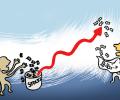
So far in 2019, India has been one of the highest recipients of foreign flows among Asian and Emerging Market (EM) economies

Market experts poohpooh fears of capital flight from India.
Tata Motors was the biggest loser in the Sensex pack, tumbling 2.47 per cent, followed by Reliance Industries (2.44 per cent), Maruti (1.84 per cent), SBI (1.76 per cent) and Bajaj Finance (1.23 per cent).

Financial shares were among the top gainers with HDFC leading the gains.

Christine Lagarde warned of a repeat of high market volatility.

'India is possibly the most fiscally constrained market in the region.'

As we say shalom to 2016, the key drivers for the markets in the year ahead have become more obvious, says Neeraj Gambhir, managing director and head of fixed income, India, Nomura. First, there is a surging dollar. Second, rising commodity prices. Then, we have the effects of demonetisation.

Foreign brokerage HSBC has said it expects the rupee to trade at 60-levels by December against the dollar even though risks on the domestic unit from both external and domestic fronts have increased.

Brokerage Edelweiss Securities said if the NDA returns to power with a clear majority in line with exit polls, markets would rejoice the policy continuity.
At present, the repo rate acts as the policy rate when liquidity is in deficit mode while reverse repo becomes the operating rate when there liquidity is surplus.

After its various corrections since Diwali, the stock market is expected to settle and consolidate in the next few days, with most uncertainties thought to have been priced in. That applies to the telecom scam-related implications, too, as long as its toll does not go beyond ministers and no more bad news comes from European countries. Most players believe there are several good stocks at attractive valuations.

Kotak Mahindra Bank was the biggest gainer on both the indices, ending nearly 9 per cent higher following reports that Warren Buffett's Berkshire Hathaway Inc was planning to pick up stake in the private sector lender.

Demonetisation will wipe out the likely benefits of a good monsoon this year, says Christopher Wood of CLSA.

While Governor Das was sanguine on government walking the fiscal prudence path--which was missed three out of the five budgets of the Modi government--Acharya pointed to the fiscal slippages as a worry.

Top gainers of the session included Bajaj Auto, Kotak Bank, M&M, Vedanta, IndusInd Bank, Asian Paints, HDFC Bank, Reliance Industries, HUL, HDFC, ITC, Tata Steel and Tata Motors, rallying up to 5 per cent.

As the Indian equities signed off 2019 on a remarkable note, the m-cap of BSE-listed companies rose by Rs 11,05,363.35 crore to Rs 1,55,53,829.04 crore.
.jpg)
The basis of Ind-Ra's expectation of INR appreciation is based on economic developments in the last one to two months of this fiscal and the likely developments in the remaining months.

India should not be left behind. It should join the seven central banks which are studying feasibility and safeguards necessary to eliminate risks, particularly from hacking, advises former foreign secretary Shyam Saran.

Political risk culminating from elections in the US and Latin America, and evolving right-wing populism in Europe could lead to substantial volatility, say Abheek Barua & Tushar Arora.

Indian equities are in a multi-year bull story with capex cycle recovery as the main driver.

Analysts expect global markets to remain in consolidation mode with a negative bias over the next six months.

Forecasts of a further rise in bullion prices keep Indians away from selling gold.
Research shows the US Fed doesn't get its predictions right as often as we would like to believe. With India and China in an upbeat mood, the dark days of last September are slowly fading in memory.

Sectorally, metal and banking stocks rallied the most, while FMCG and realty stocks came under selling pressure.

With the frontline Indian benchmark indices trading near all-time highs ahead of the general elections that begin later this week, Marc Faber, Editor and Publisher of "The Gloom, Boom & Doom Report" tells Puneet Wadhwa that the Indian stock market is relatively expensive, especially the index (large-cap) stocks.

Indian markets on Thursday shrugged off any negative impact.

'Demonetisation will push India onto a higher growth path after a temporary dip.'

A fall presents an opportunity to buy rate-sensitive stocks.

As global markets near all-time highs driven by liquidity, Marc Faber suggests most asset prices worldwide are inflated.
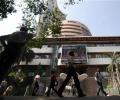
Global events will continue to be in the limelight, besides domestic policy.

Silver coins also tumbled by Rs 1,000 to Rs 52,000 for buying and Rs 53,000 for selling of 100 pieces.

US Fed rate rise raises risk of further drying up of FII flows.

Since 2005, in 8 out of 10 years (except in CY11 and CY14) the benchmark indices have given positive returns in December.

The rupee had closed at 64.83 last Friday.

Gold extended its slump for the second day and shed another ₹ 350 to hit a six-month low of ₹ 29,000 per 10 grams in the bullion market.

It is thought that the RBI has been accumulating dollars to fight odds.
While the Fed and the ECB slash and raise rates when needed, the RBI seems to move in just one direction.
