
Maruti Suzuki India on Tuesday said it has increased prices of its entire model range with immediate effect. An estimated weighted average of increase across models is 0.45 per cent, the auto major said in a regulatory filing.

'We are seeing one of the highest discounts in recent years across companies.' 'October is a crucial month with several festivals coming up.'

Among the Sensex stocks, JSW Steel, Asian Paints, Maruti Suzuki India, NTPC, Adani Ports and Special Economic Zone, Bharti Airtel, ITC and Tech Mahindra were the major gainers. Reliance Industries, Tata Motors, Infosys, Mahindra and Mahindra, Bajaj Finance and Axis Bank were the laggards.

The country's largest carmaker Maruti Suzuki India (MSI) on Monday said it has increased prices of its entire product range, except Celerio, by up to 1.9 per cent with immediate effect. In a regulatory filing, the company noted that it has taken the decision to hike prices due to an increase in various input costs. The weighted average price rise in ex-showroom prices (New Delhi) across select models is 1.9 per cent, it added. This is MSI's third price hike this year.

South Haryana hasn't delivered a chief minister since 1967, when his father Rao Birender Singh was ousted from power. It's a legacy Rao Inderjit Singh is determined to reclaim.

Tata Motors is looking to consolidate its position in the SUV segment as it marks its entry into the highly competitive mid-size space which is currently dominated by South Korean and Japanese carmakers. The Mumbai-based auto major on Monday launched midsize SUV coupe Curvv with petrol and diesel powertrains with a price starting at Rs 9.99 lakh. The company has already unveiled the electric version of the model in August.

The top six auto brands are: Maruti Suzuki, Hyundai, Tata Motors, Toyota, Kia and Mahindra & Mahindra.

Auto manufacturers have focused on launching CNG variants of their popular models to meet consumer demand for vehicles with lower running costs.

Among the key concerns of the Street is market share losses in growth segments, led by higher competitive pressures.

Haryana has done well in terms of economic growth over the last couple of decades. For it to continue to lead the growth ladder, the new government has to work hard on multiple dimensions, recommend Shishir Gupta and Rishita Sachdeva.

'Bilateral trade has suffered seriously because of the growing unrest.' 'There is a standstill on both sides amid the curfew.'

'At present, hybrids emit lesser carbon despite using fuel than pure play electric cars.' 'That is because EVs have to be charged and 76 per cent of the country's electricity is still coal-based and not renewables.'

Truck movements across the India-Bangladesh border are on the rise, with increasing rentals signalling a trade recovery between the two South Asian nations. Yet, geopolitical tension looms large, with Bangladesh now under an interim government for nearly two months.

The environment ministry is likely to soon issue regulations that will mandate automakers to recycle a specified percentage of steel from old vehicles, starting from the next financial year, according to people familiar with the matter. "We recently held a meeting with members of the Society of Indian Automobile Manufacturers (Siam). "The final regulations are likely to be issued in the next 10 days," a government source informed.

Most of the engines used by Suzuki's two-wheelers in India are manufactured by Maruti at its Manesar plant.

MSI sells a range of models from entry-level hatchback Alto to S-CROSS, priced between Rs 2.99 lakh and Rs 12.39 (ex-showroom prices Delhi) lakh, respectively.

Automobile exports from India rose 15.5 per cent year-on-year in the June quarter with all verticals, barring three-wheelers, recording growth in shipments, according to the latest SIAM data. Overall shipments stood at 11,92,577 units in the first quarter the current fiscal year, as compared with 10,32,449 units in the same period of the last fiscal. Passenger vehicle exports stood at 1,80,483 units in the first quarter, registering a jump of 19 per cent over 152,156 units in the same period last year.

Maruti's results and the investor response indicate that quite a few stocks in the auto sector could be on the verge of a big bounce, says Devangshu Datta.

As Kolkata marches towards modernity, it is hard to imagine its streets without these cabs, notes Air Commodore Nitin Sathe (retd).

The domestic car market leader said there will be no cash outflow from MSI as the merger is proposed to be effected through a share swap agreement.

It's not only the Indian markets that command a valuation premium over their global peers; shares of subsidiaries of India-listed multinational companies (MNCs) also trade at rich valuations compared to their parent companies. An analysis of 12-month forward price-to-earnings (P/E) and price-to-book (P/B) multiples of domestically listed MNCs shows that most quotes have a premium ranging from 2.1x to 6x that of their parent. Similarly, P/B, in most cases, is significantly higher in the domestic market.

Stock markets snapped their five-day losing run on Friday with the benchmark BSE Sensex closing higher by 75 points on value-buying in banking and oil shares after recent losses. The 30-share BSE Sensex rose by 75.71 points or 0.10 per cent to settle at 73,961.31. During the session, it hit a high of 74,478.89 points and a low of 73,765.15 points.

India's biggest car maker Maruti Suzuki said on Tuesday that its vehicle production in September will tumble by 60 per cent due to chip shortage. The company, which had earlier cut down production at its Gujarat plant, said the chip shortage will hit production in Gurugram and Manesar plants, effectively forcing the automaker to cut production by 60 per cent. Owing to a supply constraint of electronic components due to semiconductor shortage, the company is expecting an adverse impact on vehicle production in September in both Haryana and its contract manufacturing company, Suzuki Motor Gujarat Pvt Ltd. (SMG) in Gujarat.
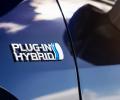
Plug-in hybrids have two engines and the electric part has a much larger battery than in the regular hybrids. Car companies, led by the Japanese, are pushing the Indian government to look at hybrids in the interim if it wants to reduce carbon emission.

Maruti is not an online outlier, of course; other heavyweights have rolled out similar services. But as an analyst pointed out, Maruti's all-India roll-out has significant impact given that it accounts for over half of all cars sold, reports, reports Pavan Lall.

Recently, Suzuki Motor Corp (SMC) in an investor presentation expressed strong intent to enter the electric vehicle (EV) space. This is part of a larger strategy the Hamamatsu-based firm has drawn up in developing electrification of technologies as it seeks to achieve carbon neutrality. The significance of this presentation is that it marked the first time that the Japanese carmaker spelt out its EV strategy with well-defined timelines. SMC plans to develop electrification technologies by 2025, fully implement them in products from the same year, and make a full-scale quantitative increase from 2030.
Passenger vehicle wholesales in India witnessed a marginal growth in May on account of high base effect and muted demand due to general elections. The overall passenger vehicle dispatches from companies to dealers stood at 350,257 lakh units last month as compared to 335,436 in the same month a year ago, registering a growth of 4 per cent.

Mahindra is coming up with the Thar Roxx. MG Motor India announced a third electric vehicle Windsor. Hyundai and Kia are expected to introduce updated versions of the Alcazar and Carnival respectively.

While Toyota will acquire 4.94 per cent shares of Suzuki, worth $ 908 million, the latter will make a $ 454-million investment in the biggest automaker of Japan. Premium products from the Maruti stable such as the Baleno, Ciaz and Vitara Brezza will be sold under the Toyota brand with small changes.
Leading automakers Maruti Suzuki, Hyundai and Tata Motors on Friday reported robust sales for February as demand for sports utility vehicles continued to remain strong. Mahindra & Mahindra, Toyota Kirloskar Motor and Honda Cars also witnessed higher vehicle dispatches to dealers last month. February turned out to be the third-best month for sales for the industry ever.

The Hayabusa from the Suzuki stable is an insane machine. But that is not the only motorcycle that the Japanese automaker produces. There are so many more, so let's take a quick journey through the iconic bikes made by Suzuki.
Passenger vehicle wholesales in India increased 4 per cent year-on-year in May to 3,47,492 units, as compared to the same month last year, industry body SIAM said on Tuesday. Overall passenger vehicle (PV) dispatches from companies to dealers stood at 334,537 units in May 2023.

The slowdown in growth is an industry-wide trend and companies are adjusting production to bring down the inventory levels at plants as well as dealerships.

Tata Motors on Wednesday said it remains confident about the long-term prospects of the electric vehicle segment and termed the fall in sales numbers a "short-term" issue. In an interaction with PTI at the launch of the company's first mid-sized electric SUV, Curvv.ev, at a starting price of Rs 17.49 lakh (with 45 kWh battery) Shailesh Chandra, managing director of Tata Motors Passenger Vehicle and Tata Passenger Electric, said that the company is looking to achieve one-lakh electric vehicle sales this financial year. Curvv EV is the second car based on the advanced Pure EV architecture - acti.ev, which marks Tata Motors' entry into the highly competitive mid-size SUV segment and will be competing with the likes of MG ZS EV, Hyundai Creta and Maruti Suzuki Grand Vitara, among others.

Maruti Suzuki India (MSI) on Wednesday reported over two-fold jump in its consolidated net profit to Rs 1,036 crore for the first quarter ended June 30, mainly due to a low base in the year-ago period. The auto major had posted a net profit of Rs 475 crore in the COVID-hit April-June quarter of the last fiscal. Its net sales rose to Rs 26,512 crore in the June quarter compared to Rs 17,776 crore in the same period of 2021-22.
Maruti contributed over 29 per cent of Suzuki's net profit in April-December 2006, though it accounted for less than 7 per cent of its turnover.

They are also on the board of Maruti Suzuki India.

Maruti Suzuki's royalty payments to its Japanese parent Suzuki are "extortive" and the amount paid has increased over six times per car sold over the past 15 years, according to a report.

In the domestic market, the car has been well accepted and currently the company has over 80,000 bookings for the model.
Suzuki Motorcycle India announced the launch of two new bikes for the domestic market 'Heat' for excessive bike users and 'Zeus' targeted at college students and executives.
 © 2026 Rediff.com - Advertise with us - Disclaimer - Privacy Policy - Sitemap - Feedback - About us - Terms of use - Grievances