
Rahul Gandhi, Leader of Opposition in Lok Sabha, has strongly dissented on the selection process for the next CBI director, alleging bias and lack of transparency in the government's approach.

The Madras High Court has restrained TVK MLA R Srinivasa Sethupathi from voting, including in the upcoming confidence motion, due to a petition challenging his one-vote victory.

The Supreme Court has allowed former West Bengal chief minister Mamata Banerjee and others to file fresh applications regarding their claim that victory margins in 31 constituencies in the recent assembly polls were less than the deletion of votes during the Special Intensive Revision (SIR) of electoral rolls.
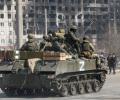
The Centre has informed the Supreme Court that 217 Indian nationals reportedly joined the Russian armed forces, with 49 fatalities amid the Russia-Ukraine war, and efforts are underway to repatriate those who were misled.

The Supreme Court has taken exception to AIIMS' plea to set aside its order allowing a 15-year-old rape survivor to terminate her 30-week pregnancy, urging the Centre to amend the law to permit abortion beyond 20 weeks in such cases.

The Supreme Court has directed Delhi Police to expedite its investigation into the assault of a woman advocate, allegedly by her husband, while ensuring the safety of the victim and her children.

A medical board from AIIMS Delhi will conduct a second post-mortem examination on former model-turned-actor Twisha Sharma in Bhopal, following her family's concerns about the initial autopsy and allegations of dowry harassment.
The last rites of former actor-model Twisha Sharma, who was allegedly harassed for dowry, were conducted in Bhopal. Her family continues to seek justice, with the Supreme Court taking cognisance of the case.

A nine-judge Supreme Court bench has reserved its order on petitions related to discrimination against women at religious places, including the Sabarimala temple, and the scope of religious freedom.

The Supreme Court has permitted the NIA to file its charge sheet upon completion of the investigation into the incident in West Bengal where judicial officers were illegally confined by a mob.
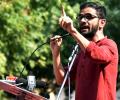
The Supreme Court granted interim bail to two Delhi riots accused, while addressing concerns about conflicting views on bail under the Unlawful Activities Prevention Act (UAPA). The court referred the question of law on whether prolonged incarceration can override UAPA restrictions to a larger bench.
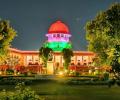
The Supreme Court has initiated suo motu action regarding an NCERT class 8 textbook that references corruption in the judiciary, raising concerns about potential defamation and the integrity of the judicial system.
The Supreme Court granted bail to the wife of the alleged 'kingpin' of a Rs 3,700-crore scam and directed that no court shall de-freeze the assets attached by the probe agencies in the case till the trial in the FIRs against the accused are concluded.
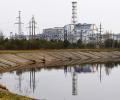
The Supreme Court is reviewing a plea challenging the 2025 SHANTI Act, which caps liability at Rs 3,000 crore for nuclear plant incidents, raising concerns about victim compensation and operator accountability.
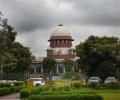
The Supreme Court of India has observed that the practice of excommunicating Parsi women for entering into interfaith marriages is prima facie discriminatory, emphasising that the right of conscience is a birthright.
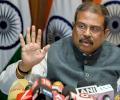
The CJP's rapid rise on social media reflects growing digital dissent and youth frustration with issues like unemployment and exam-paper leaks.
The Supreme Court of India has stated that religious institutions must have structure and norms for their functioning, emphasising that the right to manage a religious institution does not imply an absence of order.

The Supreme Court has directed the Madhya Pradesh government to decide on granting sanction to prosecute minister Kunwar Vijay Shah for his remarks targeting Army officer Col Sofiya Qureshi. The court expressed its displeasure over the delay and the nature of Shah's comments.

Chief Justice of India Surya Kant cautioned against the uncritical adoption of AI in the judiciary, emphasising the need for human judgement and ethical considerations in judicial decision-making.
Chief Justice of India Surya Kant has cautioned against the uncritical adoption of Artificial Intelligence in the judiciary, emphasising the need to balance technological advancements with human intellect and ethical considerations.
The Supreme Court of India has dismissed the use of information from 'WhatsApp University' as evidence in a case concerning religious freedom and discrimination against women at religious sites, including the Sabarimala Temple.

The Supreme Court overturned a Delhi High Court order that had suspended the life sentence of former BJP MLA Kuldeep Singh Sengar in the 2017 Unnao rape case, instructing the High Court to reconsider the plea.

The Supreme Court of India has voiced concerns about the potential consequences of individuals questioning religious practices in constitutional courts, warning it could lead to the fragmentation of religions and civilisation. A nine-judge Constitution bench is hearing petitions related to discrimination against women at religious places and the scope of religious freedom.

The Supreme Court has transferred the investigation of the Malda incident, involving the gherao and attack on judicial officers, to the National Investigation Agency (NIA), citing concerns about the credibility of West Bengal's bureaucracy.
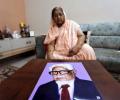
The Supreme Court has disposed of Teesta Setalvad's plea for passport release, advising her to reapply with a travel itinerary. The case relates to alleged fabrication of documents in the 2002 Gujarat riots.

Pramod Bhagat secured one gold and two silver medals at the Spanish Para Badminton International 2024, leading a strong performance by the Indian contingent.
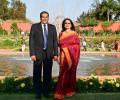
The Supreme Court has appointed former Chief Justice of India Sanjiv Khanna as the sole mediator to resolve a dispute involving businessman Ashokbhai Haribhai Gajera and others in a case linked to textile market projects in Surat. The case involves allegations of siphoning off Rs 1,900 crore and forging documents.

The observations came from a bench of Chief Justice Surya Kant and Justice Joymalya Bagchi which was hearing pleas questioning the validity of Section 152 of the Bharatiya Nyaya Sanhita (BNS).
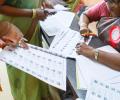
The Supreme Court declined to initiate an inquiry into alleged voter roll irregularities in West Bengal, stating it would amount to a 'fishing inquiry'. The court's decision came after concerns were raised about the addition of a significant number of voters ahead of the state's Assembly elections.
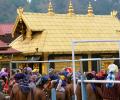
The Shabari story in the Ramayana found mention before a nine-judge constitution bench of the Supreme Court on Wednesday while hearing petitions related to discrimination against women at religious places, including the Sabarimala temple in Kerala.
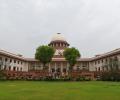
The Supreme Court of India is hearing petitions related to discrimination against women at religious places, including the Sabarimala temple in Kerala, and the scope of religious freedom practised by multiple faiths.

The Centre has supported the restriction on women of menstruating age entering Kerala's Sabarimala temple, arguing that the Supreme Court's 2018 judgement assumes male superiority.

Delhi Police has formed a team to investigate allegations that two government hospitals and a private hospital refused immediate treatment to a woman advocate who was allegedly assaulted by her husband.

The Supreme Court dismissed a petition related to the preliminary investigation report on the Air India plane crash in Ahmedabad, questioning the petitioner's motives and agenda.
The Supreme Court of India has agreed to examine a constitutional challenge regarding gender discrimination within Parsi personal law, specifically focusing on whether a Parsi woman loses her religious identity upon marrying outside the community.
The Supreme Court has directed the Delhi Police to investigate the brutal assault on a woman advocate, allegedly by her husband, and has asked for a senior officer to lead the probe. The court also addressed concerns about hospitals refusing the victim admission and directed financial assistance.
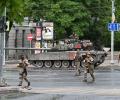
The Centre informed the Supreme Court that ten Indians have died while fighting alongside Russian forces in the Russia-Ukraine war. The court is hearing a plea seeking the repatriation of Indians allegedly forced to fight.
The Supreme Court has declined to intervene in a petition concerning the deletion of names from voter lists in West Bengal, directing the petitioners to seek redressal through established appellate tribunals.
The Supreme Court is hearing petitions related to discrimination against women at religious places, including the Sabarimala temple. A nine-judge bench is examining the scope of religious freedom and the exclusion of women based on age and menstrual status.

Chief Justice of India expresses concern over the increasing number of digital arrest scams, highlighting a recent case where an elderly woman was defrauded of her retirement benefits.
