
'The purposes of our document are three-fold: To lay out the opportunities that India enjoys in the international sphere; to identify the challenges it is likely to confront; and to define the broad approach that India should adopt as it works to enhance its strategic autonomy in global circumstances that are likely to remain volatile and uncertain for some time to come.'
One of the chapters in the document titled 'Asian Theatre' has quite elaborate comments on China, and opines that India's China strategy has to strike a careful balance between cooperation and competition, economic and political interests, bilateral and regional contexts. Rediff.com publishes verbatim a part of the chapter 'Asian Theatre'.

The most aspirational and optimistic youth are in places that have seen the least growth and yet they are hardly turning out to vote.

The Ashokan Pillar in Kolhua, Bihar, is one of India's best maintained historical sites.

Historian and writer Sunil Khilanani lists King Ashoka's teachings, the Constitution and EVMs as some of India's finest treasures.

Six books were nominated for the Shakti Bhatt First Book Prize this year. The books in contention for this year's cash prize of Rs 1 lakh and trophy are: Boats on Land by Janice Pariat, India Becoming by Akash Kapur, The King's Harvest by Chetan Raj Shreshta, The Wildings by Nilanjana Roy, Foreign by Sonora Jha and a pleasant kind of heavy and other stories by aranyani.

'It is astonishing that such a serious issue be handled in so casual and cavalier a fashion, but this has become what is expected of this government,' observes Aakar Patel.

'The Indian economy has become like a car that has the appropriate wheels on one side -- political liberalism -- and scooter wheels -- economic illiberalism -- on the other,' points out T C A Srinivasa Raghavan.

'Our strategy should be to 'hold the line' in the north on the Sino-Indian land frontier, but maintain and, if possible, enlarge India's current edge in the maritime south.'

'... A youth movement which could really transform our politics in a way that the existing elites don't understand.' 'The more you suppress free expression, the more people will value it.' 'The State can't suppress a young society like India where there are so many interesting new ideas emerging,' says Sunil Khilnani, whose latest book Incarnations looks at Indian history through 50 lives.

'Shaheen Bagh is no longer a mere ghetto of lower middle class Muslims.' 'Now, it is a metaphor for resistance, secularism and struggle,' notes Md. Zeeshan Ahmad.

'We cannot ignore the role of public institutions in driving development... I don't see much focus on institutional renewal.'

Books like Sunil Khilnani's Incarnations: India in 50 Lives, simple and straightforward though they appear, are instead powerful arguments for complexity, for empathy, and for curiosity
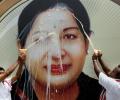
'The irresistible charm of Indian politics is it can always throw up surprises -- even when it looks as predictable as in Tamil Nadu,' discovers Shekhar Gupta.
 © 2026 Rediff.com - Investor Information - Advertise with us - Disclaimer - Privacy Policy - Sitemap - Feedback - About us - Terms of use - Grievances