
The Congress party also called for a special session of Parliament to evaluate the situation in detail, to identify any mistakes that were made, and to ensure that they are not repeated in the future.
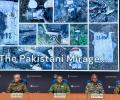
'I'm not accepting the 'any act of terrorism is an act of war' threshold.' 'I don't think this is sustainable because if you do this four or five times in a short duration, it will lose its edge.'
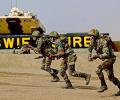
The Indian Army's broader reorganisation is inevitable as India's military doctrine adapts to the demands of the modern battlefield.

The Pakistani flag has been removed from the historic table at Raj Bhavan in Shimla where the Simla Accord was signed, a day after Pakistan suspended the 1972 agreement. The suspension came in response to India's retaliatory actions following a terrorist attack in Jammu and Kashmir. The Simla Accord, signed by Indira Gandhi and Zulfikar Ali Bhutto, aimed to settle issues bilaterally and maintain peace at the Line of Control. However, Pakistan's frequent violations of the agreement have led to its suspension, raising concerns about the future of India-Pakistan relations.

China and Pakistan are in a tight strategic alliance. India must deal with them one at a time, but be prepared in case they decide to collude, points out Shekhar Gupta.
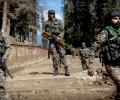
China hopes both sides will remain restrained, move toward each other, and work together to de-escalate the situation.
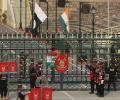
In the India-Pakistan situations, off-ramps have come either through foreign mediation (after months of kinetic warfare over Kargil, and a long stand-off with Op Parakram) or when a situation made it possible for both sides to claim a win, explains Shekhar Gupta.

'India has gone some way to meeting its objectives because it has established a deterrent value that Pakistan will have to take into account when it plans future terrorist attacks.'
It is important for India to pay close attention to both the tone and substance of authoritative remarks coming out of Pakistan, explains former foreign secretary Shyam Saran.
Pakistan has warned the international community that any military moves by India shall be 'responded to assuredly and decisively... onus of any escalatory spiral and its consequences shall squarely lie with India.' Implicit in the statement is a veiled threat that even a nuclear threshold may be reached if push comes to shove, warns Ambassador M K Bhadrakumar.
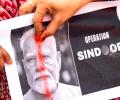
World leaders, including the UN Secretary-General and US President Donald Trump, have urged India and Pakistan to exercise restraint and seek peaceful solutions to the ongoing tensions. The calls for calm come after India conducted airstrikes in Pakistan-occupied Kashmir in response to a recent terrorist attack. Leaders from the US, Russia, UK, China, UAE, Qatar, and Japan have expressed concern over the escalating situation and emphasized the need for dialogue and de-escalation.

India's tactical and operational response demonstrated its ability to prosecute tri-service operations, even without a formal tri-service doctrine or the higher command structure needed to coordinate it, points out Ajai Shukla.

As with biopics these days, Kangana Ranaut's films may be less about telling the story of a dark chapter of Indian history and more about giving fodder to those who seek to defend or justify government highhandedness today, observes Utkarsh Mishra.

Guterres referred to the Simla Agreement, which is a bilateral agreement and rejects any third-party mediation in the issue.
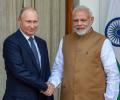
"We hope that the parties involved will not allow a new aggravation of the situation in the region as a result of the decisions."
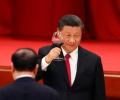
He claimed China has a policy of keeping "hot spots like Taiwan, South China Sea and Tawang burning" in order to divert attention to its own failings.
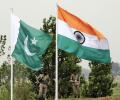
'When the Indian Army carries out anti-infiltration ops, the Pakistan army willy-nilly will get involved in some way. So, it is imperative for the Pakistan army to act against militant groups.'
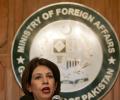
Pakistan on Thursday said India's stand that the Simla Agreement of 1972 supersedes earlier United Nations resolutions on Kashmir is not legally tenable even as it sought "serious negotiations" on all outstanding disputes.

The best, wisest, and fairest next step in strengthening our own cause is to restore statehood to Jammu & Kashmir and allow the resumption of robust political activity. That's a box that remains unchecked on the Modi government's report card as we approach the fourth anniversary of Kashmir's Constitutional shift, notes Shekhar Gupta.
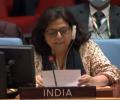
India hit back at Pakistan in the UN Security Council after Islamabad raised the Kashmir issue at the 15-nation Council.
"Are they ready to review their decisions? If they do, we can also review our decisions. Review will be on both sides," Qureshi said.
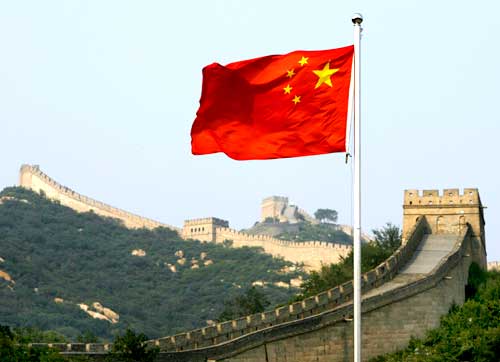
The Chinese envoy recommends an early harvest on the border issue while maintaining peace and tranquillity in the border areas, reports Ajai Shukla.

'Since India has to live next to Pakistan, it can't remain under permanent blackmail.' 'A predictable consequence of these fundamental shifts is the fraying of the principle of strategic restraint.' 'It hasn't been junked. But the threshold has been shifted to provide India much greater room for retaliatory action,' says Shekhar Gupta.

'Indira Gandhi and P N Haksar did not want Pakistan to leave as an embittered foe hell-bent on taking revenge for being humiliated so comprehensively.'

The Gujarat high court on Friday directed the Union of India to approach the International Court of Justice within two months for the release of 54 1971 prisoners of war languishing in Pakistani jails.
In a set of recent tweets, Khan said that "Kashmiris must be allowed to decide their future".
BJP demanded India suspend talks with Islamabad in the light of Pakistan Foreign Office spokesperson Tasnim Aslam's remarks that her country would not hand over Mumbai blasts' suspects.
While expressing optimism over the talks, the Pakistani foreign minister said the Simla accord does not exclude the "international character" of Kashmir.
While visiting the world's highest battlefield, Dr Singh said on Sunday that time has to make efforts to convert Siachen into a "peace mountain" but asserted there could be "no redrawing of boundaries".

The leaders of the two countries "discussed the main aspects of bilateral cooperation and exchanged views on current regional topics, including developments in South Asia," said a brief statement issued by the Russian President's office - Kremlin.

"The treaty has caused huge loss to Jammu and Kashmir" as the people of the state cannot fully utilise the waters of various rivers, particularly Chenab in Jammu, for agricultural and other activities, Singh said.
Rehman had suggested that the Simla Agreement and the Lahore Declaration could be the basis for normalisation of Indo-Pak ties.
This was in response to Prime Minister Vajpayee's statement that Indo-Pak talks should focus on Pak-occupied Kashmir.
'Both the countries have signed this agreement to resolve all their disputes bilaterally,' Fazal-ur Rehman said.

The latest updates on the fallout of one of the most daring strikes carried out by the Indian Army, attacking terrorists across the Line of Control in Pakistan-occupied Kashmir.
As per the Simla Agreement, all outstanding issues between India and Pakistan should be treated as bilateral ones, while the Hurriyat has been insisting that it be made a party to talks to resolve the Kashmir problem.

Railway officials in New Delhi said the train has not been suspended.

'Stop terror, start talks. Let us wait for a response on that from the Pakistani side'

Maj Gen Lodin succeeds Major General Delali Johnson Sakyi of Ghana, who completes his two-year assignment as chief military observer and head of mission for the UNMOGIP on July 2.
 © 2026 Rediff.com - Advertise with us - Disclaimer - Privacy Policy - Sitemap - Feedback - About us - Terms of use - Grievances