Bengaluru is at a critical juncture, where its economic model, reliant on attracting and retaining skilled professionals, is directly threatened by a measurable decline in urban quality of life, point out Shishir Gupta and Rishita Sachdeva.

Some of the worst-affected areas include Manyata Tech Park, BTM Layout, Ejipura Junction, HSR Layout 5th and 6th sectors and Silk Board Junction.

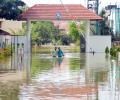
Heavy overnight rains severely affected parts of the city on Monday, leading to water-logged roads, inundated residential areas and traffic pile-up, as the city braces for more spells in the coming days.

The city received about 104 mm of rainfall in the last 24 hours, inundating many low-lying areas and leading to traffic pile-up, prompting the BJP to launch a scathing attack on the ruling Congress.

Amid the heavy downpour in Bengaluru, residents of many flood-affected areas have taken to social media to pour out their woes ranging from waterlogging to complaining about "crumbling" infrastructure.

Karnataka Deputy Chief Minister D K Shivakumar on Thursday said a 190 km long tunnel has been proposed to ease traffic congestion in Bengaluru and within 45 days, the state government will be inviting public tenders for it.

Bengaluru's Outer Ring Road spanning from Hebbal to the Silk Board Junction has been recognised as one of India's fastest growing IT/ITeS growth corridors, according to a report by Vestian Global Workplace Services.
With regards to continuing the anti-dumping duty on import of raw silk from China, the Commerce Ministry has ordered a sunset review investigation by the Central Silk Board in the matter. In face of the pending investigation, the duty has been extended for another year up to January 1, 2009. The silk growers in Andhra Pradesh, Karnataka, Tamil Nadu, West Bengal and Jammu and Kashmir are concerned that this exercise may lead to opening up the silk imports from China.
Indian coffee is soon going to be branded globally under a new look and name --'Coffee Mark.'
Two persons were washed away near the Silk Board Junction in Bangalore while they were wading through waist deep water.
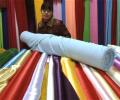
The new area expansion would help in increasing the production of silk from the present 23,000 tonnes per annum to 32,000 tonnes, a growth of 39 per cent.

'The more conversations I have, the more I realise how boringly similar we are -- they love their family, crib about work, and considering the cholbe na attitude and frequent strikes, I could easily be speaking to someone in Kolkata or Kochi.'
 © 2026 Rediff.com - Investor Information - Advertise with us - Disclaimer - Privacy Policy - Sitemap - Feedback - About us - Terms of use - Grievances