
Sri Lanka declared a state of emergency on Wednesday as angry protesters stormed the prime minister's office in Colombo, hours after president Gotabaya Rajapksa fled to the Maldives on a military jet, amid the country's worst economic crisis in decades.

The government's poor handling of the economic crisis where people currently endure long hours of power outages and scarcity of essentials has angered the public which planned country-wide protests on Sunday.
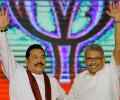
Delhi finds itself between the rock and hard place in the coming Sri Lankan election, points out Ambassador M K Bhadrakumar.
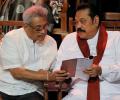
President Rajapaksa and Prime Minister Rajapaksa will transform Sri Lanka's political landscape after Thursday's electoral triumph, predicts N Sathiya Moorthy, veteran Colombo watcher.

The SJB has begun to collect signatures from MPs for the no-confidence motion, according to media reports.
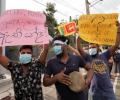
Ppolitical experts in Colombo said the ministers came under intense pressure from the public over the government's alleged "mishandling" of the economic crisis, triggered by the shortage in the foreign exchange reserve.

Whatever its apprehensions and concerns about the regime of the Rajapaksa clan, India must be ready with unconditional assistance when Colombo asks for it. Because it will, observes Aditi Phadnis.
Gota has to decide if he could order elder brother Mahinda's arrest as the agent provocateur of Monday's violence. Then he has to prepare for an interim government, in which no one would now want to become a cabinet minister leave alone prime minister, explains N Sathiya Moorthy.

The SLPP, led by prime minister Mahinda Rajapaksa, has won in 145 constituencies, bagging a total of 150 seats with its allies, a two-thirds majority in the 225-member Parliament, according to the results announced by the election commission.

Unofficial results indicate that the SLPP would comfortably win at least 17 out of the 22 districts on offer.

The 74-year-old leader, who describe himself as "a rebel with a cause", earlier served as the country's president from 2005-2015, becoming South Asia's longest-serving leader. He was also prime minister for a brief period in 2018.

Reacting to the apex court's ruling, sacked Prime Minister Wickremesinghe said, "We trust that the President will promptly respect the judgment of the courts.

India welcomed resolution of the political crisis in Sri Lanka and exuded confidence that relations between the two countries will continue to move on in an upward trajectory.
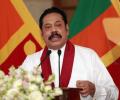
The parliament has approved a no-trust vote against Prime Minister Rajapaksa, speaker of parliament Karu Jayasuriya announced in the House.

Polls opened at 7 am local time and would close at 5 pm with some 12,845 polling stations being set up throughout the country for 15.9 million voters, who will choose a successor to President Maithripala Sirisina.
'Rajapaksa's victory poses a serious foreign policy challenge for the Modi government,' notes Ambassador M K Bhadrakumar.

'Sirisena will keep both Rajapaksa and Wickremesinghe on tenterhooks till the next general election due in 2020,' says Aditi Phadnis.
 © 2026 Rediff.com - Investor Information - Advertise with us - Disclaimer - Privacy Policy - Sitemap - Feedback - About us - Terms of use - Grievances