
The official data on April-June GDP will be released on August 31.

The rupee has depreciated 2.35 per cent in the past three months and one per cent in the past month, despite strong capital flows and falling oil prices.
While RBI's foreign exchange reserves have swelled to over $400 billion, it has a 'sell' position of $981 billion.

Traders believe the RBI will step in more strongly, if the rupee starts falling towards 65
The rupee appreciation will most likely lead to lower inflation and less ambiguity.
So far, India has attracted over $20 billion in the debt segment, thanks to the rate differential.

'The reform agenda is progressing in the right direction'.

India needs to sustain a GDP growth rate of 8 per cent to become a five trillion dollar economy by 2025, the Economic Survey has stated.

Is India really one of the cheapest nations to live in?

While far from being a currency war, India does not have much of an option but to depreciate to accommodate its exports at a time when China shows its intent to let its currency depreciate.

If net forex outflows turn out to be relatively high in the next few years, the rupee could depreciate beyond Rs 80 to a dollar by 2022. The causal reasons could, for example, include unmet expectations of FPI and FDI investors about the performance of the Indian economy, sharp rise in prices of imported oil and decrease in FX remittances. The RBI has to ask itself whether guaranteeing future rupee-dollar exchange rates on FX forward contracts is a reasonable way to use its risk-bearing capacity, says Jaimini Bhagwati.

'From a retail investor's perspective, therefore, it is essential not to get swayed by the short-term correction in the equity market and macro noise, and stay the course with their long-term financial plans,' notes Ashwin Patni.
A gradual weakening of the rupee, however, may add to inflationary pressures.

Possible slowdown of FII money into debt and equity markets could add pressure on currency.

It's time to step on the reforms accelerator.

The new foreign trade policy is considered to be less effective.
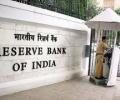
The rupee has not depreciated enough against other currencies.

The argument for a weaker rupee is substantial.

May touch 64/$ due to foreign flows slowing down

For India, struggling for competitiveness, the current rupee overvaluation in terms of real effective exchange rate is a genuine constraint.

The fact that the US recovery needs an elaborate defence suggests that things are far from certain.

Can we find fault with RBI for not intervening enough in the market? Actually no, say some experts. A correction in rupee was long overdue.

'It is time to allow the rupee to move towards its true value, as it is hurting Indian exports, investment and SMEs associated with export sectors that create jobs,' argues Pravakar Sahoo.

Economic recovery is well under way in some advanced economies.

A fall in the rupee could boost exports. But the flip side of the equation is that a weaker rupee could stoke some inflation

Infrastructure and inflation targeting are expected to be top priorities for the new Reserve Bank of India governor, says A V Rajwade.

A weaker rupee might stimulate Indian exports and nullify some of the effects of Chinese devaluation.

Mr Prabhu has a big challenge ahead in implementing trade reforms to regain the lost export momentum, says Jayanta Roy.

Data on the real value of the currency against other currencies tells a different story.

It would be a miracle indeed if we grow at 7/8 per cent a year over the current and next few years, says A V Rajwade

'...and defensive until the global macro headwinds turn more benign.'

'It has a natural inclination to foster as much competition among civilian politicians as possible.'

High fiscal deficits raise inflation which hits the lowest income and salaried classes.

If the REER is to be restored to its 2004-05 level, the rupee has to depreciate a lot, says V K
It is high time to manoeuvre the rupee more effectively and predictably, even as it has to be recognised that such tweaking of the rupee needs to be accompanied by reforms to the real sector and factor markets.

It is surprising that central bankers around the world have cautioned the US Federal Reserve against raising rates.

'The big elephant in the room is our misguided view about the rupee.' 'India is scared that if our currency appreciates, who will buy from us. But a breakout is inevitable.'

Rupee volatility could be dampened if it is steadily manoeuvered to levels consistent with inflation differentials, say Jaimini Bhagwati and Abheek Barua

Many things could play spoilsport for the Indian economy.

To the extent that monetary variables affect investment, the weather, thus, looks far less clement.
 © 2026 Rediff.com - Investor Information - Advertise with us - Disclaimer - Privacy Policy - Sitemap - Feedback - About us - Terms of use - Grievances