
10 Heroes of the 1965 War which ended on September 23 60 years ago.
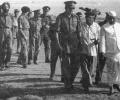
In what was perhaps the most critical meeting before full-scale war broke out, Shastri defined India's immediate war objectives to his defence minister, army, and air force chiefs: 'To defend against Pakistan's attempts to grab Kashmir by force and to make it abundantly clear that Pakistan would never be allowed to wrest Kashmir from India; To destroy the offensive power of Pakistan's armed forces...' A fascinating excerpt from Shiv Kunal Verma's must-read 1965: A Western Sunrise India's War With Pakistan.

'Both Abdul Hamid and the enemy tank place each other in their sights and shoot. Both shells hit their targets. There is a loud blast, fire and smoke.' 'Hamid doesn't get time to jump off. A deafening blast follows and then there is complete silence.' 'Abdul Hamid is dead. He has destroyed a total of seven enemy tanks, many more than what an armoured formation could take on.'

'He was a sentimental man, but his commitment to the Olive Green always came before anything else, including his family.' A fascinating excerpt from Rachna Bisht Rawat's Bipin: The Man Behind The Uniform.

'News is rife that Pakistan will attack the next day. They have no idea that this is where they will take on the might of 1 Armoured Division of Pakistan in a three-day bloody battle that will be remembered in military history as the Battle of Asal Uttar.' Rachna Bisht Rawat salutes the brave men turned the tide of the '65 war.
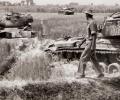
The competition for the worst or most perilous 10 years has always been between the 1960s and the 1980s, points out Shekhar Gupta.

'Captain Haneef-ud-din, pulling his sinewy body forward, crawled, rifle in hand, in the snow on 6 June 1999. He died on this craggy mountainside exactly two years after he had passed out of the IMA...'

'He destroyed many of our tanks, and finally, it was just the two of us left facing each other with our tanks just 200 m apart.' A tale of valour excerpted from Rachna Bisht Rawat's 1971: Charge Of The Gorkhas And Other Stories.
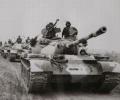
Why did Pakistan sign a cease-fire without acquiring Kashmir, which was the sole purpose of the 1965 War, asks Ahmad Faruqui.
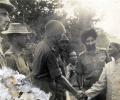
Lieutenant Colonel Desmond Hayde was awarded the Mahavir Chakra, the second highest honour in battle, for winning an epic battle in Pakistan. In a brilliant and gruesome assault, what he and his men achieved that September 50 years ago had never been seen before.
'Shastri told General Chaudhuri, 'I want to reach Lahore before they enter Kashmir'.' 'Today, many regard this initiative of Shastri as the first surgical strike.' A revealing excerpt from Dr Sandeep Shastri's Lal Bahadur Shastri: Politics And Beyond.

'We were firing at Patton tanks that were moving towards India.' 'Fighter aircraft are the biggest menace for tanks because they come at great speed, attack from a height and their rockets are lethal.' 'The Hunter travels at 400, 420 knots. One knot is 1.6 times a km, so it was at a speed of 700, 800 km/hr.' 'You come at great speed and when you see the tanks, you pull up because attacks are always done in a dive.' 'You go up to 3,000 to 4,000 feet and then dive on to the target and let off your rockets...'
 © 2026 Rediff.com - Investor Information - Advertise with us - Disclaimer - Privacy Policy - Sitemap - Feedback - About us - Terms of use - Grievances