
The 16th Finance Commission, led by Arvind Panagariya, has recommended maintaining the states' share in central taxes at 41% for the five-year period starting April 1, 2026. The government has accepted this recommendation, with Rs 1.4 lakh crore allocated to states for FY 2026-27 as Finance Commission Grants.

Reserve Bank Governor Sanjay Malhotra on Friday said the key policy rates will remain at low levels for a long period and may go down even further.

'We have seen that stablecoins lack the basic attributes of money, their advantages are neither unique nor unambiguous and their risks are all too real.'

The amount involved in banking system frauds surged to Rs 21,515 crore in the first half of FY26, up 30 per cent from the same period last year, even as the number of frauds fell 2.8 times to 5,092.

The government has extended the tenure of the 16th Finance Commission by one month till November 30. The 16th Finance Commission was constituted by the government on December 31, 2023, with former Niti Aayog vice-chairman Arvind Panagariya as its Chairman.

Reserve Bank of India (RBI) Governor Sanjay Malhotra, and Deputy Governors Poonam Gupta, T Rabi Sankar, Swaminathan J, and S C Murmu on Friday addressed issues during the post-policy media interaction.

Fraud reported by banks declined in 2024-2025 to 23,953 as compared to 36,060 in the previous year though the amount involved jumped to Rs 36,014 crore from Rs 12,230 crore.

'There are no additional benefits for banks and market participants to use CBDC...'
The Reserve Bank of India (RBI) is in no rush to launch the central bank digital currency (CBDC) nationwide, as its most promising use case - cross-border payments - depends on other countries rolling out their own CBDCs simultaneously for the system to work effectively. That said, the CBDC pilot is progressing well, with the user base in India expanding to about seven million, said RBI Deputy Governor T Rabi Sankar.

'Other sectors that manage the savings pools of Indians are giving tough competition to life insurance companies.'
Reserve Bank of India (RBI) Governor Sanjay Malhotra, with Deputy Governors Poonam Gupta, Swaminathan J, T Rabi Sankar, and M Rajeshwar Rao, responded to a range of queries in the post-policy interaction with the media

Finance Minister Nirmala Sitharaman on Tuesday asked fintech firms to focus on risk management at a time when criminals are using AI to mimic voices, clone identities and create lifelike videos to manipulate people.

Sanjay Malhotra on Wednesday took charge as the 26th Governor of the Reserve Bank of India. Malhotra, a career bureaucrat, arrived at the central bank's headquarter this morning, where he was welcomed by senior RBI staffers. The central bank confirmed Malhotra's appointment through a post on the microblogging site "X" and also shared a few pictures.
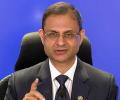
'We will be very, very proactive in providing whatever liquidity requirements are needed.'

'We never waste a crisis. There will be learning and the supervisory tools will get better with each episode.'
The government has invited applications for the post of deputy governor of the Reserve Bank of India (RBI) from interested candidates with at least 25 years of experience and below 60 years of age as on January 15, 2025. One of the deputy governors, Michael Patra's current term will end on 15 January. The last date of submission of applications is November 30, 2024.

Reserve Bank of India (RBI) Governor Shaktikanta Das said on Friday said the central bank has developed an innovative artificial intelligence and machine learning (AI/ML) based model MuleHunter.ai to address the growing issue of mule bank accounts that are often used for committing financial fraud. Developed by the Reserve Bank Innovation Hub, the new initiative is piloted with two public sector banks.
The recently launched retail central bank digital currency (CBDC) pilot has 50,000 users and 5,000 merchants, the RBI said on Wednesday. "We want the process to happen, but we want the process to happen gradually and slowly. "We are in no hurry to make something happen so quickly," Deputy Governor T Rabi Sankar said at the post-policy press conference in Mumbai.

There will be no charge for RuPay credit card use on Unified Payments Interface (UPI) for transactions up to Rs 2,000 in line with the RBI direction, a recent NPCI circular said. RuPay credit card has been operational for the last four years, and all major banks are enabled and are issuing incremental cards for both commercial and retail segments. "During credit card on-boarding on the apps, the device binding and UPI PIN setting process shall include and be construed as customer consent for credit card enablement for all types of transactions," the circular dated October 4 said.

Any currency design change must be approved by the RBI central board and the central government.
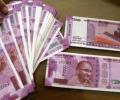
It is only after the government's nod that a particular design change come into effect.

'The last year's growth is a foretaste of things to come in the retail credit market.'

As the RBI moves ahead for the launch of the central bank digital currency (CBDC), Governor Shaktikanta Das on Wednesday marked out cyber security and digital frauds as the main challenges in the new system. Deputy Governor T Rabi Sankar said there are two types of CBDCs - wholesale and retail - and a lot of work has happened in the former while the latter was termed as a "complicated" aspect which will take time. The RBI had earlier this year announced that it has started work on the CBDC, in line with other major central banks of the world which are looking at a fiat digital currency.

India's inclusion in JP Morgan's bond index can channel billions of dollars into India. How will the government securities market handle it?

Reserve Bank of India governor Shaktikanta Das on Monday said payments through UPI (unified payment interface) have grown exponentially in the past 12 months with daily transactions crossing 36 crore, which is up 50 per cent from 24 crore in February 2022. In value terms, these transactions are worth Rs 6.27 lakh crore, registering a growth of 17 per cent from Rs 5.36 lakh crore in February 2022, the governor told reporters while launching the Digital Payments Awareness Week at the RBI headquarters in Mumbai this afternoon. He also said the overall monthly digital payment transactions crossed over Rs 1,000-crore-mark each month during the past three months.

"We will raise Rs 300 crore via bonds of two-, three- and five-year tenures. This will be our maiden bond issuance and is part of our effort to widen funding sources," says Vimal Bhandari, executive vice-chairman and chief executive officer (CEO), Arka Fincap. The firm, a subsidiary of Kirloskar Oil, is only five years old and small (assets of around Rs 5,000 crore with an "AA" rating), but the response to this float will be closely watched: It would be the first by a non-banking finance company (NBFC) after Mint Road upped the risk weights on bank exposures to them by 25 percentage points. The move by the Reserve Bank of India (RBI) has caught NBFCs off guard even though the issue had been flagged by Governor Shaktikanta Das with their corner-room occupants (and that of banks) in July and August 2023 - on consumer credit and the dependency on bank borrowings.

Former RBI governor D Subbarao on Monday said there is a strong motivation for the central bank to launch a digital currency and cash is going to coexist with the new-age currency. Addressing an event virtually organised by economic think tank NCAER, Subbarao further said cybersecurity is also one of the downside risks of the Central Bank Digital Currency (CBDC). "There is a strong motivation for the RBI to launch CBDC... Cash is going to coexist with CBDC," he said.
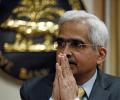
RBI Governor Shaktikanta Das on Tuesday asked private sector banks to ensure continuity in the provision of various financial services, including credit facilities to individuals and businesses, in the face of challenges brought on by the pandemic. Earlier this month, the governor had held a similar meeting with MD and CEOs of public sector banks. During the meeting with the MD and CEOs of select private sector banks, Das also impressed upon the banks to quickly and swiftly implement the measures announced by the RBI on May 5, 2021, in right earnest.
Days after the government said the Reserve Bank will introduce a digital currency in 2022-23, Governor Shaktikanta Das on Thursday said the central bank does not want to rush and is carefully examining all aspects before introduction of the Central Bank Digital Currency (CBDC). He, however, declined to give any timeline for the launch of the CBDC. In her Budget 2022-23 speech, Finance Minister Nirmala Sitharaman had announced that the RBI will introduce a digital currency in the next financial year beginning April 2022 to boost the digital economy and for more efficient currency management.

The Reserve Bank is working with the government to thrash out a payment settlement solution for Indo-Russian trade, which is hit by the economic sanctions imposed on Moscow after it invaded Ukraine, but asserted that any such solution will be 'sensitive' to the prevailing economic blockade, the central bank said. RBI Governor Shaktikanta Das was quick to add that it is a matter that the government has to deal with first, and as far as the central bank is concerned, obviously, we will not do anything which goes against the sanctions. RBI Deputy Governor T Rabi Sankar said since the Ukraine war has disrupted trade and payments, we are discussing with all stakeholders, and at the same time, we are sensitive to the economic sanctions.
In August, the central bank had announced that it will set up the Reserve Bank Innovation Hub (RBIH) to promote innovation across the financial sector by leveraging on technology and creating an environment that would facilitate and foster innovation.

Recently, Slice, a payment app, acquired a 5 per cent stake in North East Small Finance (NESF) for $3.42 million - the first such deal by a fintech in a small finance bank. Slice (valued at $1.5 billion, and backed by Tiger Global, Blume Ventures and Axis Bank) will technically get a toehold in a scheduled commercial bank if NESF were to get a licence to morph into one down the line Such a transition is well within the banking regulator's declared framework. The transaction has to be seen in a larger context.

Chief Economic Adviser V Anantha Nageswaran on Thursday said cryptocurrencies are akin to 'a world of Caribbean pirates' in the absence of a centralised regulatory authority and are yet to pass the test of a fiat currency. He said that the government is pursuing a 'high-wire balancing act' to ensure that the gains in growth, inflation, and rupee stability of the last four years are not frittered away. He said the recent development in Terra-Luna cryptocurrency, which witnessed a massive meltdown last month, is a 'very important cautionary tale'.

Making a strong case for banning cryptocurrencies, Reserve Bank Deputy Governor T Rabi Sankar on Monday said they are even worse than ponzi schemes and threaten the financial sovereignty of a country. Observing that crypto-technology is underpinned by a philosophy to evade government controls, he said they have been specifically developed to bypass the regulated financial system. More substantially, he added, cryptocurrencies can wreck the currency system, monetary authority, banking system, and in general the government's ability to control the economy.

The Reserve Bank is working on a phased implementation strategy for its own digital currency and is in the process of launching it in wholesale and retail segments in the near future, RBI Deputy Governor T Rabi Sankar said on Thursday. He said the idea of Central Bank Digital Currency (CBDC) is ripe, and many central banks in the world are working towards it. Sankar further said CBDC is needed to protect consumers from the "frightening level of volatility" seen in some of the virtual currencies which have no sovereign backing.

Banks have raised concerns over the new international trade settlement in rupee, fearing that facilitation of such a mechanism could result in them facing the ire of economic sanctions by the West, people aware of the matter said. Large banks with overseas operations have sought clarity and assurance from the Reserve Bank of India (RBI) that they will not be targeted with sanctions for facilitating rupee trade with a sanction-hit country such as Russia. The present payment mechanism is a shift from earlier such arrangements, like the one with sanction-hit Iran, which involved banks facilitating settlement of international trade that did not have business in the sanctioned nation.
They straddle many different (non-financial) lines of business with sometimes opaque overarching governance structures.

Hinting at further relaxation in the capital account convertibility norms, RBI Deputy Governor T Rabi Sankar on Thursday said the country is on the cusp of some fundamental shifts with regard to currency management. India has come a long way in achieving increasing levels of convertibility on the capital account and has broadly achieved the desired outcome for the policy choices in terms of achieving a stable composition of foreign capital inflow, Sankar said while addressing the Foreign Exchange Dealers' Association of India's (FEDAI) annual day meeting. Convertibility refers to the ability to convert domestic currency into foreign currencies and vice versa to make payments for balance of payments transactions.

The Reserve Bank of India's (RBI's) recent decision to allow credit cards for payments through the Unified Payments Interface (UPI) is likely to attract a merchant discount rate (MDR), said a top payment industry source. For smaller merchants, a subsidy for MDR could be provided. "With credit card-UPI linkage, UPI will not only be a payment instrument but also a lending platform. "How can banks lend without a commercial model? Also, the government has said MDR will be zero for payment products but not for lending products," the source said, indicating the MDR regime for credit card-linked UPI payments.
If the CBDCs don't offer interest, why will people shift from cash to CBDCs?, asks Tamal Bandyopadhyay.
 © 2026 Rediff.com - Investor Information - Advertise with us - Disclaimer - Privacy Policy - Sitemap - Feedback - About us - Terms of use - Grievances