

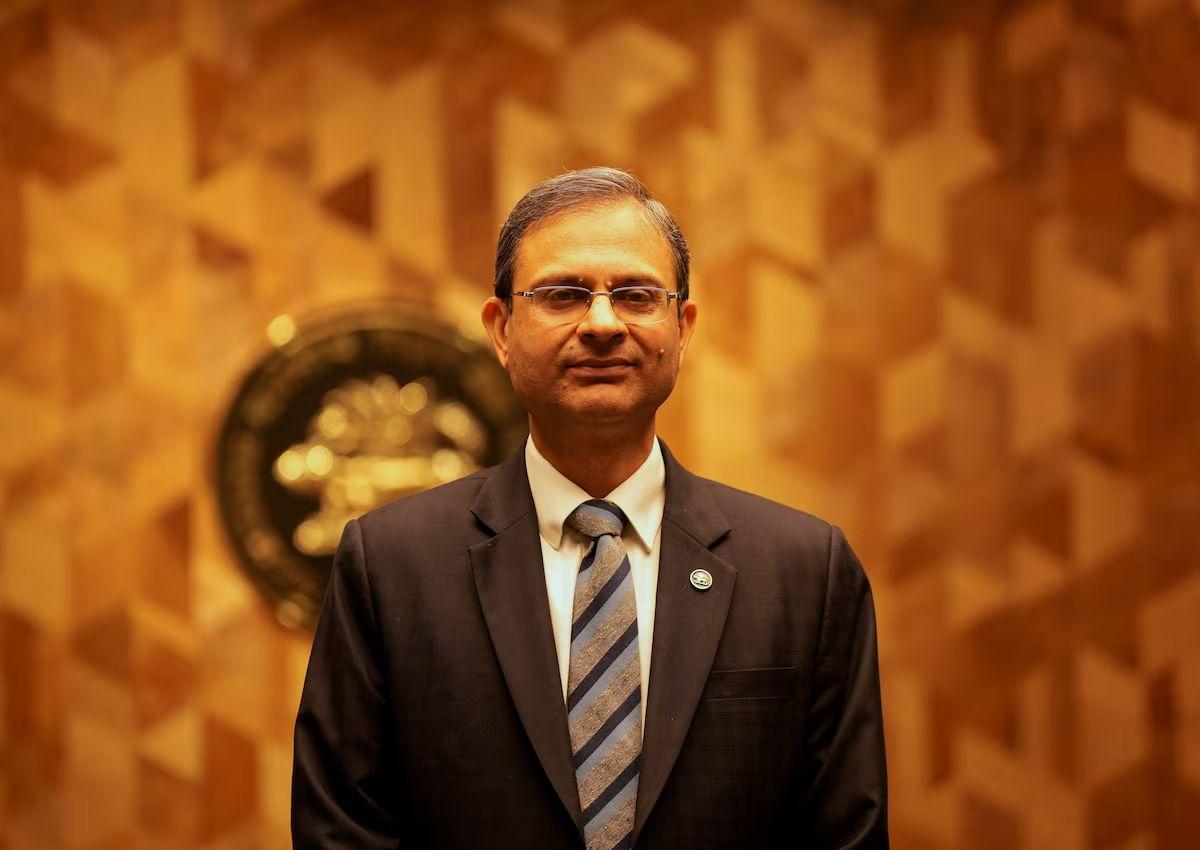
Reserve Bank of India (RBI) Governor Sanjay Malhotra, and Deputy Governors Poonam Gupta, T Rabi Sankar, Swaminathan J, and S C Murmu on Friday addressed issues during the post-policy media interaction.
Is there more room for the Monetary Policy Committee (MPC) to support growth?
Malhotra: On whether there is additional policy space, we are at “neutral” now.
As I said in my statement, inflation is very benign.
Excluding food, which has been volatile, the core inflation rate has stayed at 3-3.5 per cent over the last two years.
If you exclude gold and silver, our expectation is that inflation will remain very benign.
Discussing whether this opens the door for further rate cuts would be speculative.
For me, what matters now is ensuring monetary-policy transmission after the cut of 25 basis points.
With prices expected to stay benign, it is important that the benefits first flow to the real economy.
We will then evaluate how inflation and growth-inflation dynamics evolve, and take decisions policy by policy.
What is the RBI’s approach on the exchange rate?
Malhotra: On the rupee, our stated policy has been to let the market determine the rate.
We do not target any levels or bands. In the long run, markets are efficient.
In February, the rupee had weakened to nearly 88 against the dollar, but within three months it strengthened to below 84.
Such fluctuations and volatility can and do occur.
Our role is to curb abnormal or excessive volatility, and that remains our approach.
As I noted in my statement, the external sector is strong.
We have adequate reserves, the current account deficit is manageable at around 1 per cent, and with strong fundamentals, we expect healthy capital inflows.
How do dollar-rupee swaps help contain rupee volatility? It seems more like a liquidity tool.
Malhotra: Yes, they are purely a liquidity measure and are not intended to support the rupee.
We allow the rupee to find its appropriate value and focus only on ensuring orderly movements.
What would be your message to banks on credit growth?
Malhotra: We do not target any specific growth rate for the economy or for credit.
These trends depend primarily on the structure of the economy.
Monetary policy can influence conditions in the short run, but it cannot determine long-term growth or credit expansion.
Could you elaborate why you expect growth to soften?
Malhotra: Our assessment is based on the high-frequency indicators we track.
These suggest that the growth rate of about 8 per cent in the first half will not be sustained at the same level.
We have shared our projections for this quarter and for the period ahead.
Sector-wise details can be provided separately, but some sectors may not perform as strongly as they did earlier.
Gupta: When we talk about softening, it is relative to the strong growth seen recently.
Sectorally, the outlook remains broadly resilient.
Malhotra: We had revised downward sectoral growth rates because of higher tariffs.
Sectors affected by tariffs, such as textile, leather, and, to some extent, shrimp, are likely to see a small impact.
You have not said whether there is any space to support growth, in this policy. From a real-rate perspective, do you see any space? And was the absence of a United States trade deal (so far) implicitly considered in your decision?
Malhotra: No, that was not a consideration.
As I mentioned, India is largely a domestic demand-driven economy, and the impact of higher tariffs has been factored into our projections.
The decision is not driven by tariffs alone.
Regarding policy space, this will remain data-driven, whether there is further scope and whether there is a need will depend on incoming data.
What I can say is that we expect inflation to remain benign.
If this continues, policy rates are likely to be low rather than high.
With the inflation rate expected to stay benign, we anticipate low policy repo rates.
Do you feel Friday’s rate cut will translate into a lowering of deposit rates?
Malhotra: We have to be looking at the real interest rates where inflation is so low.
Even though the nominal interest rates may seem to be low, the real interest rates today are quite high.
We expect deposit rates to moderate to some extent.
Is there any calculation done on the impact of inflation in case the currency falls by Re 1? What would that be?
Malhotra: Five per cent depreciation leads to 35 basis points of inflation and helps exports and gross domestic product growth by about 25 basis points.











 © 2026