
The finance ministry is not only keen to split the roles of CMD, but also wants to appoint them for a fixed tenure of five years.

The government plans to bring down its stake to 26 per cent in these two banks, which are yet to be identified. This may not come in the way of getting investors for these banks, provided the government is willing to step back rather than run them the way it had been doing for over five decades since these banks were nationalised, points out Tamal Bandyopadhyay.

Credit cards appear to have found favour with public sector banks, which had, so far, been reluctant in expanding their unsecured loan portfolios aggressively.


The gap between credit and deposit growth in the banking system is expected to decline sharply to 80 basis points (bps) in the next financial year from an average of 386 bps over the FY22-Q3FY25 period, according to rating agency India Ratings. This would be against the backdrop of sharp moderation in the incremental loan deposit ratio (LDR) of the Indian banking system to 85 per cent in February 2025 from 117-118 per cent in the same month of 2024.

A number of public sector banks will have to stock up on core capital, if the Reserve Bank of India decides to ask banks to leave out hybrid instruments while computing Tier-I capital adequacy, as indicated by RBI last week.

Net profit of 19 listed banks is likely to decline by 4 per cent year-on-year (Y-o-Y) for the quarter ended March (Q4FY25) mainly due to pressure on net interest margins (NIM) as a result of rate cut by the Reserve Bank of India (RBI), according to analysts' estimates. Additionally, loan growth is expected to further slowdown amid low demand in certain secured products, stress in the unsecured segment, and a high cost to deposit (CD) ratio across the system.

A plea that the banking regulator's stress should be on the strategic role of boards and an increase in the remuneration of independent directors were among the issues put forward to the Reserve Bank of India's (RBI's) top brass in its interaction with the full boards of state-run banks held on Monday. The meeting, the first leg of first-of-its-kind interactions with the boards of state-run banks, will now be followed by those of private banks in Mumbai on May 29. The RBI's press release, issued late on Monday, did not refer to the specific points that found mention in the deliberations, but top sources told Business Standard the twin concerns were taken up in the open-house interaction with the banking regulator's brass.

Normal banking operations like cheque clearance in public sector banks across the country are likely to be hit on Wednesday as employees have decided to go on one-day nation-wide strike to press for wage revision.

Capital infusion of $30 bn over two years needed amid high dividend payouts and impairment ratios.
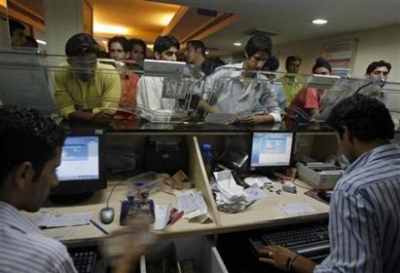
Quarterly results of many of these banks show significant losses.
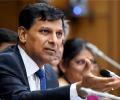
Rajan said RBI should pay as much dividend as possible to the government, which over the past two years has run into billions of dollars
A major reshuffle in the top brass of nationalised banks is on the cards, with the finance ministry's banking division scheduled to hold interviews for the posts of five chairpersons on January 24.
While the environment is not conducive, most of the concerns are factored in and valuations have entered an attractive zone.
The finance ministry is expected to announce a performance-based incentive scheme for bank chairmen on Tuesday.
With almost 25,000 seats up for the taking the Common Written Exam for Probationary Officers is a golden opportunity for candidates aspiring for jobs in India's public sector banks.
With almost 25,000 seats up for the taking the Common Written Exam for Probationary Officers is a golden opportunity for candidates aspiring for jobs in India's public sector banks.

Out of the 12 executive directors announced on Wednesday, five will fill vacancies with immediate effect, while the remaining will be promoted as and when posts are vacant.
Crisil Ltd on Tuesday said the Centre's sops to Food Corporation of India including cut in interest rate on bank loans to FCI by 1.5%, will negatively impact the bottom line of public sector banks pulling down pretax-profit by 4.5% in the near term.

The need to allow government shareholding in public sector banks to come down below 51 per cent

Typically, those from the IIMs, Xavier Labour Relations Institute and Indian School of Business joined at Scale III, but graduates from other B-schools were recruited in scale II.

A trends study conducted by India's Financial Intelligence Unit (FIU) has expressed suspicion that cryptocurrency is being used across the country in serious criminal acts like terrorist financing, fuelling secessionist activities, cybercrime, narcotics trafficking, illegal betting and gambling. The report, which was based on suspicious transaction reports and operational analysis, shared these trends and credible intelligence with law enforcement agencies.

High frequency indicators, like vehicles sales, air traffic, steel consumption and GST E-way bills, point towards a sequential pickup in momentum of economic activity during the second half of the fiscal 2024-25 and sustain moving forward, RBI Bulletin said on Wednesday. However, a strong dollar, driven by US economic resilience and trade policy pivots, could exacerbate capital outflows from emerging economies, push risk premiums higher, and intensify external vulnerabilities, said an article on 'State of the Economy' published in RBI's February bulletin.

'The snakes and ladders game will continue till the consolidation process is complete simply because we don't know how bad the scene is, with some of the banks being merged,' says Tamal Bandyopadhyay.

Factors like dedicated recovery teams, centralised follow-up on bad loan accounts and resolutions via NCLT are driving the trend

Private sector banks in India are taking the lead in the adoption of Artificial Intelligence (AI) in areas like fraud detection, customer segmentation, and chat automation, according to a Reserve Bank of India (RBI) study. The asset size and capital adequacy ratio are influencing the rate of adoption.
.jpg)
Privatising public sector companies would have encountered significant opposition from their managers as well as from strong unions.

Lack of decisiveness and courage to deal with PSBs may turn out be the biggest impediment to the Modi government's economic initiatives, says Debashis Basu.

As many as 10 public sector banks could be out of the infusion plan because of Sebi's minimum public shareholding norms.

Former RBI governors Urjit Patel and Raghuram Rajan have also expressed worry about the Mudra scheme, particularly government's target-setting practice and the rising bad loans.
.jpg)
At the retreat, PSBs had suggested the government cut its stake in these entities to less than 51 per cent over a period of time and empower the boards of individual banks.
The banking sector's credibility is on thin ice. Unless the government takes strict steps, things could get worse.

The number of digital financial frauds rose more than four times in FY24 year-on-year to comprise 80 per cent of all financial frauds.
The appointments in 2009-10 would include the CMDs of Syndicate Bank, Bank of India and United Bank of India, sources said. These appointments will be there because of vacancy arising on account of superannuation of the existing chiefs, sources said.

The Union Finance Ministry on Tuesday said that aggregate business of public sector banks (PSBs) has shown strong growth of 11 per cent in the first half of the financial year 2024-25 (H1FY25) to touch Rs 236 trillion. The operating and net profit were also robust. At Rs 1.5 trillion, operating profit grew by 14.4 per cent year-on-year (Y-o-Y) while the net profit saw an impressive 25.6 per cent jump at Rs 85,520 crore in the first half of FY25.

Chief Election Commissioner (CEC) Rajiv Kumar, set to retire next month, plans to spend several months in solitude in the Himalayas. He also expressed a desire to teach underprivileged children, recalling his own humble beginnings. Kumar's tenure as CEC saw him oversee landmark elections, including the 16th Presidential and Vice-Presidential elections in 2022 and assembly elections in 11 states.

Though most experts remain bullish on the banking space, they suggest investors buy only those banks whose NPAs are at a manageable level of 3% to 4% and there is credit growth or earnings visibility.

Privately, many bankers admit their immediate goal is not growth but slowing the erosion of Casa deposits, reveals Tamal Bandyopadhyay.

'We plan to launch new initiatives, including cash flow-based lending, to ensure borrowers are not burdened and can access funds more quickly.'
 © 2026 Rediff.com - Investor Information - Advertise with us - Disclaimer - Privacy Policy - Sitemap - Feedback - About us - Terms of use - Grievances