This is a terrible situation for a growing economy to be in, and the central bank would be expected to act to correct the situation.

The size of the hole in today's banking crisis appears to be roughly 10 per cent of GDP.

If oil prices rise, the government would face an uncomfortable political decision.
The non-oil, non-finance sector of the economy is under severe stress.

There is ample fuel in the computer revolution to do many useful things.

The demand for OROP has been projected as an unambiguous issue but a good policy argument must have a sound economic element.

The minister echoed the consistent message of the Indian delegation as well as other developing countries that the Intended Nationally Determined Contributions of all countries should include elements of adaptation, finance, technology and capacity building.

The total earnings in Q1 rose 14.54 per cent, while working expenses grew at a measly 4.22 per cent.

Athens has pushed two reform packages through parliament

Firms that should borrow abroad do not do so enough, and those that should not borrow abroad do.

'By demonetising higher denominations of currency notes, we have taken out the vehicle for corruption.' 'But the motive is still there.'

Greek Finance Minister Yanis Varoufakis announced his resignation on Monday, a day after Greeks delivered a resounding 'No' to the conditions of a rescue package.

A K Bhattacharya digs into the yet-to-be-public report on ways to curb black money and finds out that Modi's next moves could include action on dabba trading, hawala, and education.

The Group of Ministers on Telangana met for the first time on Friday with an assurance that the concerns of Andhra Pradesh would be addressed with "fairness and objectivity".

India's economy is not like Western ones, and thus needs restrained fiscal policy even during a recession, says Ajay Shah.

The government has at last commenced important structural reforms.

What is required from government is intellectual framework.
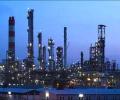
These refineries, commissioned mostly in the 1950s and 1960s during India's early industrialisation push, are inefficient and costly to maintain compared to their modern counterparts on the coast mainly operated by private companies.
Smart cities must be very well equipped with technology and security systems alike.

This was even as the country's economy grew by 7.3%.
Poor predictability, credibility and effectiveness of fiscal performance have been key reasons for successive governments failing to deliver on their promises.
According to the draft, in the northeastern states the threshold is at Rs 500,000.

The RBI cited lower-than-expected inflation, weak crude prices and weak demand, as well as the government's commitment to sticking to a fiscal deficit target as reasons.

Crisis of growth is worsened by the challenging global environment and policy missteps. Returning to 9 per cent growth trajectory will be a tall order.

We are in this mess as the machinery of the government in a market economy is broken. We need technically sound banking regulation, so that capital is not misallocated, and the landscape does not get littered with zombie firms kept alive through evergreening, says Ajay Shah.

Agricultural incomes can be taxed without hurting farmers, as a substantial section - the small and marginal ones - will remain outside the tax net simply because their incomes are likely to be below the basic exemption limit of Rs 250,000 per annum that is extended to all taxpayers in India, finds out Ishan Bakshi.

World trade has been growing slower than world GDP since 2012.
Based on the evidence at hand, Modi's goal of scripting a broader, lasting upturn appears some way off, says Rajesh Kumar Singh.
Higher crude oil prices also translate into better corporate earnings for India's top companies
The RBI expects change, presumably commencing in the next Budget, but must hold its current view until this actually happens.

The recent agreement between the RBI and the Centre marks a significant step forward toward financial inclusion.
The long-term growth perspective or potential for India is one of the highest in the Asia Pacific region.

The fiscal deficit for 2015-16 may eventually come down to the targeted level of 3.9 per cent of GDP.

Politically, it will not be easy for Modi to take hard decisions such as raising fuel prices in the first budget, given the risk of higher inflation.
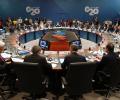
For India, the talks will work as another opportunity to sharpen its positions ahead of the formal UN negotiations.

Athens bowed to demands to phase out tax breaks for its islands.

The Union government has no 'Buy India' policy, but has a 'Buy Air India' policy.
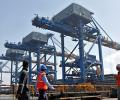
Special Economic Zones are likely to be central to realising Prime Minister Narendra Modi's ambitious Make in India agenda.

In 2012-13, the Centre managed to cut fiscal deficit to 4.9% of GDP, lower than the Budget revised estimates of 5.2%

The Niti Aayog has finalised the first draft of a new national energy policy.
 © 2026 Rediff.com - Investor Information - Advertise with us - Disclaimer - Privacy Policy - Sitemap - Feedback - About us - Terms of use - Grievances