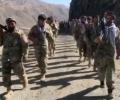
The Taliban on Wednesday said that the negotiations with the leaders of the Panjshir province have gone in vain as it is the only province that is still out of the Taliban's reach in the country.
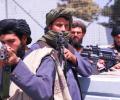
This comes a few days after reports emerged that Amrullah Saleh, who was residing at the Panjshir, has fled to Tajikistan.

Taliban have imposed a blockade in Afghanistan's Panjshir province, denying residents food and carrying out some extrajudicial killings, The Washington Post reported.

The Taliban is highly pragmatic and would regard it wasteful to resume military offensive to capture Panjshir. The Taliban's preference, historically, has been to keep the military option as the last resort, explains Ambassador M K Bhadrakumar

Ahmad Massoud had called for a 'national uprising' against the Taliban.
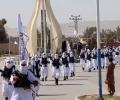
Hundreds of 'mujahideen' are heading towards the state of Panjshir to control the province, Sputnik reported citing a news agency.

Reports coming from the ground confirm that an intense battle between Taliban and opposition forces to control the Panjshir Valley north of Kabul, the last Afghan province holding out against the group.
Sources stated that a discussion is likely on the changed geopolitical situation in wake of the Taliban taking over Afghanistan and the drawdown of the US forces from the region.
The National Resistance Front of Afghanistan has denied Taliban's claim and said that the resistance forces are present at all strategic positions across the valley to continue the fight.
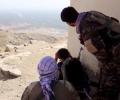
Deputy head of the Taliban's cultural affairs commission Ahmadullah Wasiq said that fighting between Taliban fighters and the Resistance Front was ongoing in central Panjshir, TOLO News reported on Sunday.
"The war in Afghanistan is over, now we will work together to rebuild this country," said Taliban spokesperson Zabiullah Mujahid at a press conference in Kabul.
'Even during the worst days during the 1990s, India was dealing with the Taliban.'

No prizes for guessing what the BJP's election campaign is going to be, and who will provide important inputs for it.

Imran Khan knows Pakistan is holding a strong hand and doesn't have to flaunt it while claiming victory. But Pakistan has learned from the experience of the 1990s -- high risk of going out on a limb, asserts Ambassador M K Bhadrakumar.
Taking part in the first meeting of Foreign Ministers of the neighbouring countries on Afghanistan, Foreign Minister Wang Yi said China will provide Afghanistan with 200 million yuan ($31 million) worth of grains, winter supplies, vaccines and medicines as per its requirements, official media in Beijing reported.

The Taliban have the ISIS in its crosshairs. The Taliban has shown the skill to assimilate extremist elements if they are reconcilable as well as the ruthlessness to eliminate troublemakers, observes Ambassador M K Bhadrakumar
A closure of the Indian mission in Kabul will be a Himalayan blunder at this historic juncture when the wheels of diplomacy and politics are set to accelerate in Afghanistan, argues Ambassador M K Bhadrakumar

'It was always anticipated that the return of the Taliban would embolden armed Islamists including anti-India groups like the Lashkar and Jaish.'

At least 250 people have died amid massive avalanches and flooding in Afghanistan.

The world's attention is on the new Taliban and the imminent announcement of an inclusive government in Kabul, observes Ambassador M K Bhadrakumar
Remember the US withdrawal agreement was signed in February 2020. In the intervening period, a proper evacuation plan ought to have been in place. It was not. Consequently, tens of thousands of Afghans who had worked as interpreters, drivers, suppliers of goods and services, etc, face brutal retribution from the Taliban, Virendra Kapoor points out.
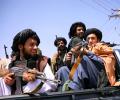
India is worried about Pakistan getting the Taliban to ignite trouble in Kashmir, observes Ramesh Menon.
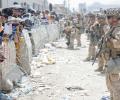
Taliban failed to honour Doha accord, never renounced Al-Qaeda: US general Mark Milley

'Whatever comes in the minds of the Pakistani generals and Pakistan military, they just go for it.' 'They do not care about the consequences for their country or the consequences to the people of Pakistan.'

'It was a mission undertaken in darkness in every sense -- literally, because Afghanistan had no electricity at that time; and, metaphorically because Delhi historically dealt only with the Pashtuns of Afghanistan and the foreign ministry's vast archives had nothing to offer on the culture and politics of the northern tribes in the Hindu Kush.'
 © 2026 Rediff.com - Investor Information - Advertise with us - Disclaimer - Privacy Policy - Sitemap - Feedback - About us - Terms of use - Grievances