
Diplomats agree that amid stormy relations with China and Pakistan, Modi has posted impressive foreign policy successes, notes Aditi Phadnis.

'The biggest lacuna in this agreement is it is called 'full civil nuclear cooperation agreement.' Actually, it is anything but full.'

Obama's decision to visit India must be a result of his judgement that Modi is a man of action, feels Ambassador T P Sreenivasan.

Ashley J Tellis, a leading authority on Indo-US relations, tells Archis Mohan in an emailed interview that it is time Washington and New Delhi agreed on the contours of their 'strategic partnership', and that India's elite could learn from Prime Minister Narendra Modi in how he has put India's interests first and his own sentiments about the Americans second.
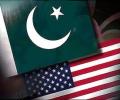
US Assistant Secretary of State for South and Central Asia Nisha Desai Biswal believes the India-US nuclear deal is not in limbo and it is for India and Pakistan to set the pace for conversations to resolve their issues. Rediff.com's Aziz Haniffa reports from Washington, DC.

'Modi's promise of change during the election campaign was on the domestic front, but his first year in office focused on foreign policy beyond all expectations,' says Ambassador T P Sreenivasan.

'Devyani -- she is a public servant and her personal life has already received far too much attention -- and her ambitious father now need to retreat to the background so that wiser diplomatic heads restore sanity to India-US relations as India prepares for parliamentary elections,' says Ambassador K C Singh.

'Just how strong were the ties between the world's largest and oldest democracies that an incident involving a diplomat and a maid led to anger threatening the relationship itself? Or had the relationship been weakening in the past few years, masked by the empty symbolism of State dinners, asks Devesh Kapur.

PM Modi seems to be gradually ending India's strategic ambiguity
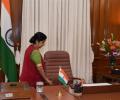
Sushma Swaraj, like Clinton, has a strong political base in her own party and is likely to have her imprint on foreign policy, says Ambassador T P Sreenivasan.

The city readies itself for the biggest economic, political and social event of the year
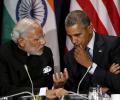
'Big countries do not agree on every set of issues.' 'Look, one of the differences in the relationship is that when we do not agree, we are sitting down and talking to each other.'

'Modi's investment in the relationship with Washington is the biggest deliverable of this visit. He means business and that's fantastic!'
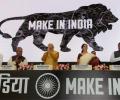
'India is going to maintain its ties to China, India is going to develop a strong relationship with the United States. It means that India is going to have the flexibility to pick and choose its friends.' 'That's traditional Indian foreign policy, and it's smart.' Former US ambassador to India Frank Wisner, one of America's sharpest minds on South Asia, tells Aziz Haniffa/Rediff.com what Washington can expect from Narendra Modi's visit.

Anti-nuclear activist S P Udayakumar, who has been called a threat to the economic security of India by the Intelligence Bureau, speaks to A Ganesh Nadar.

'The real test will be in defence-related deals, for instance the Javelin anti-tank missile: Is the US willing to co-develop something with India, on terms that will support the 'Make in India' initiative? Is there defence technology transfer? Or will it dump old junk on India?' asks Rajeev Srinivasan.
 © 2026 Rediff.com - Investor Information - Advertise with us - Disclaimer - Privacy Policy - Sitemap - Feedback - About us - Terms of use - Grievances