
An improvement in political relations, anchored in a restoration of peace and tranquillity at the border, could open up opportunities for expanded economic and commercial relations between them, suggests former foreign secretary Ambassador Shyam Saran.

The banking sector emerged as an outlier when the rest of India Inc witnessed a slowdown in earnings in FY23. The combined net profit of listed public and private sector banks was up 39.4 per cent year-on-year (YoY) last financial year and their share in India's gross value added (GVA) or gross domestic product (GDP) at factor cost rose to a record high of nearly 1 per cent up, from 0.8 per cent a year ago. Listed banks' combined net profit grew to Rs 2.36 trillion in FY23, from Rs 1.69 trillion a year ago. In comparison, India GVA at current prices was up 15.2 per cent YoY at Rs 247 trillion in FY23; it was around Rs 214 trillion a year ago.

The Reserve Bank has found gaps in banks' corporate governance despite issuing guidelines on the matter, Governor Shaktikanta Das said on Monday. Addressing directors of bank boards, Das said such gaps, which have been mitigated, could have caused "some degree of volatility". He also hit out strongly against "smart accounting" to conceal stress and bloat financial performance.

State Bank of India's earnings growth may turn lacklustre in the near-term, warn analysts. This, they said, could be due to margin compression and likely lower fee income over the next one year. "While the cost of deposits is repricing sharply across the system, there will be relatively lower yield expansion going ahead as most of the back-book has been repriced and there is a high competitive pressure on yields.

According to the Central Bureau of Investigation, Gutte is one of the directors of Gangakhed Sugar and Energy Limited.

Scheduled commercial banks have written off loans amounting to over Rs 10.09 lakh crore in the last five financial years and the process of recovery of dues from the borrowers continues, Union Finance Minister Nirmala Sitharaman informed the Lok Sabha on Monday.

'It is nice that the banking system is in good shape.' 'It is a little early to call it too good because I think it was too bad in the past.'

Instead of being guided only by returns, investors should also factor in the risks of lending on these platforms.
Benefitting from the economic rebound, banks are expected to report a healthy bottom-line and asset quality profile in the quarter ended March 2023 (Q4FY23). The net profit of listed commercial banks is projected to grow by an average 43.6 per cent year-on-year (YoY) in Q4FY23 amid better net interest margins (NIMs) and declining credit costs. This is based on a combined assessment of analyst estimates for 17 banks on Bloomberg database.

The plan was to expand further, add more branches and also eventually become the third bank in India to start a wholly owned subsidiary after Singapore's DBS Bank and State Bank of Mauritius, but those plans never materialised due to lack of scale and rising non-performing assets in the country.

The country's largest lender SBI on Friday reported a 41 per cent surge in standalone net profit at Rs 9,114 crore for the fourth quarter ended March 2022, helped by decline in bad loans. State Bank of India (SBI) had registered a profit of Rs 6,451 crore during January-March period of 2020-21, the lender said in a regulatory filing. Total income of the bank during the March quarter increased marginally to Rs 82,613 crore, from Rs 81,327 crore in the same period of the previous fiscal.

A strong business update for the April-June quarter of the 2023-24 financial year Q1FY24 has led to a big jump of over 7 per cent in the share price of Bajaj Finance on Tuesday (July 4). The non-banking financial company's (NBFC's) new loan book grew 34 per cent with 9.9 million new loans booked in Q1FY24 from 7.2 million loans booked in Q1FY23. The company's total customer franchise rose to 72.98 million (as on June 30, 2023), compared to 60.30 million year-on-year (YoY) with the highest-ever quarterly increase of 3.84 million in Q1FY24. Assets under management (AUM) grew by 32 per cent to about Rs. 270,050 crore in Q1FY24 from Rs. 204,018 crore in Q1FY23.
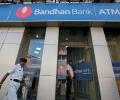
Bandhan Bank has declared disappointing results for the first quarter of the 2023-24 financial year (Q1FY24). While the market has been braced for known issues around microfinance exposures in West Bengal and Assam, there is higher stress in the portfolio. This means higher credit costs and poorer asset quality, leading to target downgrades by analysts.
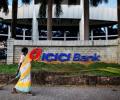
ICICI Bank on Saturday reported 24.7 per cent rise in consolidated net profit at Rs 6,092 crore for September quarter 2021-22. The private sector lender had posted a net profit of Rs 4,882 crore in the same quarter of the previous fiscal year. Total income however grew marginally to Rs 39,484.50 crore in the quarter from Rs 39,289.60 crore in the same period of 2020-21, ICICI Bank said in a regulatory filing.

Both Jet Airways and Go First have met with a similar fate of landing up in insolvency, albeit for different reasons. Whether Go First will be able to avoid the sharp erosion in value like in the case of Jet, experts say, will depend on how quickly it is able to restart operations and retain its slots at airports. Go First, owned by the Wadia group, filed for voluntary corporate insolvency resolution on May 2 due to inadequate capacity utilisation that led to a cash crunch.

'A fair bit should be allocated towards fixed income.'

Axis Bank's results for the fourth quarter of the 2022-23 financial year (Q4FY23) were skewed due to large one-off charges related to its acquisition of Citi's retail business. Axis reported a loss of Rs 5,730 crore on account of exceptional items of Rs 12,350 crore (net of tax) towards Citi's acquisition, policy harmonisation etc. Excluding this one-off, the adjusted net profit or profit after tax (PAT) would be Rs 6,630 crore, up 61 per cent year-on-year (YoY).
Given the uncertain macroeconomic conditions, most brokerages have turned slightly cautious on the pace of growth in State Bank of India's (SBI's) earnings going ahead. While they don't see any significant risk arising for now, its sheer balance sheet size and systematic importance has nudged them to cut earnings estimates for fiscal year 2023-24 (FY24) and 2024-25 (FY25) up to 5 per cent. India's largest state-owned bank, on Thursday, reported standalone net profit of Rs 16,694.51 crore for Q4FY23.

We must stop stigmatising business failures. Particularly when startups are mushrooming all around, the financial system, backed by the RBI and the government, can explore ways of extending support to restart the journey of a failed entrepreneur by finance as well as counselling, recommends Tamal Bandyopadhyay.

The CBI has booked Kanpur-based Rotomac Global and its directors for Rs 750.54 crore for alleged fraud in Indian Overseas Bank, officials said. The company, which was in the business of writing instruments, has a total outstanding of Rs 2,919 crore against a consortium of seven banks led by Bank of India in which Indian Overseas Bank has an exposure of 23 per cent. The agency has booked the company and its Directors - Sadhna Kothari and Rahul Kothari - under IPC sections related to criminal conspiracy (120-B) and cheating (420), besides various provisions of the Prevention of Corruption Act.
HDFC Bank Q1FY24 results analysis: Shares of HDFC Bank, the world's seventh largest financial entity, have advanced 2 per cent in two days, as against 1 per cent rise in the benchmark S&P BSE Sensex, after the lender reported its April-June quarter (Q1) results for financial year 2023-24 (FY24) on July 17. The S&P BSE Bankex index, meanwhile, has gained 1.3 per cent. While the near-term stock performance may remain sideways due to merger-related hiccups, analysts remain bullish on the stock's long-term prospects.

HDFC chairman Deepak Parekh on Monday said harmonisation of rules between banks and non-banks which reduces the regulatory arbitrage was one of the key factors which influenced the decision for merger between the largest home financier and HDFC Bank. Parekh, who said the merger discussions have happened over the last three weeks, noted that requirements like non performing asset recognition being at par and size-based regulations for non-bank finance companies are among the changes in landscape. Addressing a press conference after the surprise announcement earlier in the day, Parekh said the last three years have seen harmonisation in the regulations which reduce the "regulatory arbitrage" of running a separate home finance company.

The Central Bureau of Investigation has arrested former ICICI Bank CEO and MD Chanda Kochhar and her husband Deepak Kochhar in connection with alleged cheating and irregularities in loans sanctioned by the bank to the group in 2012, officials said on Friday. The CBI had booked Chanda Kochhar, her husband and Venugopal Dhoot of Videocon Group, along with companies Nupower Renewables, Supreme Energy, Videocon International Electronics Ltd and Videocon Industries Limited, as accused in the FIR registered under IPC sections related to criminal conspiracy and provisions of the Prevention of Corruption Act, they said.

On June 30, mining and metals giant Vedanta, announced that it had decided to initiate a strategic review of its steel and steel-making raw material businesses. The review would begin immediately and evaluate a broad range of options, including but not limited to a potential strategic sale of some or all of the steel businesses, the company said in its stock exchange filing. The signs have been there - approaches had been made to steel players over the past year. Last December, Anil Agarwal, chairman Vedanta group, told Business Standard that the steel plant capacity was about 3 million tonnes (mt).
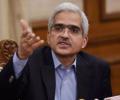
After hiking the repo rate by 0.50 per cent, RBI Governor Shaktikanta Das on Wednesday said future policy actions by the central bank will be guided by the evolving conditions. Addressing a press conference, the governor said the RBI has changed the policy stance to drop the phrase "remains accommodative", and instead opted for "withdrawal of accommodation" for guiding its future moves. The central bank did not hike the cash reserve ratio contrary to speculation, he said, adding that the liquidity withdrawal will be calibrated and measured.
The country's largest lender State Bank of India (SBI) on Wednesday reported a 69 per cent jump in its consolidated net profit at Rs 8.889.84 crore for the second quarter ended September 30 on account of decline in bad loans. The bank's net profit was Rs 5,245.88 crore in the July-September quarter of previous fiscal, SBI said in a regulatory filing.

The second quarter results of banks show that net profits for the industry increased 57 per cent annually. The private sector banks recorded a 64 per cent rise in profits, whereas the net profits of public sector banks jumped 50 per cent in this period. A significant portion of this increase can be attributed to the rise in credit costs and a decline in non-performing assets (NPAs).

Finance Minister Nirmala Sitharaman on Monday said that writing off does not mean "completely waiving the amount" and banks follow up on loans to recover the outstanding dues. "Writing off is not completely waiving the amount. As a part of the accounting process, banks make a provision for the amount, which is due from the NPA account and in that process, we call it as writing off, but the provisioning is made and the pursuing of that particular defaulter or the NPA, which owes money to the bank, is followed up," the minister said answering a query in Lok Sabha.

Axis Bank on Thursday reported a 54 per cent jump in its standalone net profit to Rs 4,117.77 crore for the quarter ended March 2022. The country's third-largest private sector lender had posted a net profit of Rs 2,677.06 crore in the year-ago period. The total income (standalone) rose to Rs 21,999.58 crore in the January-March period of 2021-22 against Rs 19,035.12 crore in the same period of 2020-21, Axis Bank said in a regulatory filing. For the full 2021-22, the net profit nearly doubled to Rs 13,025.48 crore from Rs 6,588.50 crore in 2020-21.

Bank credit offtake is expected to pick up following normalisation of economic activities aided by the government thrust on public expenditure in current fiscal year, a report said. According to the Care Edge report, the gross non-performing assets (GNPA) ratio hit a six-year low of 5.9 per cent in FY22 but remained above the pre-asset quality review of 2015-16. However, it said, India's NPA ratio is one of the highest among the comparable countries despite gradual decline.
Axis Bank has strengthened its positioning -- on both the assets and liability side -- and it may be set to deliver sustained improvement in performance. The valuation gap between Axis Bank (which trades at 1.4x core book value (or BV) and peers like ICICI Bank (valued at 2x BV) is expected to narrow.
The health of Indian banks continued to improve in 2021-22 with their balance sheet growing at double digits after a gap of seven years and their asset quality and capital position bettering, the Reserve Bank of India (RBI) said in its annual report on trend and progress of banking in India. At the same time, the banking regulator flagged the issue of slippages from restructured accounts. "Going forward, it is imperative that banks ensure due diligence and robust credit appraisal to limit credit risk," the report said.

The Indian banking system's latest record on wilful defaulters shows Rs 62,970 crore, or around 10 per cent increase, in the additional amount outstanding since the pandemic began. The total outstanding amount increased to Rs 6.85 trillion in June from Rs 6.22 trillion in December 2019, shows a Business Standard analysis of numbers from the TransUnion CIBIL database. India recorded its first case of Covid-19 in January 2020.The amount outstanding to wilful defaulters had touched a post-pandemic peak of Rs.7.6 trillion in December 2020 (or Rs 1.4 trillion more than pre-pandemic levels).

Wilful defaulters, responsible for non-performing assets for over a year, would be prohibited from taking over an insolvent company.

The CBI has filed an FIR against Amrapali Leisure Valley Developers Pvt Ltd, its director Anil Sharma and others for allegedly cheating Bank of Maharashtra and Andhra Bank of over Rs 230 crore, officials said on Friday. The banks had sanctioned credit facilities to develop a housing building at the Tech Zone IV in Uttar Pradesh's Greater Noida on a plot measuring 1.06 lakh square metre, the FIR alleged. The company failed to maintain financial discipline following which the account was declared a non-performing asset on March 31, 2017, the complaint from Bank of Maharashtra, now part of the FIR, has alleged, adding that "it has resulted in the loss of over Rs 230.97 crore". Following the FIR, the CBI Thursday conducted searches at four locations in Delhi, Noida and Ghaziabad, they said.

Ten years after Kingfisher Airlines was grounded, its former employees continue to wait for their dues. On Monday, the Supreme Court awarded a four-month sentence to the grounded airline's flamboyant owner Vijay Mallya in a contempt case. The apex court also ordered him to deposit $40 million plus interest in four weeks to avoid attachment of his properties.
'When we look at the quality of our retail loan book, the non-performing asset percentage is low.'
According to the complaint filed by SBI, the account had become non-performing asset on January 27, 2016.

State-owned Punjab & Sind Bank is targeting salary accounts to boost the share of low-cost deposits. Swarup Saha, managing director and chief executive officer of the New Delhi-based lender, tells Manojit Saha that the bank may see gross non-performing assets (NPAs) fall below 8 per cent if there is resolution of the stressed assets.

In yet another move to close the regulatory gap between banks and shadow banks, the Reserve Bank of India (RBI) has mandated exposure limits to the non-banking finance companies, in line with commercial banks. In the large exposure framework released on Tuesday, the regulator capped aggregrate exposure of NBFCs which are in the upper layer toward one entity at 20 per cent of capital base. The limit can only be extended by another 5% with board's approval. For a particular borrower group, the cap is at 25 per cent, with additional 10 per cent if exposure is towards infrastructure.
 © 2026 Rediff.com - Investor Information - Advertise with us - Disclaimer - Privacy Policy - Sitemap - Feedback - About us - Terms of use - Grievances