

A comprehensive IPR policy would help the government pull in investors into its 'Make in India' initiative.

German Chancellor Angela Merkel is on a three-day visit to India.

India had been engaged in a contentious battle with the US over the issue, especially in the pharmaceutical sector.

The number one way the Modi administration can demonstrate its commitment to the success of the Atal Innovation Mission, Accelerating Growth for New India's Innovations, Make in India, Digital India, and Startup India is to strengthen its IP framework in ways that promote the legal and regulatory certainty necessary for greater R&D investment, high-value jobs, and greater innovative and creative outputs, the report said.
Modi's hopeful rhetoric has not yet turned into concrete policy reform

'We have often heard the mythical argument that patents block access to life-saving drugs, but only 5% of medicines from multinational companies are under patent protection in India.' 'Where these patented products are beyond the reach of Indian patients, the companies have programmes to facilitate access to their drugs, for free or for a fraction of the price,' points out Ranjana Smetacek, former director general, Organisation of Pharmaceutical Producers of India.

India has now moved up 1 position to 29th.

Under the current administration, political attitudes toward IP seem to have improved.

Dispute over IPR was a bone of contention in bilateral ties till a couple of months ago.

The 'Make in India' vision cannot survive in the long-term without concrete measures to build a concurrent 'Create in India' movement.

Prime Minister Narendra Modi said India and the United Kingdom are economically made for each other.
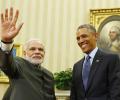
When President Obama lands in New Delhi later this week, this spirit of accommodation must reignite a strategic economic relationship between the two countries.
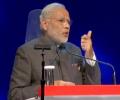
"Reform is not an end in itself. Reform for me is just a way station on the long journey to the destination. The destination is the transformation of India," he said.
 © 2026 Rediff.com - Investor Information - Advertise with us - Disclaimer - Privacy Policy - Sitemap - Feedback - About us - Terms of use - Grievances