
There have been conflicting reports about whether Taliban's supreme council was consulted or not on the election

Mullah Akhtar Mansoor, a top Afghan Taliban leader who backed the peace process and a former aviation minister in the pre-2001 Taliban regime, has been appointed as the new chief of the insurgent group, as Taliban confirmed the death of its longtime supremo Mullah Omar.

Media reports also cited the US aid restrictions over the F-16 fighter jets deal between the two countries.

He was responding to a question over Pakistan denouncing the US drone strike in Balochistan last month as violation of its sovereignty.

Mullah Yaqub, who was in his early 20s, was killed by Taliban who didn't want him as their leader and Pakistan, says a top Afghanistan lawmaker

Pakistan was earlier reluctant to confirm Mullah Mansour's killing. On Tuesday, Interior Minister Chaudhry Nisar Ali Khan had said that the body recovered on Pakistani soil, near the Afghan border, was charred beyond recognition.

An audio message has been released in Pushto, circulated by Taliban commanders, where Akhundzada said, "Taliban will never bow their heads and will not agree to peace talks," reports Dawn.
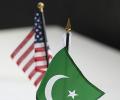
Pak-US ties are sliding down the hill due to difference over handling of peace issue in Afghanistan and US' growing defence tie with India.

Acknowledging the killing of its leader Mullah Akhtar Mansour, the Afghan Taliban have announced Mawlawi Haibatullah Akhundzada as his successor.

The Afghan Taliban is struggling to find a successor to slain chief Mullah Akhtar Mansour.
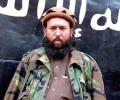
Khan was known to directly participate in attacks against US and coalition forces, and the actions of his network terrorised Afghans, especially in Nangarhar.
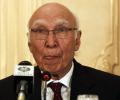
Pakistan on Thursday accused India of using the Pathankot terror attack as an "excuse" to derail the bilateral dialogue process and said that talks are the best way forward to resolve outstanding issues, including "mutual concerns" related to terrorism.
Asked if Pakistan can be an ally in the war on terror, Royce said, "I think the civilian government is."

Tired of the alleged "double game" being played by Islamabad, American lawmakers have announced to hold a Congressional hearing next week to discuss whether Pakistan is a "friend or foe" of the US in the war on terror.
Pakistan's Interior Minister Chaudhry Nisar Ali Khan on Tuesday refused to confirm the death of Taliban chief Mullah Akhtar Mansour but said a DNA test will be done to establish the identity of a man killed in a American drone strike last week.

The United States respects Pakistan's sovereignty but will carry out strikes to eliminate terrorists who are targeting its forces, the Obama Administration said on Monday as Islamabad expressed concern over the drone strike by American forces on its territory to kill Taliban chief Mullah Akhtar Mansour.

The Taliban's official spokesman, Abdulqahar Balkhi, claimed responsiblity for the attack on Twitter.
Taliban leader Mullah Mansour was killed in a United States airstrike.
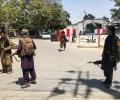
Despite dependence on the ISI for years of sustenance, Taliban leaders may harbour resentment over the ISI's excessive control, notes Rana Banerji, who headed the Pakistan desk at the Research and Analysis Wing.

Two suicide attacks killed at least 35 people and wounded hundreds more in Kabul on Friday, the first major attacks in the Afghan capital since the announcement of Taliban leader Mullah Omar's death.
Afghan Taliban chief Mullah Akhtar Mansour, killed in a United States airstrike in Balochistan, was a frequent flyer and used a Pakistani passport for over nine years
India has demanded the United Nations to slap sanctions against the new Taliban leader in Afghanistan, saying it is "sheer folly" that the leader of a proscribed entity is not yet designated as a terrorist individual.
"We have removed the leader of an organisation that has continued to plot against and unleash attacks on American and coalition forces, to wage war against the Afghan people, and align itself with extremist groups like Al-Qaeda," the US president said in a statement.
Pakistan National Security Advisor Sartaj Aziz brings to New Delhi a newfound Pakistani confidence, stemming from its leverage in Afghanistan, says Ajai Shukla

A proposed nuclear deal aims to stop Pakistan from building small tactical nuclear weapons that could fall into terrorist hands.

Pakistan, which has propped up the new Taliban leadership, would be keen to use its influence over the group to neutralise India's presence in the region.
