
Almost 80 per cent of all income losses during the first wave of the pandemic in 2020 were incurred by the private sector in India, while in many other countries the entire loss was on respective governments, a report said on Wednesday. While the Centre had announced a Rs 21 lakh crore COVID-19 relief package, comprising 10 per cent of the GDP, the actual financial support was only about 2 per cent of GDP, as the rest was all credit-driven. "Almost four-fifths of all income losses during the pandemic in 2020 were incurred by the private sector in the country, while the government sector bore only about a fifth of the losses.

Given the nature of the money stuck, investors are fast losing patience with the exchange.

A survey by five brokerage houses -- SBICap Securities, Angel Broking, ICICI Securities, Motilal Oswal and HSBC Securities -- reveals that after a volatile calendar year which saw input costs rise to record levels in the first half and then fall dramatically in the second half, FMCG companies will now see the benefit, as it usually takes a quarter for falling costs to show in the results.

India's rupee is likely to remain under pressure due to high prices of crude oil and other commodities, and may stabilise at around 79-80 against the US dollar in the near term, say experts amid limited headroom available with the Reserve Bank to check the weakening of the domestic currency. The currency has slumped over 5 per cent this year after Russia's invasion of Ukraine sent international crude oil prices soaring to a decade high. On Monday, rupee ended at a fresh all-time low of 78.34 (provisional) against the US dollar.

Despite unprecedented levels of uncertainty in Samvat 2077, investors have little to complain about on the returns front. The BSE Sensex delivered returns of 38 per cent in this period, while the Nifty registered a return of over 40 per cent. As is the case in bull markets, companies in the small- and mid-capitalisation basket outperformed the benchmarks, with returns almost twice those of frontliners.

Nikunj Saraf, Vice President Choice Wealth, answers your queries.

The retail frenzy over initial public offers (IPOs) seen over the past few months is not without reason. Over the past two years, 61 companies have tapped the primary market and raised funds via IPOs. Of these, 24 companies (nearly 39 per cent companies) have more than doubled at the bourses with Happiest Minds, IndiaMart Intermesh, Indian Railway Catering and Tourism Corporation (IRCTC), Affle India and Route Mobile surging 468 per cent to 722 per cent since their listing date till now. Retail participation in the equity market, according to analysts, has just reached an inflection point due to the low interest rate regime amid lack of investment-worthy avenues that can generate a good return for investors.

Omkeshwar Singh, Head, Rank MF, a mutual fund investment platform, answers your queries.

Omkeshwar Singh, Head, Rank MF, a mutual fund investment platform, answers your mutual fund queries.

June was a memorable month for the 101-year-old Tamilnad Mercantile Bank (TMB). Last month, the Thoothukudi-based bank witnessed two new landmarks in a history in which the last three decades could easily qualify for a Kollywood blockbuster.
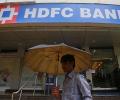
While HDFC Bank has vowed to recoup its lost market share in the credit card segment in three to four quarters by aggressively sourcing new cards, brokerages believe it is a little hard to come by, given how competitive the landscape has become, with other players in the market becoming equally aggressive to gain market share. Kotak Institutional Equities in its report on Monday said, "We would like to believe that the recovery in market share is likely to be gradual, if any. "All the key players, including Axis Bank, are now willing to expand their credit card portfolios as they have tested quite well against Covid-19."
Exponential Investment (Business Associates of Motilal Oswal Financial Services Limited) urgently requires 4-5 graduates (preferebly management / commerce) for Business Development .

The early bird results for the January-March 2022 quarter (Q4FY22) hint at a slowdown in corporate sector growth in the upcoming quarters. The combined net sales of the 81 early bird companies in the Business Standard sample were up 15.1 per cent year-on-year in Q4FY22; this was less than the 15.9 per cent YoY jump reported in Q3FY22. The slowdown could be much stronger for the domestic market-focused companies, including those in the banking, finance, and insurance (BFSI) space.
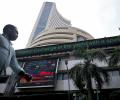
RBI policy, macro data, company earnings to decide market course this week: Experts

Stock markets are expected to remain under pressure this week due to the overhang of US presidential polls and uncertainty over global growth due to resurging cases of coronavirus, according to analysts.
Poor rainfall in rain-dependent central and southern India in the next three weeks could affect agricultural GDP growth in the coming season, a report by broking firm Motilal Oswal has said.

'Pockets of mid and small-cap indices are showing exuberance and are discounting even FY23 valuations now.'

'The IPO market is cooling off and getting a reality check.'
More may follow as market indices gain 80 per cent

The adverse impact on the margins of auto, consumer staples and consumer durables sectors will be counterbalanced by an earnings uptick in the metals, cement and oil & gas sectors.

Call it a revival of the information technology (IT) industry or increase in demand from non-IT sectors, office lease and sale transactions have picked up by 10 to 15 per cent in the past quarter.

Stronger rupee likely to take a toll; Infosys results on April 13 to be keenly watched

Reliance Industries accounted for Rs 6.3 trillion in wealth created since 1995; closest rival was Hindustan Unilever which was at Rs 4.9 trillion.

The broader NSE Nifty fell 78.75 points, or 0.70 per cent, to close at 11,234.55.

The move is meant to curb or reverse the export of India's financial markets to overseas trading platforms.

Equity mutual funds attracted an all-time high net inflow of Rs 28,463 crore in March, on continued interest by retail and HNI investors, who used market correction as a good buying opportunity.

Apart from RIL, home-loan lender HDFC, pharma company Sun Pharma, auto major Hero Honda and software exporter Infosys have emerged among the top 100 wealth creators in the past one decade.

Omkeshwar Singh, head, Rank MF, a mutual fund investment platform, answers your queries.

Mihir Tanna, Associate Director, S K Patodia & Associates, answers your tax queries.

However, experts caution that investors should not expect the big returns they got from the sector between March and September 2020.
The Union Government's decision to ban futures trading in rubber, soya oil, potato and chana for four months, in a bid to tame spiralling inflation, is unfortunate and may hit market sentiments badly, industry players said.The four commodities have a combined daily turnover of about Rs 1,200 crore (Rs 12 billion) on the Multi Commodity Exchange of India Ltd. and the National Commodities and Derivatives Exchange Ltd., the nation's biggest bourses.

The number of equity schemes rose to 562 from 519 two years ago. Equity NFOs, in fact, have mopped up more than Rs 16,000 crore since 2018 - 2.7 times the Rs 5,948 crore collected in the preceding three calendar years.

Market participants are impressed that Rajan has set the ball rolling on his first day at RBI with a series of announcements, raising expectations that more are in store.
Bankers expect RBI to drop rates though there may not be any increase in aggregate liquidity as banks are parking surplus funds with the central bank. Some sectors like the small and medium enterprises, real estate have not been getting adequate funds and RBI may extend a refinance line or special facility whereby they can borrow at a subsidised rate.
Omkeshwar Singh, Head, Rank MF, a mutual fund investment platform, answers your queries.
.jpg)
Last fortnight, 206 companies from the BSE-500 hit 52-week lows as investors sold heavily in counters with dimmed prospects.

Indian equity markets are likely to witness volatility this week due to concerns over rising cases of coronavirus and expiry of derivatives contracts, analysts said. Further, progress surrounding the COVID-19 vaccine, related updates, US stimulus talks and global cues would dictate the market trend, traders said. "Going ahead, the market is likely to be volatile as sentiments oscillate between fear of rising COVID cases globally and optimism over vaccine progress. Investors would closely watch out development over the US stimulus talks," said Siddhartha Khemka, Head - Retail Research, Motilal Oswal Financial Services Ltd.
The Indian equity market is likely to see one of its worst phases, with most sectors expected to report a decline in earnings or single-digit earnings growth in Q4 FY'09, a leading broking firm said in its report.
Pharmaceutical major Matrix Laboratories, public sector oil producer Oil and Natural Gas Corporation and Ranbaxy Laboratories have emerged as the fastest, biggest and the most consistent wealth creators for year 2006
The BSE sensex now trades at a discount to S&P 500 and has corrected by 35 per cent from its peak of 20,873 points to close the quarter at 13,462 point in FY 08. The Sensex hovered around 13,349 on Tuesday. Over CY 04-07, the Indian markets delivered 40 per cent returns each year, the most consistent and superior retuns amongst all the global markets over this period.
 © 2026 Rediff.com - Advertise with us - Disclaimer - Privacy Policy - Sitemap - Feedback - About us - Terms of use - Grievances