
Morgan Stanley removed banking stocks from its model portfolio when it slashed its weighting on the sector by 500 basis points. Several foreign brokerages, such as UBS, JP Morgan, and Credit Suisse, of late, have also become less optimistic about banking stocks.

India's prices are rising faster than many of its emerging market peers. The country's inflation print for May at 4.25 per cent is a marked reduction from the levels seen in May 2022 (7.04 per cent). However, even though the inflation rate remains within the Reserve Bank of India's medium-term target of 4 per cent, with a 2 per cent margin on either side, it continues to be higher than China, Russia, and Brazil.

Most players are looking to invest anywhere between $500 million and $1 billion in new ventures in the next couple of years, said experts on this segment.

With Housing Development Finance Corporation's (HDFC's) merger with HDFC Bank becoming effective on July 1, the merged entity is set to become the top weight in the benchmarks S&P BSE Sensex and the National Stock Exchange Nifty indices, dislodging the country's most valuable company, Reliance Industries (RIL), from its perch. HDFC will stop trading after July 13. At present, RIL has a weighting of close to 12 per cent in the Sensex and 10.3 per cent in the broad-based Nifty. Meanwhile, HDFC Bank and HDFC have weights of 9.9 per cent and 6.8 per cent in the Sensex and 8.8 per cent and 6 per cent in the Nifty, respectively.

New investment projects announced in the manufacturing sector declined in the three months ended June 2023. The value of new projects was lower than in the March quarter, as well as the year-ago period, shows data from project tracker the Centre for Monitoring Indian Economy (CMIE). The new project announcements worth around Rs 85,000 crore in the manufacturing segment in June were a 48 per cent decline from the Rs 1.6 trillion in March and a 66 per cent decline from the Rs 2.5 trillion seen in June 2022.
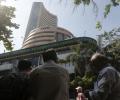
Against an offer of 4.55 crore shares of Adani Enterprises Ltd, only 4.7 lakh were subscribed, according to information available from the BSE. Adani Enterprises fell almost 20 per cent to below the offer price of its secondary sale as all the seven listed companies of the conglomerate took a beating in the aftermath of Hindenberg Reserach alleged that the group was "engaged in a brazen stock manipulation and accounting fraud scheme over the course of decades".

The sharp rally in the broader markets has propelled India's market capitalisation (m-cap) to a new high. The combined m-cap of all BSE-listed firms rose to Rs 291.9 trillion in intraday trade on Thursday before settling lower at Rs 290.9 trillion. The previous record was on December 14, 2022, at Rs 291.3 trillion.
Morgan Stanley Smith Barney currently is valued at $20 billion on Citigroup's books, which is $ 5 billion more than it is on Morgan Stanley's, the report said citing Credit Suisse's analyst Howard Chen.

Less-than-expected rainfall and a poor spatial distribution, experts say, can rekindle fears of a rise in food and fuel inflation that can have an impact on the RBI's monetary policy. The fear of less than optimal rainfall due to El Nino this year, analysts believe, is the biggest short-term risk for the markets, which they said has not been fully priced in yet by them. Monsoon set over Kerala on June 08, a week later than its scheduled date.

Indian equity markets had a good run in the first half of calendar year 2023 (CY23), with the S&P BSE Sensex and the National Stock Exchange Nifty50 hitting fresh 52-week highs. While the Sensex scaled up to a peak 64,718, the Nifty50 hit Mt 19,189. As the markets now prepare to enter the second half (H2) of CY23, all eyes are on global central banks, especially the US Federal Reserve, as to when they will pause and pivot as regards their interest-rate cycle.

Despite a firm improvement in the operational metrics of new-age companies during the January-March quarter (Q4FY23), analysts remain cautiously optimistic about their outlook. This is because the shares of these firms are still not risk free, as per analysts, given the companies are yet to make profits. Kranthi Bathini, director-equity strategy at WealthMills Securities says that while the sentiment around these stocks, which includes Paytm and Zomato, has turned positive, it remains to be seen how soon these firms turn profitable and improve margins.

This is not the first time Reliance has eyed a stake in the club.
Citibank on Wednesday joined the list of foreign banks that have exited retail banking business in India. Mumbai-based Axis Bank completed acquisition of Citigroup's consumer business for Rs 11,603 crore. Under the deal, Axis acquired consumer banking businesses of Citibank India, which includes credit cards, retail banking, wealth management and consumer loans.

It is nearly after 13 years that a foreign brokerage has resumed holistic coverage on stocks of public sector banks (PSBs). To that extent, Morgan Stanley's report dated March 3, where the analysts have listed their order of preference for PSB stocks, is an indication that the state-owned banks may once again be attracting some interest, thanks to three back-to-back quarters of good results in FY21 so far. "State-owned banks' balance sheets have improved, and bad loans formation should moderate going forward," the analysts note and this is the key reason for them to relook at their stance on PSBs. While State Bank of India (SBI) remains their preferred pick, stocks of Bank of Baroda (BOB) and Punjab National Bank (PNB) have been upgraded from 'underweight' to 'equal-weight'. The brokerage maintains its underweight recommendation on Bank of India and Canara Bank.
The share of listed public sector undertakings (PSUs) in the overall market capitalisation has hit a three-year high of 11.4 per cent. This comes on the back of the sharp outperformance of the PSU pack over the past two years. In 2021 and 2022, the BSE PSU index gained 41 per cent and 23 per cent, respectively. Market participants said a combination of factors like value buying and bullishness, particularly in public sector banks (PSBs), were the reason for the improved prospects.

Coalition governments aren't necessarily a negative for the economy, though they can result in negative outcomes in the stock market if not already priced in before elections.
Logistic players have seen a sharp correction at the bourses over the past six months as intense competition from new-age-tech startups, higher freight rates, and weak macros dented listed players' growth outlook. Analysts warn that the emergence of tech-based startups could weigh on organised players' profit-pool, and can potentially erode their market share. Thus, a stock-specific strategy would be prudent at this juncture with focus on companies that are rapidly innovating and investing in technology.

India offers policy stability, transparency and consultative process of governance to incubate investment, Finance Minister Nirmala Sitharaman said on Thursday as she invited investments in prospecting energy resources in the country. Stressing that there is a need for investments in coal, she said, "We need greater investments also to help in gasification of coal. I invite all of you to energetically participate in the (sixth round of commercial mines) auction processes which have been launched today and keep your options also further extended for greater extraction of minerals in India." During this 'Amrit Kaal', India needs all the basic minerals as the country is in the process of rapid growth, she added.

After a stellar run in 2021 that saw the S&P BSE Sensex and the Nifty50 clock gains of 20 per cent and 22 per cent respectively, global equity markets, including India, are gearing up to welcome 2022 on a cautious note. For one, new variants of the Covid -19 infection that make current vaccines less effective is one of the key risks worth flagging, analysts said. Inflation was also a risk for this asset class in 2021, although most market participants expect that the current elevated inflation levels will be transitory.

Morgan Stanley expects the central bank to cut rates this week, 125 bps in cuts through 2015.
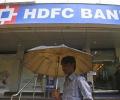
With the merger between HDFC Bank and HDFC Ltd complete, analysts said the next key monitorable for the Street would be successful resolution of merger-related hiccups, including employee-related churn and roll out of complete banking services across branches. At the bourses, they expect the stock to perform in-line with the benchmark indices in the near-term. "There's usually an initial period of consolidation after a merger as the entities work towards integration.

IIM Lucknow has concluded its 2020-21 final placements.

While commercial vehicles are expected to benefit from strong replacement demand, the two-wheeler and tractor segments are expected to gain from a recovery in the rural economy.

Bajaj Finance's quarterly business update, coupled with around 24 per cent fall over the past six months, has turned risk-reward favourable for investors, observe analysts. They see up to 39 per cent upside in the stock, from a one-year perspective. Global brokerage CLSA, for instance, has upgraded the stock from 'underperform' to 'outperform' with an increased one-year target price of Rs 6,600 (vs Rs 6,000 earlier) as it believes the risk-reward has turned favourable for the counter, and there is scope for expansion if growth remains robust.

After 13 years, Morgan Stanley Investment Managers on Thursday launched its second fund, Morgan Stanley ACE (Across Capitalisations Equity) Fund, which will invest in a portfolio of equity and equity-related securities, including equity derivatives.

Portfolio returns, say analysts at Morgan Stanley, are more likely to be driven by bottom-up stock-picking rather than top-down macro forces.

Usually, a fall in oil prices is followed with a cut in retail prices of auto fuels and the government passes on the benefit to consumers. However, Morgan Stanley believes gains this time around will remain capped.

RBI's likely focus will shift back towards the resolution of non-performing loans in the banking system for reviving credit demand
Ruchir Sharma and Nandan Nilekani engage in an exciting conversation, with Vaihayasi Pande Daniel listening in. This is a final of a three-part feature.
Ruchir Sharma and Nandan Nilekani engage in an exciting conversation, with Vaihayasi Pande Daniel listening in. This is a second of a three-part feature.
Ruchir Sharma and Nandan Nilekani engage in an exciting conversation, with Vaihayasi Pande Daniel listening in. This is a first of a three-part feature.
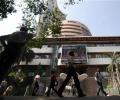
Global events will continue to be in the limelight, besides domestic policy.
Nimesh Kampani, chairman of the JM Financial group, talks to Business Standard on what led to the parting of ways with decade-old foreign partner Morgan Stanley.
Morgan Stanley, the global financial services company, says India's largest private sector company (by market value) might lose 11 per cent of its earnings per share in 2014-15 earnings estimates if gas prices remain at $4.2 a unit.
India's challenges: infrastructure, large fiscal deficit, low FDI

Vishal Kampani has big shoes to fill as his father is close to the Ambanis, the Wadias and the Ruias, says Dev Chatterjee.

But the clear winner between them is yet to emerge.
With $110.8 billion in equity and long-term debt, Morgan Stanley is the world's largest securities firm, according to the Institutional Investor magazine's annual capital position rankings.

India's gross domestic product growth has been on a steady decline since June 2011, when it stood at 8 per cent.

Multiple triggers such as asset sales, pickup in energy cash flows, increased traction in omni-channel retail, and rise in ARPUs could further drive the stock.
 © 2026 Rediff.com - Investor Information - Advertise with us - Disclaimer - Privacy Policy - Sitemap - Feedback - About us - Terms of use - Grievances