
Oil Ministry is likely to announce the new rates sometime this week.

The government had in October 2007 set a sale price of $4.20 per million British thermal unit based on the price discovered by RIL from key customers.
The OilMin is likely to announce the price for next six months soon.
Locally produced gas in India will now cost at least 8 per cent less.

The Petroleum Ministry has proposed a 33 per cent hike in the price of natural gas produced by ONGC and Oil India and gradually increase it to $4.20 per mmBtu set for gas from Reliance Industries' KG-D6 fields.
The Cabinet Committee on Economic Affairs on Thursday steeply increased the price of gas, hitting the aam-aadmi, also gave a meagre hike to the minimum support price of food-grains, adversely affecting farmers, reports Sheela Bhatt.

Reliance gets $4.215 per mmBtu for the gas it produces from KG-D6 fields off the Andhra coast. The price is fixed for the first five years of production. KG-D6 gas production began on April 2 and is slated to rise to 80 mmscmd by year-end, nearly doubling the nation's gas output.

RIL on June 15 wrote to Oil Ministry proposing to price natural gas it produces from the Krishna Godavari basin block in Bay of Bengal at a rate equivalent to price India pays for importing liquefied natural gas, official sources said.

Reliance Industries has made drastic changes in gas supply contracts that will jack up its KG-D6 gas price by 10 per cent over and above the new rate of $8.3 coming into effect from next month.
The Cabinet Committee on Economic Affairs may this week decide to price all domestically produced natural gas as per a formula suggested by a panel headed by Prime Minister's economic advisor C Rangarajan.
The current price is among the lowest in Asia Pacific.

Both the countries have increased prices of gas recently.
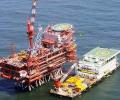
Last month, the government approved the proposal of doubling gas price from RIL's KG basin from $4.2 mmbtu to $8.4 mmbtu from April 1, 2014.

Currently, gas imported in its liquefied form costs $5.7 per million British thermal units as against $1.82 per mmBtu for fuel produced from state-owned Oil and Natural Gas Corporation's fields and $4.2 per mmBtu for gas from Reliance Industries' KG-D6 field.

The government may for the first time in about five years raise price of natural gas produced by state-owned firms like Oil and Natural Gas Corporation after the finance ministry and the Planning Commission backed the proposal for a 30 per cent hike.
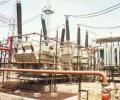
NTPC is fighting a case in the Bombay high court to get gas from RIL at a committed price of $2.34 per mmBtu.

Last week, RIL and urea companies failed to settle the key terms of gas supply from April 1 upon expiry of the five-year contracts that priced gas from the eastern offshore KG-D6 fields at $4.205 per million British thermal units.

Reliance Industries has said that developing smaller gas fields in the KG-D6 block is economically unviable at the current price of $4.20 per mmBtu and it may seek a rate of at least $6 per mmBtu in 2014, when the fields are put into production.

Oil ministry had previously proposed a 30 per cent hike in price of gas produced by Oil and Natural Gas Corporation and Oil India Ltd to $2.3 per mmBtu but finance ministry wants these rates to be brought on par with RIL, sources in the know of the development said.
Reliance Industries Ltd on Thursday told the Delhi High Court that the Delhi government's decision to probe the Centre's policy on gas pricing was a "peculiar" and "absurd" situation.
Shell had last imported LNG cargo at its Hazira Terminal in Gujarat on Oct 13, 2008 from Trinidad and Tobago at $20.5 per mmbtu. On the $9.06 per mmBtu import price, a five per cent custom duty will be levied, taking the landed cost to $9.4 per mmBtu.
RIL has raised the marketing margin to $0.15 per million British thermal unit from $0.12 per mmBtu earlier, a source said. The rate, which would be charged over the $4.20 per million British thermal unit base gas price, is however lower than the $0.18 per mmBtu margin charged by state-run GAIL. The increase, he said, was due to the additional risk of 'ship-or-pay,' an obligation under which the company would be obliged to transport the committed volumes or pay for the gas.
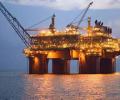
Could get $8.4 per mmBtu from April 2014 by furnishing bank guarantee that would be encashed if D1, D3 gas hoarding proved
About two dozen discoveries of the state-owned ONGC, Reliance Industries and the Gujarat State Petroleum Corp (GSPC) in KG Basin alone are languishing for want of right price.

Companies to hold rates in Delhi until new government is formed.

In the run up to the general election, Aam Aadmi Party had alleged that RIL's partner Niko Resources was selling KG-D6 gas in Bangladesh for half the $4.2 per million British thermal unit rate that India pays them.
ONGC and RIL bill their consumers like fertiliser plants and power stations in US dollar.

RIL has more than half a dozen undeveloped discoveries.

The Centre will soon write to the states to bring uniformity in the Value Added Tax on oil products so that benefits of price cuts filter down to the masses.

As the world's third-largest oil importer and consumer, India is running out of options as the relentless surge in international oil prices make it imperative to pass them on to consumers, officials said on Monday. India imports 85 per cent of its crude oil needs and about half of its natural gas requirement. While the imported crude oil is turned into fuels such as petrol and diesel, gas is used as CNG in automobiles and fuel in factories.
A third of the 1.2 billion Indian population has no access to electricity.

As per the 15-day billing cycle, gas producers are to raise the first invoice at the revised price of $5.61 per million British thermal unit this weekend.
Among the documents that Arvind Kejriwal handed out in his press conference on Wednesday, was a page from the letter from the former minister of petroleum and natural gas, S Jaipal Reddy, and marked as annexure 5, to Reliance Industries about its KG Basin oil extraction
Reliance Industries looks set to get higher price for its KG-D6 gas from April 2014 after the Prime Minister's Office has ordered that the firm be allowed to discover the market price as stipulated in the contract.
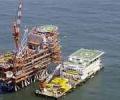
Reliance Industries has sought tripling of its KG-D6 gas price from April 1, 2014 after the current below market rate of USD 4.205 per mmBtu expires.

Reliance Industries is facing penalty for falling gas output from its KG-D6 fields.

State-owned Oil and Natural Gas Corp (ONGC) will add about Rs 8,000 crore (Rs 80 billion) to its profits annually from near doubling of natural gas prices from next fiscal.
