
India is proposing the Data Empowerment and Protection Architecture (DEPA) for AI Training, a national framework designed to enable startups, researchers, and companies to train AI models using data from hospitals, banks, and public agencies while ensuring privacy and security. This initiative aims to unlock significant AI-driven value for India's GDP by 2030.

Delhi Police have arrested 11 individuals involved in multiple "digital-arrest" scams, recovering over Rs 12 crore. The scams, linked to handlers in Southeast Asia, have affected 78 complainants nationwide, totaling Rs 73 crore. A retired scientist was defrauded of Rs 1.25 crore, with the entire amount frozen. The investigation uncovered a network arranging mule bank accounts and using cryptocurrency for commissions.

Lohum's subsidiary Vidyuta has secured government approval under the Electronics Component Manufacturing Scheme (ECMS) for a 20 KTPA cathode active material manufacturing facility, involving a Rs 500 crore investment. This initiative aims to boost domestic production of critical lithium-ion battery components, reducing import reliance and strengthening India's electronics manufacturing ecosystem.

The Indian government has ordered the removal of Jack Dorsey's Bitchat app from app stores, citing law-and-order concerns due to its ability to bypass communication restrictions. The Ministry of Electronics and Information Technology (MeitY) issued the takedown demand under Section 69(A) of the IT Act, 2000. The government also addressed the issue of banning minors from social media, indicating a search for a better solution than outright bans.

Apple has removed the offline messaging app Bitchat from its India App Store following a demand from the Ministry of Electronics and Information Technology (MeitY). Developed by Jack Dorsey, Bitchat faced scrutiny under Section 69(A) of the IT Act, 2000, due to concerns about its potential misuse by anti-national elements and for evading lawful surveillance, especially during public disorder. This marks the second time the app has faced government action in India.

The Indian government, through the Ministry of Electronics and Information Technology (MeitY), has issued an advisory to Meta, urging the social media giant to prevent its recommendation systems from disproportionately exposing users to limited narratives and to enhance checks on content that could incite public disorder or unlawful activity. The advisory, dated October 10, also calls for Meta to provide adequate context for content related to ongoing public events and to review its content-ranking mechanisms to avoid amplifying misleading information.

The three-day Army Commanders' Conference commenced in New Delhi, featuring the release of the 'Land Warfare Doctrine' by Defence Minister Rajnath Singh. This vision document aims to equip the Indian Army for future conflicts and evolving warfare challenges. The conference brings together senior leadership to discuss operational preparedness, capability development, and future transformation initiatives, with addresses from top defence officials and recognition for peacekeepers and environmental efforts.

India's central cyber security agency, I4C, has issued a critical warning to banks, NBFCs, and fintech firms regarding a surge in financially motivated cyberattacks leveraging artificial intelligence agents. These AI-driven attacks enable hackers to compromise systems and execute fraudulent transactions at machine speed, making investigations complex due to record deletion. The advisory, issued in collaboration with CERT-In, urges financial institutions to implement robust security measures, align with CERT-In's blueprint, and report incidents promptly to mitigate the escalating threat.

Search engine major Google will also start sharing details of child sexual abuse cases and repeat offenders with the cybercrime division of the Indian Cybercrime Coordination Centre (I4C) of the Ministry of Home Affairs.

The Supreme Court has sought the Centre's response on a petition filed by the Digital News Publishers Association (DNPA) challenging the Digital Personal Data Protection (DPDP) Act, 2023, and its accompanying Rules. The DNPA argues that the law, lacking exemptions for journalism, could impede news gathering and infringe upon citizens' right to information. The challenge highlights concerns over consent requirements for reporters and the Act's impact on the Right to Information.

'Cybersecurity preparedness is very weak.'

Senior executives from Meta, the parent company of Facebook, Instagram, and WhatsApp, appeared before India's child rights body, NCPCR, for questioning regarding alleged advertisements promoting child sexual exploitative and abuse material (CSEAM) on its platforms. This follows a BBC report and a stern notice from the Ministry of Electronics and Information Technology (MeitY) to Meta over the issue.

Fintech firm PhonePe has signed a Memorandum of Understanding (MoU) with the Ministry of Electronics and Information Technology (MeitY) to integrate its enterprise data intelligence platform, PulsePro, into the PM GatiShakti framework. This collaboration aims to provide granular, hyperlocal insights for national infrastructure planning, economic analysis, and holistic urban and rural development.

Union Minister Ashwini Vaishnaw announced that the Indian government will release a draft consultation paper on Artificial Intelligence (AI) regulations within the next 30 days, focusing on safety, a human-first approach, skilling, inclusivity, and harm restriction.

The Supreme Court has declared that children have a fundamental right to access and use the internet, directing the Centre to establish a national database for detecting and removing child sexually explicit visual content. The ruling, stemming from a plea by NGO Just Rights for Children Alliance, emphasises the internet's value for learning and expression while acknowledging the need for safeguards like parental consent and a "child mode" for accounts, rather than blanket restrictions.

The Supreme Court has granted the Centre a final opportunity to present measures taken to prevent the circulation of child sexual exploitation and abuse material on social media platforms, following a petition highlighting inconsistent compliance by intermediaries.

Andhra Pradesh Chief Minister N Chandrababu Naidu has approved the establishment of India's first dedicated Quantum and AI University campus in Amaravati by NIELIT. This significant project, funded by the MeitY, Government of India, will focus on advanced technologies like Quantum, AI, and Semiconductors, integrating education, research, and entrepreneurship.

'Details of accounts such as the name, email id associated with the account, the IP address will now be shared with law enforcement agencies, which will help track down offenders faster.'

IT Minister Ashwini Vaishnaw announced that the Indian government will release a consultation paper on AI regulations within a month. This framework will address critical aspects like AI safety, deepfakes, and a human-first approach, emphasising the industry's primary responsibility in ensuring safe AI deployment. The move comes amidst growing global concerns over AI risks and the need for robust safeguards.

The company's India head, Arun Srinivas, has been summoned by the child rights body on Thursday.

An Indian Parliamentary panel has summoned major social media platforms like Meta, Google, X, and Snapchat, along with MeitY and Home Affairs officials, to discuss the regulation of digital platforms. The meeting, scheduled for August 3, will focus on user privacy, public order, and the platforms' role in recent protests.

The Supreme Court has directed the Centre to explore a statutory framework to ensure social media intermediaries comply with Indian laws regarding minors, particularly concerning their inability to independently enter into contracts. The court highlighted the need for safeguards to protect children from potential harms on digital platforms, including exploitation and misuse of data, and asked the Solicitor General to examine incorporating these requirements into intermediary rules.

Cockroach Janta Party (CJP) founder Abhijeet Dipke is set to appear before a Ministry of Electronics and Information Technology (MeitY) committee regarding the withholding of the group's X account. This development comes amidst an ongoing CJP protest at Jantar Mantar demanding the resignation of Union Education Minister Dharmendra Pradhan over alleged exam irregularities and the NEET paper-leak controversy.

Meta has agreed to report child safety-related matters, including child sexual abuse cases, to appropriate law enforcement agencies in India, government sources confirmed, emphasising that online safety for children is a "non-negotiable" fundamental principle for social media platforms operating in the country.

A parliamentary standing committee on Information Technology has demanded a personal apology from Meta CEO Mark Zuckerberg for the temporary removal of Prime Minister Narendra Modi's video from Facebook. The committee also discussed potential legal action and the withdrawal of safe harbour protection, while questioning Meta officials on algorithmic bias and accountability.

The Supreme Court has sought responses from the Union ministries of electronics and information technology and law and justice regarding a plea for safeguards for minors on social media. The NGO 'Just Rights for Children Alliance' filed the plea, arguing that social media platforms should not enter into contracts with children under 18, citing their statutory incapacity to contract and the risks of online harm.

Government sources state that Meta, due to its algorithmic amplification of content, can no longer be considered a "simple intermediary" but rather a "service provider," implying greater responsibility and potential loss of legal immunity. This shift comes as Meta commits to directly reporting child abuse content to Indian law enforcement, amidst increasing government scrutiny over harmful online content and algorithmic bias.

An Indian Parliamentary standing committee has demanded an apology from Meta chief Mark Zuckerberg within three days for the temporary removal of Prime Minister Narendra Modi's video from Facebook, threatening to withdraw immunity under the IT Act if he fails to comply. The committee also pushed for government action against Google India regarding financial fraud.

Top Meta India executives, including chief Arun Srinivas, appeared before the National Commission for Protection of Child Rights (NCPCR) for the second time in a week regarding alleged Child Sexual Exploitative and Abuse Material (CSEAM) related advertisements on its platforms. Meta has committed to reporting child safety matters directly to India's I4C cybercrime portal, a significant shift from its previous practice of reporting to a US-based centre. The government is pushing for stronger safeguards and accountability from social media platforms to ensure online child safety.

The government has issued a stern notice to Meta on Child Sexual Exploitative and Abuse Material (CSEAM) in paid advertisements on Instagram, sources said on Sunday.
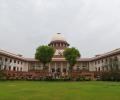
The Supreme Court has sought responses from the Centre, states, and social media platforms Meta and X on a Public Interest Litigation (PIL) challenging police organisations' practice of posting content that reveals the identities of accused individuals or depicts them in a dehumanising manner. The PIL calls for guidelines to regulate police social media use and mechanisms for content removal.

India's Ministry of Electronics and Information Technology (MeitY) has sought an explanation from WhatsApp regarding its username feature, citing concerns over potential cybercrime facilitation. Concurrently, the ministry is investigating reported data leak allegations involving Tata Electronics, a key supplier for Apple's iPhone components in India. MeitY is also exploring techno-legal solutions for VPNs to address challenges posed by unregistered providers operating from outside India.

The Delhi High Court has directed the Centre's Grievance Appellate Committee (GAC) to consider a complaint regarding the removal of allegedly inflammatory and derogatory YouTube videos targeting Shirdi Sai Baba. The Shri Saibaba Sansthan Trust, Shirdi, seeks the removal of content that it claims hurts religious sentiments and promotes communal disharmony, despite a previous GAC order for removal of some material.

The Delhi High Court has asked the Centre to respond to Telegram's petition challenging a temporary government order that restricts access to its platform and disables message-editing features in India, citing concerns over potential cheating during the NEET-UG 2026 re-examination.

IIT Madras is hosting the 3rd Digital India RISC-V (DIR-V) Symposium 2026 in partnership with the Ministry of Electronics and Information Technology and RISC-V International. The symposium aims to unite stakeholders from government, industry, and academia to advance India's semiconductor innovation, focusing on indigenous processor technologies, secure computing, hardware innovation, and AI, aligning with the government's vision for India as a global semiconductor hub.

E-Eye, which cost about Rs 3,500 to develop, can test a sample for around Rs 2, making it particularly suitable for field-level water quality monitoring in areas where access to sophisticated laboratories is limited.

Experts urge internet platforms to adopt prevention-by-design and stronger AI systems to curb child sexual exploitation material and improve online child safety.

Meta's global team met with top Indian IT Ministry officials following government summons regarding the temporary restriction of Prime Minister Narendra Modi's Facebook post and ongoing concerns about child sexual abuse material (CSAM) on its platforms.

The Congress party has alleged that Instagram blocked a post by Rahul Gandhi featuring actor-politician Vijay due to government interference, a claim denied by the Ministry of Electronics and Information Technology (MeitY).

The Indian government has issued a notice to Telegram, demanding a crackdown on the widespread dissemination of pirated films and OTT content. The Ministry of Information and Broadcasting seeks an Action Taken Report within 15 days, emphasizing a shift towards platform accountability for copyright infringement, which is deemed a criminal offence.
