
South Asian countries, led by India, registered a rapid economic growth in 2010 and their unemployment rates dipped marginally from the previous year, says the latest annual Global Employment Trends (GET) report of the International Labour Organisation (ILO).

The employment that is returning is mostly essential services required by Indian households. Most urban Indian households cannot function without a retinue of maids, cooks, drivers, cleaners, notes Mahesh Vyas.

Although India is a labour-surplus economy with an unlimited number of workers willing to work at a subsistence wage a paradoxical feature of the labour market is the rising incidence of scarcity or shortages amid a situation of potential plenty.
There is no doubt that the global economic crisis has further exposed the fragility of youth in the labour market.

'People are getting back to work.' 'The worst seems to be over.' 'It is very likely that the recovery is mostly among the informal, self-employed, workers who cannot afford to be away from work for too long,' notes Mahesh Vyas.
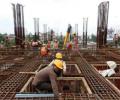
Around 81 per cent of the workers constitute the unorganised sector - devoid of any social security cover and outside the purview of a complex set of labour laws.
A leading job portal on Thursday said that sectors such as retail witnessed a good recruitment trend on the back of rising domestic demand.

Opportunities for job seekers are expected to grow even better in 2015 with employers in India being most optimistic on hiring, says a report.

The world's largest economy, which is witnessing slow expansion, is also grappling with high unemployment levels. "Reports from the 12 Federal Reserve districts suggest that economic activity continued to expand moderately from November through December," Fed's latest Beige Book said.

Online job portal Monster.com's employment index rose to 118 last March from 116 in February. The index provides a broad indication of demand for jobs online.

In signs of improving labour market, private companies in the US generated 201,000 new jobs this month.

At this point, it is crucial to think of solutions that will help flatten the curve and also generate income, says Pratyush Banerjee.
The apex bank's observation on Tuesday comes at a time when global markets remain uncertain about the overall impact of the tsunami and the subsequently unravelling nuclear crisis in Japan.

The number of Internet users has more than tripled in a decade.

Saudi Arabia may soon impose a six-year cap on the residency of foreigners in the country as part of its programme to regulate the local labour market - a move likely to affect a large number of Indias working that country.

The data, to be compiled by the ministry of statistics and programme implementation, will bring out the proportion of population actively contributing to production of goods and services, also known as the labour force participation ratio, every quarter.

Stating that COVID-19 has not yet been contained in India, the rating agency in a statement said the government stimulus package is low relative to countries with similar economic impacts from the pandemic. "The COVID-19 outbreak in India and two months of lockdown -- longer in some areas -- have led to a sudden stop in the economy. That means growth will contract sharply this fiscal year (April 2020 to March 2021)," it said. "Economic activity will face ongoing disruption over the next year as the country transitions to a post-COVID-19 world."

'Over 27 million youngsters in their 20s lost their jobs in April.' '33 million men and women in their 30s lost jobs in April,' points out Mahesh Vyas.

'Just as coronavirus has come to us from China, this disease is also coming from that country.' 'India is a strong democracy and you cannot compromise on labour laws in this manner.' 'These changes will be challenged in court.'

'Rather than cutting and pasting from advanced economies, we should use basic economic principles to think about what is right for India at the stage of development at which we are,' says Chief Economic Advisor Krishnamurthy Subramanian.

'There is a bleak business outlook for trade and industry as government struggles to rev up economic growth and labour market.'

The US economy shed 54,000 jobs in August, significantly less than anticipated, stoking hopes that the country's labour market is slowly improving.

With the Congress already opposed to the proposed law, regional parties might become the swing factor, says T N Ninan.

"Don't stop people from coming to big cities to improve their lives where labour market exist. Let this process go. But don't leave places that are left behind. Provide essential services like infrastructure, public services everywhere," World Bank economist Somik Lall said.

While overall employment rose from 456 mn to 463 mn between FY11 and FY15, with farm employment falling by 26 mn over the same period, the net addition to employment over the entire four year period was a mere 7 mn.

The unemployment rate in the 16- nation euro area stood at 10 per cent in July, indicating that the region's labour market continues to remain shaky.

According to sources, government officials have asked industry bodies and manufacturers to submit key concerns and requirements to begin manufacturing activity.

Signalling an improvement in the strained American labour market, US private companies added as many as 32,000 new jobs in April.

According to the Manpower Employment Outlook Survey released today by ManpowerGroup, the hiring pace for the upcoming quarter has rebound from both, last quarter and a year ago at this time.

Average salary has grown faster than average business income for three of the last five years. This has implications in a country like India. Most people in India are self-employed, with 51.4% of the population falling in that bracket.

The unemployment rate in the OECD region a grouping of 27 developed and developing nations stood at 8.8 per cent in November 2009, amid the global labour market slowly witnessing signs of stabilisation.

India is expected to grow by 8.75 per cent in 2010 and 8.5 per cent in 2011, driven by a strong domestic demand, International Monetary Fund said in its 2010 World Economic Outlook released here on Wednesday.

The unemployment rate in the United Kingdom slipped to 7.8 per cent in the three months leading to May, and the number of unemployed people declined to 2.47 million during the same period.
With jobs vanishing by the thousands as a fall-out of the economic downturn, the Economic Survey on Wednesday asked the government to review labour laws for pushing growth in employee-intensive sectors.

The old problem of talent exodus may come to haunt companies once again when the economy recovers, if they do not take steps to attract top talent and retain employees now, a study says.

The recovery in the job market is still miles away as more redundancies and fall in hiring intentions in the public sector are expected even though the economy has come out of recession, says a survey.

Not just in the fight against COVID-19, but also in politics, economics and society, observes Ajit Balakrishnan.

The country's new economic roadmap highlights the importance of creating a virtuous cycle of investment, savings and exports in order to sustain rapid economic growth over the next five years.

From thousands of job losses to historic bankruptcies to Dubai debt crisis, the year had more than its share of shocks.

'Of the 9.5 million unemployed who stopped looking for jobs, nearly seven million were young.' 'Is it possible that the young decided to continue with studies rather than look for jobs?' asks Mahesh Vyas.
 © 2026 Rediff.com - Advertise with us - Disclaimer - Privacy Policy - Sitemap - Feedback - About us - Terms of use - Grievances