
Anil Ambani's Reliance Natural Resources continued its attack on the government for allegedly favouring brother Mukesh Ambani's Reliance Industries Ltd on the sale price of gas from the Krishna Godavari D6 basin. At $4.2 per million British thermal unit (mBtu), the price fixed, there is a premium of more than 100 per cent over the gas available through the administered pricing mechanism, it said.
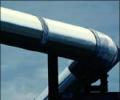
State plans to ask Centre to increase K-G gas allocation.

The Samajwadi Party members stormed the well dissatisfied over the government's response to their demand for gas allocation to Anil Ambani-promoted Dadri power plant in Uttar Pradesh from the Mukesh Ambani-led RIL's D-6 gas field in the Krishna-Godavari basin.

RIL, with interests in petrochemicals, oil and gas exploration, textiles and retail, will continue to see a slow decline in margins.

Reliance hold 90 per cent interest and is the operator of the deep-sea block KG-DWN-2001/1 (D9).

The 28 discoveries include Charada structure and Matar field in Cambay basin (Gujarat) and YSAF in KG basin (off Andhra Pradesh coast), the company said. The discoveries made in FY'09 have been notified to the directorate general of hydrocarbons.
DGH director general V K Sibal objected to Hardy, which holds 10 per cent stake in RIL-operated D3 and D9 blocks, making 'an unwarranted, unethical and premature announcement that is bound to mislead' and influence share price. Sibal on May 29 wrote to Securities and Exchange Board of India chairman C B Bhave asking the market regulator to take up with its counterpart in London the unauthorised statement made by Hardy about its assessment of reserves in the two blocks.

MA fields were producing around 32,000-33,000 barrels of oil per day and 8 million standard cubic meters per day of gas.

RNRL had sought 28 mscmd of gas for 17 years at $2.34 per million British thermal units (mBtu) from Mukesh Ambani's RIL.

Read the full text of the Supreme Court ruling in the Krishna Godavari Basin gas dispute between Mukesh Ambani-led Reliance Industries Ltd and Anil Ambani's Reliance Natural Resources Ltd.
In what could seal the fortunes of the gas and power businesses of the two Ambani brothers, the Supreme Court is to deliver a judgment tomorrow on the bitterly fought dispute over gas from the Krishna-Godavari basin's D6 block.
Reliance Industries (RIL), India's largest company by market capitalisation, will begin producing gas from its Krishna- Godavari (KG) field, which is off the country's east coast, "by December" this year, a senior executive said.
RIL has been using gas from GAIL during the past three months to test-fire the 1,440-km east-west pipeline, India's longest, from Kakinada in Andhra Pradesh to Bharuch in Gujarat. Only 100 km of the pipeline remains to be test-fired. It will transport gas from the world's largest gas discovery at the Krishna-Godavari basin in the Bay of Bengal to Jamnagar in Gujarat, where it has set up the world's largest petroleum refinery.

The time will come when Indian readers will head that way too, so India Inc will have to rethink traditional ways of controlling information flows.
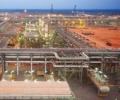
A day after Reliance Industries Ltd announced sale of 30 per cent interest in its 23 oil and gas blocks, Canada-based Niko Resources, RIL's partner in three fields - D6, NEC 25 and D4 - on Tuesday said it has the option to increase its stake in the fields by up to 30 per cent from current working percentages.

This follows a letter by RIL to the ministry, justifying the increase in capex.

This is significantly higher than the government revenues of Rs 500 crore (Rs 5 billion) that ADAG has been claiming in an advertising campaign that it launched on August 17. The exercise marks the first time the directorate general of hydrocarbon, the upstream oil regulator, has worked out such an estimate. The exercise is not carried out in the normal course for oil or gas fields.

Anil Ambani group firm RNRL first filed a case against RIL in Bombay high court in November 2006, alleging violation of a family pact about supply of gas from elder brother Mukesh led RIL's Krishna-Godavari gas fields. Since the financial year 2006-07, RNRL's legal and professional fees have surged nearly five-fold from Rs 3.12 crore (Rs 31.2 million) to Rs 15.27 crore (Rs 152.7 million) in the latest fiscal 2008-09.

RIL's predominantly gas rich KG-D6 block, off the east coast, has also helped boost availability of the environment friendly fuel in the country.

In a surprise move, oil regulator DGH has asked Reliance Industries to include the marketing margin the company charges on sale of natural gas from its field to the approved gas price for calculating the government's share from the project.
Very little notice, however, has been taken of the fact that Reliance Gas Transportation and Infrastructure Ltd, which set up the pipeline network for transport of this gas which has had rival users clamouring for government priority, is no longer owned by RIL, but by the latter's chairman and managing director, Mukesh Ambani. The change took place three years earlier and went largely unnoticed, even though RGTIL is crucial for RIL's burgeoning gas business.
The government has asked Reliance Industries to supply natural gas from the company's eastern offshore D6 fields to the beleaguered Dabhol power plant, a segment that gets top preference for gas allocation along with fertiliser units.
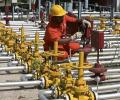
India's natural gas production is projected to jump by 52 per cent to 122 million standard cubic metres per day by 2024 as state-owned Oil and Natural Gas Corporation (ONGC) and Reliance Industries Ltd-BP combine raise output from the KG basin fields. Natural gas production in 2019-20 was 85 mmscmd, which is estimated to have fallen to 80 mmscmd in the following year, HDFC Securities said in a report. The output is projected to rise in the current fiscal that started on April 1 to 93 mmscmd, 107 mmscmd in the following year and 122 mmscmd in 2023-24, the brokerage estimated.
The agreement, which will be reviewed at the end of five years, will boost profitability of the steel firms who had been buying expensive LNG or naphtha to meet feedstock shortage at their plants, a senior official said. The ministry of petroleum and natural gas had last week asked Reliance to sell natural gas to steel firms like Essar, Ispat and Vikarm Ispat to help the nation's most prolific gas field to produce at optimum level.
A division bench of Justices J N Patel and K K Tated said that the new agreement should be as per the memorandum of understanding between the Ambani brothers Mukesh and Anil. The MoU stipulates that RIL would supply 28 mmscmd of gas to RNRL for 17 years at the rate of $2.43 per million British Thermal Units.
After the controversy over pricing of gas from the Krishna-Godavari basin, the Ambani brothers are locked in another court battle.
Petronet LNG, which operates a recently expanded ten-million-tonne gas regassification plant in Dahej on the west coast, is exploring a swap option with the gas from the Krishna-Godavari field (K-G D6) on the east coast owned by Reliance Industries Ltd.
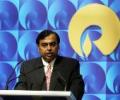
Reliance Industries Ltd has decided not to use its allocation of gas from the Krishna-Godavari basin's D6 field for petrochemical production; it will, instead, swap it with gas available from other sources. It will use D6 gas only for power generation.
Reliance Industries on Friday said it will drill three more wells in the Krishna Godavari basin bloack where the first exploratory well was abandoned owing to poor gas find.
Reliance Industries will not "scale down" production from Krishna Godavari basin to accommodate RNRL's future needs, nor would it renegotiate the government-approved price of the gas, the Bombay High Court was told on Thursday.

Reliance Industries has already stepped up gas production from 28 mmscmd in June to about 36-37 mmscmd now. The production will soon reach 42 mmscmd once the supply to the Dabhol power plant is increased in the first week of October, said a company official.
According to sources, the government has provided a list of 20 companies to Reliance Industries for sale of gas as per the gas utilisation policy. Some of these companies include Nagarjuna Fertilizer & Chemicals, Chambal Fertilizers & Chemicals, Tata Fertilizers and Oswal Chemicals & Fertilizers among others.
The Reliance Anil Dhirubhai Ambani Group on Wednesday threatened to sue three top officials of Mukesh Ambani's Reliance Industries for breach of trust and their inability to protect the interest of shareholders of an ADAG company.
RIL's KG basin started pumping gas in April and is currently producing 37-38 mscmd.
The empowered group of ministers (EGoM) on gas headed by External Affairs Minister Pranab Mukherjee on Thursday decided that gas allocation from RIL's D-6 block will be made to power projects subject to availability and without prejudice to court decisions, according to a government release.
Mukesh Ambani-led RIL has sought to lift the sty as it claims it's ready to produce gas next month. Arguing before the court against vacation of the stay, RNRL senior counsel Mukul Rohatgi said, "There is no immediate supply of gas. Let the directorate general of hydrocarbons make a statement when the company is ready to produce the gas."
The government told the court that price of gas, determined by an empowered group of ministers, is applicable to all the buyers, whether they are government companies or private. The government will file an affidavit to this effect on Tuesday.

Some documents not yet provided, spokesperson tells DNA Money. Murli Deora's Petromin says report submitted! ADAG once again asks for tabling of report, shows 'proof' govt appointed auditors of RIL expense sheet have conflict of interest.
The development plan under preparation is for earlier find in KG-8 well in June 2005. GPSC believes it will take two years from the date all approvals are in place, including the one for development plan, which details investments and volumes to be produced, for starting production from the block KG-OSN-2001/3 off the Andhra coast.
Reliance Industries has put the cost of producing natural gas from its prolific Krishna Godavari basin fields at $2.9 per million British thermal unit and the firm will earn a pre-tax return of 13 per cent.
 © 2026 Rediff.com - Investor Information - Advertise with us - Disclaimer - Privacy Policy - Sitemap - Feedback - About us - Terms of use - Grievances