
Moody's Investors Service, while silent on the sovereign rating on the higher-than-expected fiscal deficit numbers, expressed doubts over attaining the higher revenue targets and divestment realisation as assumed in the Budget. The Union Budget 2021-22 has pegged a fiscal deficit of 9.5 per cent for the current financial year as against the consensus 7 per cent, and 6.8 per cent for 2021-22 with a market borrowing of around Rs 12 lakh crore. It also assumes Rs 1.75 lakh crore to be scooped up from divestment.

International Monetary Fund Chief Economist Gita Gopinath tells Indivjal Dhasmana high-frequency indicators for the third quarter of 2021 indicate momentum in economic recovery in India.

Moody's Investors Service on Wednesday slashed India's growth projection to 9.6 per cent for the 2021 calendar year, from its earlier estimate of 13.9 per cent, and said faster vaccination progress will be paramount in restricting economic losses to June quarter.

Moody's expected economic activity to pick up in 2020 and 2021 to 6.6 per cent and 6.7 per cent, respectively.

The negative outlook reflects dominant, mutually-reinforcing, downside risks from deeper stresses in the economy and financial system that could lead to a more severe and prolonged erosion in fiscal strength than Moody's currently projects, the agency said.

IDBI Bank had to sell its MF arm after being acquired by state-owned insurance behemoth Life Insurance Corporation since LIC already had an AMC.

S&P Global Ratings on Wednesday said the second wave of COVID infections poses downside risks to India's GDP and heightens the possibility of business disruptions. The second wave brings in uncertainty and a drawn-out COVID outbreak will impede India's recovery, it said.

Moody's Investors Service on Thursday said loans to retail customers, especially those to low-income borrowers, will remain most affected due to the shock caused by the coronavirus pandemic. Despite the pandemic challenges, asset quality at Indian banks has performed better than expected at the start of the outbreak, Moody's said. "Corporate loans, in particular, have performed well because banks prior to the pandemic had largely provisioned for legacy problem loans and tightened underwriting standards," Moody's vice president and senior credit officer Srikanth Vadlamani said. Addressing an online conference organised by Moody's and its affiliate Icra, Vadlamani said an increase in non-performing loans in both public and private sector banks is subdued.

Moody's assumes that the RBI will continue to pursue price and financial stability and implement policies towards these goals.

Moody's Investors Service on Tuesday lowered India's GDP growth forecast for the 2020 calendar year to 5.3 per cent, on coronavirus implications on the economy. Moody's had in February projected a 5.4 per cent real GDP growth for India in 2020. This too was a downgrade from 6.6 per cent earlier forecast.

Top losers in the Sensex pack included Sun Pharma, Vedanta, ONGC, TCS, HUL, ITC, NTPC, Asian Paints and Infosys, shedding up to 4.23 per cent.

The improved outlook on the Government of India announced by rating agency Moody's might need to be viewed with some scepticism. There is no doubt the performance of the Indian economy has sharply improved from the deep trough it hit last year. But the ability of the second largest global ratings agency to assess an upside and downside before events make everyone wise about India has been dismal for a long time, as the chart shows.

Markets regulator Sebi on Thursday came out with detailed modalities for implementation of the accredited investors framework, a move expected to open up a new channel of raising funds from sophisticated investors. The regulator has issued guidelines on eligibility criteria for accredited investors (AIs), procedure as well as validation for accreditation, procedure to avail benefits linked to accreditation and flexibility to investors to withdraw "consent", according to a circular. Sebi had earlier this month introduced the concept of "accredited investors" in the Indian securities market.

Vedanta, Tata Steel, Tata Motors, ONGC, M&M, Maruti, NTPC and HUL too fell up to 4.06 per cent.

Moody's has forecast that China would be the only G-20 country to post growth this year.

Billionaire Mukesh Ambani's Reliance Industries Ltd (RIL) has seen pre-tax profit recover to pre-pandemic levels on the back of continued growth in consumer businesses, Moody's Investors Service said on Monday. The oil-to-retail-to-telecom behemoth on Friday reported a 0.7 per cent Ebitda (earnings before interest, tax and depreciation and amortisation) growth for the quarter ended December 31, 2020, compared with the corresponding quarter in the previous year. "A strong performance in digital services and retail segments underpinned the improvement in consolidated earnings, a credit positive," Moody's said commenting on the earnings. Continued growth in earnings combined with the company's strong balance sheet with zero net debt on a reported basis will keep Reliance's credit metrics strong for its Baa2 rating over the next 12-18 months, it said.

It said banks' asset quality will deteriorate across the corporate, small and medium enterprises and retail segments, leading to pressure on profitability and capital.
PSBs dominate India's banking system, meaning any failure could jeopardise financial stability, as such, we expect government support will remain forthcoming, said Moody's.

Top gainers in the Sensex pack included ICICI Bank, Infosys, Bajaj Finance and HDFC Bank, rising up to 2.67 per cent.

Bharti recorded $5 billion liability for past-due AGR fees, but is still completing its self-assessment to determine the final amount.

Stating that an economic recession gripped global economy following the lockdowns due to COVID-19 pandemic, Fitch Ratings on Friday said the initial disruptions to regional manufacturing supply chains in China have now broadened to include local discretionary spending and exports.

India's macroeconomic situation is improving fast and the country's GDP growth will turn positive in the third and fourth quarters of the current financial year, eminent economist Ashima Goyal said on Sunday. Goyal in an interview to PTI said the management of the COVID-19 pandemic and gradual unlocks announced by the government have helped in avoiding multiple COVID-19 peaks. The growth estimates by different agencies are being continuously revised, she said.

Moody's Investors Service on Tuesday slashed India's growth forecast for the current financial year to 9.3 per cent saying that the second wave of coronavirus infections hampers economic recovery and increases risk of longer-term scarring. Moody's, which has a 'Baa3' rating on India with a negative outlook, said obstacles to economic growth, high debt and weak financial system contrain sovereign credit profile. The US-based rating agency had in February forecast a 13.7 per cent economic growth for the current fiscal (April 2021-March 2022).

The broader NSE Nifty fell 78.75 points, or 0.70 per cent, to close at 11,234.55.

India's sovereign credit ratings do not reflect the economy's fundamentals, the Economic Survey said on Friday and nudged the global agencies to become more transparent and less subjective in their ratings. The Economic Survey 2020-21, tabled in Parliament, said that sovereign credit ratings methodology must be amended to reflect economies' ability and willingness to pay their debt obligations, and suggested that developing economies must come together to address this bias and subjectivity inherent in sovereign credit ratings methodology. "Never in the history of sovereign credit ratings has the fifth largest economy in the world been rated as the lowest rung of the investment-grade (BBB-/Baa3). While sovereign credit ratings do not reflect the Indian economy's fundamentals, noisy, opaque and biased credit ratings damage FPI flows," the survey said.

Gandhi also attacked Prime Minister Narendra Modi over the economic situation in the country, saying the PM should get his head "out of the sand" to deal with the problem facing the country.

Moody's said together, proceeds from these transactions will result in a $ 16 billion reduction in RIL's net debt.

The government holds 90 per cent stake in ITI which is valued at Rs 7,550 crore.

What worked for the markets was favourable global investor sentiment and encouraging flows into the emerging markets following stimulus measures taken by central banks.
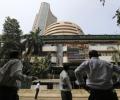
Yes Bank was the top gainer in the Sensex pack rising 5.80 per cent, followed by Tata Motors, ICICI Bank, IndusInd Bank, Axis Bank, Kotak Bank and Tata Steel.

There are various estimates of India's debt to GDP ratio, but the consensus is that that it would be over 80 per cent at the end of the current fiscal year.

The pay hike has been made effective from January 1, 2016.

Stating that the economic costs of shutdown of the global economy are accumulating rapidly, Moody's projected that all G-20 advanced economies would contract by 5.8 per cent in 2020.

S&P Global Ratings on Wednesday lowered India's economic growth forecast to 5.2 per cent for 2020, saying the global economy is entering a recession amid the coronavirus pandemic. The agency had earlier projected a growth rate of 5.7 per cent during the 2020 calendar.

Moody's said fiscal measures undertaken by the government -- such as corporate tax rate cuts, bank recapitalisation, infrastructure spending plans, support for the auto sector and others -- do not directly address widespread weakness in consumption demand, which has been the chief driver of the economy. In addition, interest rate cuts by the Reserve Bank of India are not being adequately transmitted to lending rates because of the credit squeeze caused by disruption in the non-bank financial sector, it said.

Billionaire Mukesh Ambani's Reliance Industries has announced the contours of carving out of its oil-to-chemicals (O2C) business into an independent unit with a USD 25 billion loan from the parent, as it looks to unlock value by selling stakes to global investors like Saudi Aramco.

For the current fiscal which ends on March 31, it put the real GDP estimate at 5 per cent. It estimated a 7 per cent growth in 2022-23 and 2023-24 fiscal years. The inflation rate was seen moderating to 4.4 per cent in the next fiscal from 4.7 per cent in the current.

The government's second round of stimulus will spur consumer spending in the near term but support to economic growth will be minimal, Moody's Investors Service said.

Apart from supply chain disruptions, Moody's also expects consumption and investment to be affected and prices of oil and other commodities to remain around current lows until the end of June.

India's GDP is estimated to contract by a record 7.7 per cent during 2020-21 as the COVID-19 pandemic severely hit the key manufacturing and services segments, as per government projections released on Thursday. Amid overall decline in economic activities, some respite was provided by the agriculture sector and utility services like power and gas supply, which have been projected to post positive growth during the current fiscal ending March 2021.
 © 2026 Rediff.com - Investor Information - Advertise with us - Disclaimer - Privacy Policy - Sitemap - Feedback - About us - Terms of use - Grievances