
During the dot-com bubble, it had touched a high of 1.9.

In the last 3 months, rupee has depreciated 16% against dollar.

Better-than-expected financial results in Q3 due to higher revenue growth and margins in key markets fuel the rally

The big advantage that Jio is able to garner currently is its low cost of operations.

Experts expect the trend to continue in the near term.

The broader markets were also in top gear, with the BSE midcap index surging by 2.1% at 11,431 and the smallcap index gaining 1.4% at 11,735.

Corporate indebtedness is now twice what it was before the global financial crisis; banks' bad loans ratio is 3.5 times higher.

The road ahead is not expected to be easy for one of India's best-loved brands.

TCS kicked-off the Q1FY17 earnings season for information technology companies on Thursday.

Only Hindustan Unilever and Nestl bucked the trend.

The crackdown on black money has manifested itself in a doubling in outward remittances as black money attempts to leave India.

These firms reported a combined operating profit of Rs 26,077 crore (Rs 260.77 billion).

New entrants could include Flipkart, Paytm, Cafe Coffee Day and ICICI Prudential Life Insurance, it says

This analysis is based on the quarterly earnings for 724 companies.

Reducing dependence on wholesalers will give the company better control over its inventory, besides offering greater visibility to new brands, reports Avishek Rakshit.

In five years, per-employee revenue for IT companies grew at 9 per cent each year.

While larger companies like Nestle India, Britannia and the like are often mentioned, some mid-cap companies are also expected to grow at a rapid clip.

Combined debt-equity ratio of top companies declines but interest expenses outgrow profits.

Lower revenue collection puts upward pressure on government borrowing, ensuring that it deviates from the glided path of debt reduction
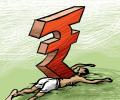
The bigger worry is that its effects could linger well into the next financial year.

Experts, however, caution that though the moves are positive for the sector as a whole, they don't expect much gain in the near-term.

Promoters' holding in private sector BSE 500 companies declined to 43.4% in Sept

Urjit Patel as the new RBI governor whose focus is on taming inflation has lowered the probability of interest rate cut soon

In the past 12 months, such earnings have grown in double digits in Europe, the US, Japan and South Korea.

The index is more expensive than it was at 2014-end or when it hit a life-time high in January.

FMCG stocks have underperformed the market, falling 2.2 per cent so far in 2014.

Though India has been one of the best-performing markets in the last two months, it has lagged some of its emerging market peers such as the Philippines, Thailand and South Africa.

They believe that the key reason behind such a high growth rate could be "a steep downward revision" of the year-ago base period.


FY17 GDP growth faces cash crunch heat

The report analysed product launches of 2011, their success over three years, and reported 31 of the 14,509 products introduced that year were received well by consumers.

Analysts are eyeing bigger launches that will positively impact company's fortunes.

Number of stocks trading above 50 times and 100 times earnings are at record highs. When this happened in 2015 and 2016, the Sensex fell 22.6 per cent in a little over a year's time after peaking in January 2015, while it fell by 11.3 per cent in two months from its peak in September 2016.
Beat gains made by mid-cap, broader indices.

EM asset classes could rally if the pace of US Federal Reserve rate increases moderates.

Developers had been urging dual usage of their SEZ land since the beginning of global financial recession in 2008.

With a rise of around 30 per cent in the benchmark index S&P BSE Sensex, 2014 has been the best year for Indian equity markets since 2009, when the benchmark index surged 81 per cent.

If financials and oil sectors were removed, India Inc has done quite well.

The rush for prohibition and the Supreme Court's decision to ban liquor sales within 500 metres from highways have hurt companies.

After 11 years at the helm of Jubilant, Ajay Kaul, the 'nuts and bolts' executive, called it a day amid speculation that his expansionist strategy was not clicking, says Viveat Susan Pinto.
 © 2026 Rediff.com - Advertise with us - Disclaimer - Privacy Policy - Sitemap - Feedback - About us - Terms of use - Grievances