
Indian airline industry is expecting to prune its net losses to Rs 3,000-5,000 crore in this fiscal from an estimated Rs 17,000-17,500 crore in FY2023 on the back of improved yields and stable cost environment, credit ratings agency ICRA said on Tuesday. At the same time, ICRA also estimated that domestic air passenger traffic will expand by 8-13 per cent each in FY2024 and FY2025. The rating agency has also maintained its stable outlook on the industry in view of healthy passenger traffic growth, improved yields and a stable cost environment.

Foreign portfolio investors' (FPIs') net investment in the domestic debt market in October was the third highest during the current calendar year as foreign investors rushed to lock in higher returns amid global uncertainty and geo-political tensions, market participants said. FPI inflows in debt stood at Rs 6, 322 crore in October against Rs 768 crore in September, according to data on the National Securities Depository Limited (NSDL). Market participants said that the majority of the inflows were channelled through corporate bonds.

After falling 10 per cent against the greenback in 2022, the rupee staged a comeback in 2023 as it appreciated, albeit marginally, on the back of strong portfolio inflows, in addition to timely intervention by the Reserve Bank of India. The Indian unit appreciated by 0.16 percent in six months until June 28. The rupee stood in third place in terms of appreciation against the US dollar among the 12 Asian currencies and in 12th place of the 23 emerging-market currencies.
Domestic air passenger traffic touched 1.25 crore in January this year, an increase of 96 per cent compared to the year-ago period, according to rating agency Icra. However, it said the traffic remained around 2 per cent lower compared to the pre-Covid levels -- January 2020. The traffic stood at 64 lakh in January last year. Icra is maintaining a negative outlook on the Indian aviation industry, reflecting the view that the financial performance of Indian airlines is likely to remain under pressure in the near term, even though the recovery in domestic passenger traffic has been healthy.
The Reserve Bank on Monday asked banks to put in place additional arrangements for export and import transactions in Indian rupees in view of increasing interest of the global trading community in the domestic currency. Before putting in place this mechanism, banks will require prior approval from the Foreign Exchange Department of the Reserve Bank of India (RBI), the central bank said in a circular. "In order to promote growth of global trade with emphasis on exports from India and to support the increasing interest of global trading community in INR, it has been decided to put in place an additional arrangement for invoicing, payment, and settlement of exports / imports in INR," it said.
India should become a middle-income country and then push to make INR (rupee) a hard currency, and till then, it must promote the settlement of global trade in the local currency, think tank GTRI said on Sunday. Global Trade Research Initiative (GTRI) said that transforming a currency into a hard currency is a complex process that hinges on several pivotal factors. Firstly, economic stability is paramount; a country must exhibit low and stable inflation, consistent growth, and a balanced trade environment.

The rupee depreciated by 9 paise and settled at its all-time low level of 83.13 against the US dollar on Wednesday, weighed down by a surge in crude oil prices and strong American currency. Forex traders said the Indian rupee depreciated as the US dollar rose to the highest levels in six months. Moreover, elevated crude oil prices also weighed on rupee.

Rohit said he never doubted Jaiswal's talent and, during their opening partnership, kept telling the debutant that he belonged at the Test level.

'Gold prices thrive on volatility and more so when the stock markets trend downward.'
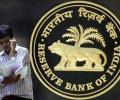
The Reserve Bank on Wednesday hiked key benchmark policy rate by 25 basis points to 6.5 per cent, citing sticky core inflation.

Gold, the safest haven amid the ongoing uncertainty, also emerged as one of the most lucrative investment options in financial year 2022-23 with an impressive return of 16.1 per cent in rupee terms, and 2.3 per cent returns in dollars. And, had it not been for the very high inflow of smuggled gold and the huge discount prevailing in the market due to high prices, the returns in gold would have been much higher, analysts said. The precious metal has consistently been delivering positive returns in India since 2016.

Reserve Bank and the finance ministry on Wednesday asked top management of banks and representative of trade bodies to push exports and import transactions in rupee. It was stressed during a meeting that banks should connect with their foreign counterparts for opening special rupee vastro accounts to facilitate cross-border trade in Indian currency rather than popular mode dollar, sources said. Trade associations and their foreign trading partners should explore opportunities to make use of the framework, sources added.

The Reserve Bank on Wednesday projected retail inflation to ease to 5.3 per cent in next fiscal from 6.5 per cent this year on assumptions of lower imported inflation, even though core inflation remains sticky. The RBI's inflation outlook for current fiscal has improved from 6.8 per cent projected earlier, to 6.5 per cent, on the back of steeper than expected decline in vegetable prices and Indian basket of crude at $95 a barrel. "Looking ahead, while inflation is expected to moderate in 2023-24, it is likely to rule above the 4 per cent target.

A healthy growth in India's services segments has helped the country's total exports and imports of goods and services to cross the $800 billion mark during the first half of 2023, despite a slowdown in global demand, think tank GTRI said in a report on Monday. According to the analysis of the Global Trade Research Initiative (GTRI), exports of goods and services rose by 1.5 per cent to $385.4 billion during January-June this year, as against $379.5 billion in January-June 2022. Imports, however, dipped by 5.9 per cent to $415.5 billion during the six months of this year, as against $441.7 billion in January-June 2022.

'If I were to say, I had the best vegetarian food in my life in Vietnam, nobody would believe me.' 'When I proclaimed this to my friends, they didn't believe me. I had to show them the pictures and make them drool!!'

Those who consider the rupee as a proxy for virility have started thumping their chests and dreaming of dethroning the dollar from its coveted position, observes Tamal Bandyopadhyay.

The government on Friday came out with Foreign Trade Policy (FTP) 2023 which seeks to boost the country's exports to $2 trillion by 2030 by shifting from incentives to remission and entitlement based regime. Unlike the practice of announcing 5-year FTP, the latest policy has no end date and will be updated as and when needed, said Director General of Foreign Trade (DGFT) Santosh Sarangi while briefing media about FTP 2023. Earlier, Commerce and Industry Minister Piyush Goyal unveiled FTP 2023 which will come into effect from April 1, 2023.

India has decided to authorise the country's biggest lender SBI to promote rupee trade with Russia and soon Moscow will name its bank to operationalise the mechanism, exporters' body FIEO said on Wednesday. The RBI in July issued a detailed circular asking banks to put in place additional arrangements for export and import transactions in Indian rupees in view of increasing interest of the global trading community in the domestic currency. Currently, a large part of bilateral trade between India and Russia is getting settled in rupee due to sanctions imposed by the US and Europe following Moscow's attack on Ukraine.

The share of non-resident Indians (NRIs) and overseas investors in Indian mutual funds has been declining over time, despite adding half-a-trillion rupees to holdings over the last five years. Mutual fund holdings for the segment went up from Rs 0.95 trillion as of December 2018 to Rs 1.54 trillion as of December 2022, shows Business Standard analysis of data from the industry body Association of Mutual Funds in India (Amfi). Their share in overall mutual fund assets has fallen from 4.2 per cent to 3.9 per cent during the same period.

The rupee depreciated 39 paise to an all-time low of 82.69 against the US dollar in early trade on Monday as elevated crude oil prices and risk-averse sentiment among investors weighed on the local unit. Moreover, a negative trend in domestic equities and firm American currency sapped investor appetite, forex traders said. At the interbank foreign exchange, the rupee opened at 82.68 against the greenback, then slipped further to 82.69, registering a fall of 39 paise over its previous close.

Amid the absence of some big names, the Indian Premier League 2023 kicks off with defending champs Gujarat Titans facing a formidable Chennai Super Kings.

Indian rupee, which earlier this week touched an all-time low, is likely to remain under pressure and may test new levels as a fallout of the US Federal Reserve indicating more interest rate hikes, experts said. The aggressive rate hikes will dampen demand and increase the possibility of a recession in the US. This could accelerate the pace of capital outflows, weaken the rupee and raise the threat of imported inflation.

The rupee on Friday rebounded from the near-80 levels to close higher by 17 paise at 79.82 against the US currency following a recovery in the domestic stocks and weakness in the greenback in overseas markets. The US dollar retreated from the two-decade high levels against a basket of six currencies which supported the rupee sentiment. At the interbank foreign exchange market, the local currency opened at 79.95 and witnessed an intra-day high of 79.82 and a low of 79.96 against the US dollar in the day trade. ,

Maruti Suzuki's contribution to the sales revenue of its Japanese parent, Suzuki Motor Corporation (SMC), has touched the highest-ever figure during April-December of FY23. According to SMC's results declared on Tuesday, Maruti's share in its global revenues jumped from 33.42 per cent in April-December of FY22 to 40.93 per cent in the corresponding period of FY23.

Foreign investors pumped in Rs 11,119 crore in the Indian equities in December, making it the second consecutive monthly inflow, despite increasing concerns over the re-emergence of Covid-19 cases in some parts of the world. However, foreign portfolio investors (FPIs) have turned cautious in recent days. The inflow in December was much lower compared to Rs 36,239 crore invested by FPIs in the month of November, data with the depositories showed.

Reserve Bank Governor Shaktikanta Das on Wednesday said in the wake of appreciating US dollar, the movement of rupee has remained least disruptive as compared to its peers, and the size of foreign exchange reserve is comfortable. On a financial year basis (from April to October 2022), the rupee has appreciated by 3.2 per cent in real terms, even as several major currencies have depreciated, he said while announcing the latest set of bi-monthly monetary policy. "The story of the rupee has been one of India's resilience and stability," the Governor said while pointing out that the appreciation of the US dollar this year, which precipitated large-scale depreciation of all major global currencies including the Indian rupee, has drawn wide attention.
'To simply let the rupee depreciate to any level according to market forces will not be in the country's interests.'

Finance minister Nirmala Sitharaman on Wednesday exuded confidence that inflation would further decline and the government is on track to meet its budgetary target for deficit and said that there is no fear of stagflation in India. Replying to the debate on first batch of Supplementary Demands for Grants 2022-23 in Lok Sabha, the finance minister said inflation has come down and it is now in the tolerable band of the RBI. Inflation has been declining since April 2022 and it is declining further, she said.

Equity benchmarks snapped their six-session rally to close marginally lower on Thursday amid profit booking in banking and energy counters. Investors also stayed on the sidelines ahead of the RBI's policy meet outcome on Friday. In choppy trade, the 30-share BSE Sensex ended 51.73 points or 0.09 per cent lower at 58,298.80. During the day, it hit a low of 57,577.05 and a high of 58,712.66.

The benchmark BSE Sensex and Nifty closed marginally higher in a volatile trade on Tuesday as gains in FMCG, power and energy stocks helped the indices extend gains for a fifth straight day. The 30-share BSE benchmark ended 20.86 points or 0.04 per cent higher at 58,136.36 with 16 of its constituents ending in the red. During the day, it hit a high of 58,328.41 and a low of 57,744.70.

Lok Sabha Speaker Om Birla on Monday warned members against referring to anyone's caste and religion in the House after a Congress MP alleged that Finance Minister Nirmala Sitharaman made certain remarks about his proficiency in Hindi because he belonged to a lower caste.

Amid fast-depleting forex reserves, the Finance Ministry on Wednesday signalled that it was not in favour of selling the dollar to defend any particular level of the rupee. "Let it (rupee) reach whatever levels it has to reach. We can't fritter away reserves on defending some artificial, imaginary rate of exchange," a senior finance ministry official told Business Standard. Forex reserves declined to a near two-year low of $545.65 billion as on September 16, down $85.88 billion from the level that existed on February 25, a day after Russia invaded Ukraine.

The biggest risk to India's growth outlook is an escalation of geopolitical tensions, especially if these tensions spread to the Asian region, RBI Monetary Policy Committee (MPC) member Jayanth R Varma said on Wednesday. Varma, in an interview to PTI, said that inflation and inflationary expectations appear to be moderating and high inflation will certainly not become the 'norm' in the country. He is cautiously optimistic about the Indian economy as after the pandemic abated, consumption demand has begun to recover though the recovery is uneven across sectors and industries.

After declining for three consecutive quarters, the value of FPI investment in Indian equities rose 8 per cent quarter-on-quarter to $566 billion in the July-September period, according to a Morningstar report on Wednesday. A fast-changing global macroeconomic landscape, sentiments and opportunities that the Indian equity markets have to offer impacted the direction of flows by Foreign Portfolio Investors (FPIs). Through the quarter, the value of the FPI holdings in domestic equities surged by 8 per cent to $566 billion from $523 billion recorded in the previous quarter.

The rupee on Thursday closed at its all-time low of 78.32 (provisional) against the US dollar as strong American currency and persistent foreign fund outflows weighed on investor sentiments. At the interbank foreign exchange market, the local currency opened at 78.26 and finally settled at its all-time low 78.32, unchanged from its previous close. On Wednesday, the rupee declined by 19 paise to settle at an all-time low level of 78.32 against the US dollar.

The Reserve Bank on Wednesday hiked key benchmark policy rate by 25 basis points to 6.5 per cent, citing sticky core inflation. This is the sixth time interest rate has been hiked by the Reserve Bank of India (RBI) since May last year, taking the total quantum of hike to 250 basis points. Announcing the bi-monthly monetary policy, RBI Governor Shaktikanta Das said the Monetary Policy Committee (MPC) by a majority decided to raise the policy repo rate by 25 basis points and keep a 'strong vigil' on inflation outlook.
S&P Global Ratings on Thursday said about half of the Indian companies that it rates are getting a boost in their core profitability from rupee depreciation. "Much of our rated India corporate portfolio has sizable US-dollar linked revenue and, therefore, is not exposed to rupee depreciation. "This encompasses entities in the IT, metals, and chemicals sectors. About half of the firms we rate are getting an EBITDA boost from currency weakening," the US-based rating agency said in a report.

State Bank of India (SBI) is willing to work with Russian banks not facing sanctions and remain on the Society for Worldwide Interbank Financial Telecommunication (SWIFT) network to open a special rupee vostro account (SRVA) for invoicing in Indian currency. The country's largest lender in a statement said it has not been identified as the nodal bank for handling Russia-related transactions. In July, the Reserve Bank of India (RBI) allowed banks in India, including SBI, to open an SRVA to promote invoicing in Indian rupee, subject to certain safeguards. Accordingly, the bank in a statement said it is "making necessary arrangements and processing requests received from various banks, including Russian banks", following guidelines laid out by the RBI.

The government has hiked gold import duty to 15 per cent from 10.75 per cent to check the current account deficit (CAD) and rising import of the yellow metal. The duty changes came into effect on June 30. Earlier, the basic customs duty on gold was 7.5 per cent, now it will be 12.5 per cent.
India's economy is projected to slow to 6.5 per cent in the fiscal year starting April but will remain the fastest growing major economy in the world as it fared better in dealing with the extraordinary set of challenges the globe has faced, the Economic Survey 2022-23 said on Tuesday. India's gross domestic product (GDP) growth of 6.5 per cent in 2023-24 compares with an estimated 7 per cent expansion in current fiscal year (April 2022 to March 2023) and 8.7 per cent in the previous year. Like the rest of the world, India too faced an extraordinary set of challenges in tightening financial conditions and supply chain disruptions from a prolonged war in Europe but "withstood them better than most economies", the annual document detailing the state of the economy said.
 © 2026 Rediff.com - Investor Information - Advertise with us - Disclaimer - Privacy Policy - Sitemap - Feedback - About us - Terms of use - Grievances