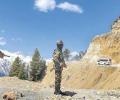
This is the third round of Corps Commander-level talks being held. The first two rounds had taken place in Moldo on the Chinese side of the LAC.
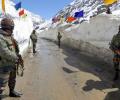
The army said senior commanders of the Indian and Chinese military reviewed the progress on implementation of the first phase of disengagement and discussed further steps to ensure complete withdrawal of troops in the region.
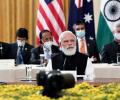
"In all the meetings the Prime Minister had, beginning with US leadership, there was a suo moto recognition of the concerns that Pakistan represents as a country that has in many senses both supported and nurtured cross-border terrorism, including in Afghanistan and from Afghanistan," he said.

'We strongly object to raising the internal issue of India here and we also reject the politicisation of this forum'

'Where Pratidwandi is concerned, there are very few men standing.'
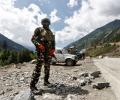
The top military brass reviewed the situation in eastern Ladakh and deliberated on key issues to be flagged at the talks on Monday, the sources said. Army Chief General M M Naravane and several top military officials were present in the meeting.
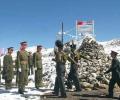
The two sides have already held at least 12 rounds of talks between local commanders and three rounds of talks between major general-rank officials but no positive outcome came out from the discussions, they said.

It is learnt that the Indian delegation insisted on a time-bound implementation of the agreement finalised during the extensive talks between External Affairs Minister S Jaishankar and his Chinese counterpart Wang Yi in Moscow on September 10 on the sidelines of a Shanghai Cooperation Organisation(SCO) meet.
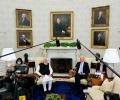
Prime Minister Narendra Modi met Joe Biden at the White House on Friday in his first bilateral meeting with the US president during which the two leaders are expected to discuss a wide range of priority issues, including combating Covid-19, climate change, economic cooperation as well as Afghanistan.

"Ambassador Mittal raised India's concern that Afghanistan's soil should not be used for anti-Indian activities and terrorism in any manner," it added.

India has voiced its strong opposition to China's Belt and Road Initiative and its flagship project -- the CPEC -- at the just concluded second UN Sustainable Transport Conference where the Indian diplomat's mike curiously went silent while she was highlighting New Delhi's objection to the controversial projects.

The talks as part of the annual Permanent Indus Commission meeting are being held after a gap of over two years.

The Indian delegation, comprising several officers and soldiers of the army, attended the celebration following an invitation by the PLA.
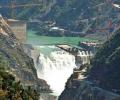
This will be the annual meeting of the Permanent Indus Commission. Under the provisions of the Indus Water Treaty, both the commissioners are required to meet at least once a year alternately in India and Pakistan.
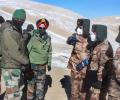
"The meeting thus did not result in resolution of the remaining areas," the Army said in a statement.

Organisers reported 10 new cases connected to the Olympics including media, contractors and other personnel, down from 15 on Saturday.

A Foreign Office official told PTI that the eight-member Indian delegation arrived in Lahore at 9.15 am (local time).
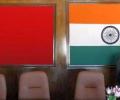
As the border standoff entered the sixth month, an early resolution to the row appeared dim with close to 100,000 Indian and Chinese troops remaining deployed in the high-altitude region and showing readiness for a long-haul. There is no official word on the talks yet but sources said the agenda was to finalise a roadmap for disengagement of troops from all the friction points.

The Army said it was also highlighted that completion of disengagement in other areas would pave the way for the two sides to consider de-escalation of forces and ensure full restoration of peace and tranquillity and enable progress in bilateral relations.
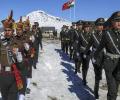
There was no breakthrough on the disengagement of troops from the friction points in eastern Ladakh during the seventh round of military talks on October 12. "The eighth round of military talks is likely to take place this week," said a source on Tuesday.
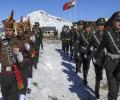
The major general-level meeting discussed ways to implement the disengagement of troops from Galwan Valley as agreed during high-level military talks between the two sides on June 6. The Indian delegation at the talks was led by Leh-based 3 Infantry Division commander Major General Abhijit Bapat. The two sides held Major General-level talks on Tuesday as well.

Here are glimpses from India's biennial military exhibition.
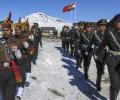
The decision to disengage the forces, locked in a bitter standoff for the last six weeks in eastern Ladakh, was taken at a nearly 11-hour-long meeting between senior Indian and Chinese commanders in Moldo on the Chinese side of the Line of Actual Control (LAC) on Monday.

India has conveyed its concerns to the top security and intelligence officials of the United States, the United Kingdom and Russia over the possible implications of Pakistan's links with the Taliban and various terrorist groups operating in Afghanistan for regional security and stability, people familiar with the development said.
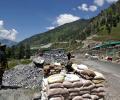
India's top military and strategic brass on Tuesday reviewed the overall situation in eastern Ladakh amid indications that the latest round of talks between senior military commanders of Indian and Chinese armies on the next phase of disengagement of troops may not have produced encouraging results, people familiar with the developments said.

External Affairs Minister S Jaishankar left London at the end of a four-day visit to the United Kingdom on Friday with a message of convergence as the two countries agreed on an ambitious '2030 Roadmap' towards a Free Trade Agreement (FTA).

Senior commanders of the two armies held intense negotiations for nearly 11 hours on Sunday at a designated meeting point in Moldo on the Chinese side of the Line of Actual Control.

After a gap of over two-and-half months, India and China on Sunday held the ninth round of military talks specifically focusing on ways to move forward on the long-negotiated disengagement process in eastern Ladakh as thousands of their troops remained deployed at friction points under freezing conditions.

Following the meeting, Abdullah tweeted that Modi assured him of India's continued support for the peace process in Afghanistan.

The experts also said China's military 'misadventure' may have been driven in part by President Xi Jinping's attempt to show 'gains somewhere" after the growing global criticism against his country over the origin of COVID-19.
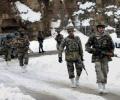
The two sides have already held seven rounds of Corps Commanders level talks to discuss the entire issue of transgressions in the Eastern Ladakh sector.
The sources said the focus of the talks was to take forward the disengagement process in friction points like Hot Springs, Gogra and Depsang in eastern Ladakh.
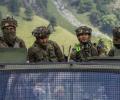
India and China on Saturday held another round of military talks with a focus on taking forward the disengagement process in Hot Springs, Gogra and Depsang in eastern Ladakh and bring down the tensions in the region, official sources said.
The Indian delegation led by Lt General Harinder Singh, the general officer commanding of Leh-based 14 Corps, and Commander of the Tibet Military District Maj Gen Liu Lin held an extensive meeting in Maldo on the Chinese side of the Line of Actual Control in eastern Ladakh on Saturday that began at around 11.30 am and went on till evening.

India and China on Friday held 'in-depth' discussions on addressing the remaining issues along the Line of Actual Control (LAC) in eastern Ladakh, holding that disengagement in the North and South banks of Pangong lake provided a good basis to work towards their early resolution.
ndia has become the world's second largest market of asbestos as the government backed by powerful corporate lobby turns a blind eye to diseases related to the use of the hazardous chemical.

'Kashmir is the main issue between the two countries.' 'We have not been able to resolve it bilaterally.' 'As the two major countries in South Asia, we have to go back to the drawing board and start engaging.'

The last round of Corps Commander-level talks had taken place on October 12 but there was no breakthrough on the disengagement of troops from the friction points.

Both the countries have deployed their big guns for the 'diplomatic offensive'.

The high-level talks came a week after 20 Indian Army personnel were killed in a violent clash between the two sides in Galwan Valley.
 © 2026 Rediff.com - Advertise with us - Disclaimer - Privacy Policy - Sitemap - Feedback - About us - Terms of use - Grievances