
Higher defence allocation will spur investment in new vehicles.
Indian players like Tata and Mahindra have low R&D spends (1 per cent and 1.5 per cent of sales respectively) as compared to the global players (about 4 per cent of sales), AT Kearney's 10th Townsend report said.

Volkswagen Passenger Cars is targeting a volume sales growth of about 15 per cent in the country in 2024, even as it expects the Indian passenger vehicle (PV) industry to grow by 5-7 per cent in the current year, its India brand director, Ashish Gupta, said on Thursday. This means the company is expecting to grow 2-3 times faster than the Indian PV industry in 2024. But globally, the German automaker is expecting just 3 per cent rise in sales this year, down from 12 per cent last year.
Indian Auto Expo that will start on February 7 will see 70 product launches. We bring the best of it.
Automobile retail sales in India rose to a record high in November, aided by the best ever monthly performance across passenger vehicle and two-wheeler segments, dealers' body FADA said on Wednesday. The overall retail sales stood at 28,54,242 units last month, 18 per cent higher over 24,09,535 units in November 2022. Passenger vehicle (PV) retail sales rose to 3,60,431 units as compared to 3,07,550 units in the year-ago period, registering a growth of 17 per cent.

Retail sales of automobiles in the domestic market saw a 7.73 per cent year-on-year decline in October this year at 21,17,596 units, mainly due to dip in two-wheeler uptake with the inauspicious period of Shraddh affecting new purchases, the Federation of Automobile Dealers Associations (FADA) said on Monday. Retail sales of automobiles in the domestic market stood at 22,95,099 units in October 2022, FADA said in a statement. Two-wheeler retail sales were at 15,07,756 units last month, as against 17,25,043 units in the year-ago period, down 12.60 per cent, as per the latest data by FADA.

The state is also the biggest market for TVS, another incumbent player, and together with Bajaj Auto, they accounted for 88 per cent of Maharashtra's total electric scooter sales last month. As many as 8,417 units were sold in Maharashtra in September. Bajaj Auto's contribution was 4,048 vehicles and that of TVS was 3,389, according to model- and state-wise data from the Society of Indian Automobile Manufacturers (Siam).

Mahindra & Mahindra chairman emeritus Keshub Mahindra passed away this morning in Mumbai due to old age. Mahindra, 99, breathed his last this morning at home peacefully, said a person close to the family. After joining the company in 1947, he became the chairman in 1963.
US-based electric vehicle maker Tesla is looking to source components worth around $1.9 billion this year against $1 billion last year, Commerce and Industry Minister Piyush Goyal said on Wednesday. The minister said that going forward, demand for electric vehicles will increase and it will help in pushing the growth of the sector. "Tesla already last year bought one billion dollars of components from I think all of you sitting here.... I have the list of companies who supply to Tesla.


The previous May peak was observed in 2018 when the domestic PV wholesales stood at 301,238 units.

According to Siam data, Indian auto companies sold 982,456 units of utility vehicles in the first half of FY23, a 50.29 per cent growth over the corresponding period last year.
India's automobile market is expected to register a slower growth between 12-14 per cent in the current calendar year, as compared to 30 per cent in 2010, an industry official said on Thursday.

Maruti Suzuki India (MSIL) does not anticipate growth in the small car segment because people continue to find these vehicles unaffordable, chairman R C Bhargava said on Wednesday. He said the market had clearly shifted towards the sport utility vehicle (SUV) segment and the company will go in the same direction. The domestic sales of utility vehicles jumped in India by 34.54 per cent to about 2 million units in FY23.

Tata Motors' luxury automotive brand, Jaguar, bagged a three-year order to supply 13,000 units of its range to a Chinese company earlier this year. Its Land Rover, jointly with Jaguar, is charting new territories for expansion.
'I'm very much against petrol and diesel....'' 'I travel in an electric car.' 'I have had a really good experience with it.'
Despite of reoccurring crisis in 2013, there were many auto-giants that did well in sales due to some of their impeccable mean machines. Here are some of the top gainers of 2013.

Even as India's passenger-vehicle sales touched a record high of 3.9 million units in 2022-23, growing 27 per cent over the previous financial year, the country's largest carmaker, Maruti Suzuki India (MSIL), said on Monday uncertainties in the electronic-component supplies might affect production in FY24. MSIL said the shortage of electronic components had some impact on production in FY23. "The company took all possible measures to minimise the impact.

Maruti Suzuki, Hyundai and Tata Motors reported their highest-ever dispatches to dealers last fiscal, enabling the domestic passenger vehicle industry to log in best-ever performance to date. The country's largest carmaker Maruti Suzuki India reported its highest wholesales to date at 19,66,164 units, up 19 per cent from 16,52,653 units in 2021-22. Its domestic dispatches rose to 17,06,831 units in 2022-23, up 21 per cent from 14,14,277 units in 2021-22 fiscal.Hyundai Motor India said its overall wholesales last fiscal were the highest ever since commencing operations in the country.

Stalling the introduction of better emission standards is based on specious logic, especially in a country that has 13 of the world's most polluted cities.

Europe's largest car maker, Volkswagen AG, today started production of its small car Polo at its plant in Chakan near Pune. Stating that the company would launch a saloon by the middle of next year, Volkswagen AG said it was aiming for a 10 per cent share of the domestic auto market in the next four to six years.
These cars are the future of mobility.
Australia is exploring possibilities of building better ties between its world-class firms and rapidly growing Indian automotive industries to create new export opportunities and help secure the ongoing strength of the multi-billion-dollar auto industry there.
A study says shortage of skilled workers, inferior quality and inadequate highway infrastructure can defeat Indian carmakers.

SoftBank Group-backed Ola Electric is in talks with multiple global suppliers to build a battery cell manufacturing plant in India with a capacity of up to 50-gigawatt hours, sources said. As part of its broader electrification push, the firm plans to invest in companies with advanced cell and battery technology, alongside the 50 Gwh battery plant. Ola Electric needs 40 Gwh of battery capacity to power 10 million electric scooters annually. The remainder will be for its electric cars, which the company plans to manufacture in the future.

That means a manufacturer looking at a market like India needs to decide whether small, cheap cars or small, expensive cars or both will work better for them, says Pavan Lall.
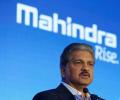
With increased consumer awareness and government support in place, it is the opportune time to enter the electric passenger vehicle segment, Mahindra Group Chairman Anand Mahindra said on Monday. With an eye on gaining leadership in the electric four-wheeler segment, the Indian auto major announced that it will launch five new electric Sports Utility Vehicles (SUVs) for both domestic and international markets, with the first four expected to hit the road between 2024 and 2026. The company would introduce the first of the five e-SUVs towards the end of 2024, starting with the Indian market.

German automotive giant Volkswagen (VW) has said it will focus on the premium sedan/sport utility vehicle (SUV) segment and avoid the mass hatchback segment. "Customers don't expect anything less than a premium product from VW. "Customers expect a certain level of quality and driving dynamics. We have to stay true to that DNA. "The day we go mass, customers will reject us," says Ashish Gupta, brand director, VW India.
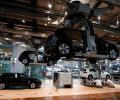
Passenger vehicle wholesales in India declined nearly 4 per cent to 279,501 units last month, auto industry body SIAM said on Wednesday. Passenger vehicle (PV) dispatches from factories to dealerships in March 2021 stood at 290,939 units. As per the latest data by the Society of Indian Automobile Manufacturers (SIAM), two-wheeler sales also fell 21 per cent to 11,84,210 units as compared with 14,96,806 vehicles in March 2021.

This is the total of both, direct and indirect employment growth as a result of the expansion. Estimates put together by the Society of Indian Automobile Manufacturers (Siam) say this will be the extra added between now and 2012, to support the ever-increasing demand for new vehicles.
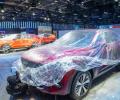
The country's leading automobile show, the Auto Expo, which was scheduled to take place in February next year at Greater Noida, has been postponed due to the COVID-19 situation and apprehensions of a possible third wave, industry body SIAM said on Monday. The last edition of the biennial automobile show took place in February 2020. "The magnitude of the risk of spread of infection is extremely high in a business-to-consumer (B2C) show like the Auto Expo which is visited by large crowds and maintaining social distancing would be difficult.
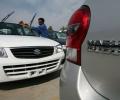
The country's largest carmaker Maruti Suzuki India (MSI) aims to sell 4-6 lakh CNG units in the current fiscal year depending upon supply situation of essential components, as per a senior company official. The company sold about 2.3 lakh CNG units in 2021-22. MSI currently sells nine of its 15 models with CNG powertrain and is looking to drive in more models with such technology in the coming days.

Automobile dealers' body FADA has urged the government to formulate a task force to monitor the compensation structure being worked out by Ford India for its dealer partners across the country. In a letter to Heavy Industries Minister Mahendra Nath Pandey, FADA president Vinkesh Gulati also requested the government to instruct Ford India to keep the industry body in the loop regarding the compensation structure for the dealerships. "We humbly request your Ministry's intervention... Create a task force which takes day-to-day updates from Ford India to monitor the compensation plan for automobile dealers and dealership employees," Gulati said in the letter.

Indian auto industry's dependence on China is high and it will continue to be so in the BS-VI era and as the country moves towards electric mobility. Domestic players lack both technological competence and the sheer pricing advantage that support Chinese imports.

Ratings agency ICRA on Wednesday revised downwards growth forecast for the domestic passenger vehicles industry to 8-11 per cent in the ongoing fiscal from the earlier estimate of 14-17 per cent on account of the ongoing semiconductor shortage. Similarly, for the two-wheeler segment, it said the volumes are expected to contract by 1-4 per cent in FY2022 against an earlier prediction of 6-8 per cent growth as affordability and demand sentiments of target clientele was hit sharply by the second wave of COVID-19 pandemic. With around 5 lakh units of production lost by various automakers in the passenger vehicles segment due to the semiconductor shortage, ICRA said the earnings loss for the OEMs (Original Equipment Manufacturers) could be around Rs 1,800 crore to Rs 2,000 crore for the ongoing fiscal.
The company will utilise this time to carry out maintenance work at its manufacturing plants.
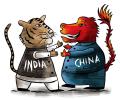
Indian auto and pharma industries import several critical components and raw materials from China.

After years of giving free passes to counterparts from Korea, Japan, US in the Indian auto market, Chinese automakers had planned a major push to grab the fifth largest car market in the world. But the shutdown of factories and logistics hubs in the country following the outbreak of coronavirus is slowly constricting the business of Chinese auto majors which have recently entered India.
 © 2026 Rediff.com - Investor Information - Advertise with us - Disclaimer - Privacy Policy - Sitemap - Feedback - About us - Terms of use - Grievances