
In a boost to the sagging defence relationship between India and Russia, the two nations on Friday signed a contract for supply of 80 MI-17V-5 medium lift helicopters for the Indian Air Force. Valued at $1 billion, the agreement between the two sides comes at a time when New Delhi and Moscow are squabbling over several defence related deals signed earlier.
Foreign Secretary Shiv Shankar Menon said in New Delhi that, "Both India and Russia are keen to expand nuclear cooperation. All the preparatory work has been done." He was inaugurating an international conference on "Changing Patterns of Indo-Russian Cooperation" organised by the Observer Research Foundation. He said that India and Russia already have an "excellent relationship" and India considers relations with Russia very important.

'There are reports that the Biden administration is contemplating imposing CAATSA sanctions against India, the largest democracy on Earth'
Prime Minister Atal Bihari Vajpayee on Thursday said that India and Russia should avail of opportunities in each other's country for broadbasing investment flows.

The Indo-Russian project to jointly design a transport aircraft for militaries of both nations kicked off in Moscow on Monday, where 30 engineers from Hindustan Aeronautics Limited began working with their Russian counterparts from the United Aircraft Corporation on the $600-million project.
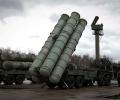
If India signs the deal, it would be the second customer of the prized missile system after China which had struck a $3 billion contract last year.
In another bid to iron out differences over cost escalation of weapons systems, including the aircraft carrier Admiral Gorshkov, Indian and Russian defence officials open crucial talks next week.
Defence Minister A K Antony will co-chair the commission meeting with Russian Defence Minister Anatoly Serdyukov to hold talks on a wide-ranging agenda of military technical cooperation, covering key spheres, including timely delivery of contracted military systems, in the light of the reported settlement of the cost-escalation issue and supply of defence systems.
Under the new deal signed in New Delhi on Friday by top officials of the Hindustan Aeronautics Limited and Russia's state owned arms agency Rosenbroexport, Russia has agreed to supply 40 Sukois in semi-knocked down kits at a cost of $1.6 billion. By agreeing to new annual cost escalation of five per cent, India would now be paying whopping $5 billion for 230 Sukhois fighters, which currently are IAF's mainstay.
India and Russia held discussions on the possibility of cooperation in space exploration, including missions to the moon and Mars. Russia's head of Federal Space Agency met the Indian Space Research Organisation chairman.
India has refused to accept further deliveries of upgraded IL-38 anti-submarine aircraft complaning that the plane-detection equipment is not working to specifications.
According to officials in the Defence Production department, the deal for joint production of the multi-role transport aircraft would be split on fifty-fifty basis.

"The deal is being implemented. We witnessed attempts on the part of the US to undermine this cooperation and make India obey the American orders to follow the American vision of how this region should be developed," Russian Foreign Minister Sergey Lavrov said.
"Bilateral talks usually focus on a broad range of issues: from the crucial international problems, such as Iraq, Afghanistan, and response to international terrorism, to the coordination of the working issues of bilateral cooperation."
We can make a beginning by openly acknowledging the Russian help in 1971 victory when President Putin visits India on 6 December 2021. Showing gratitude to a friend is part of our DNA, notes Colonel Anil A Athale (retd).
The Russian leader said as part of strengthening the strategic relationship between Russia and India there were serious plans for cooperation in high-tech, space research, aviation, construction of ships, energy, including nuclear energy.
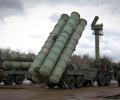
New Delhi is vulnerable to US sanctions under a 2017 law called CAATSA.
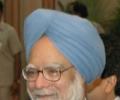
Prime Minister Manmohan Singh on Sunday left for a three-day visit to Russia during which the two sides are expected to sign a framework agreement on civil nuclear cooperation and three pacts in the field of defence.Dr Singh, who will be undertaking his sixth visit to Russia since 2004, said he will also meet Prime Minister Vladimir Putin, under whose presidency the annual dialogue was set up.
India and Russia are expected to sign a nuclear deal for the construction of four additional reactors at the Kudankulam nuclear power plant and expansion of other sites during Russian President Dmitry Medvedev's three-day visit to New Delhi beginning Thursday, a top official has said."We plan to sign on Friday an inter-governmental agreement with India to build another four reactors for the Kudankulam nuclear power plant, and envisaging cooperation," said a Russian official.

India has signed a deal worth over Rs 2,600 crore with Russia to procure 66,000 anti-tank shells to meet the shortfall of critical ammunition faced by its armoured fleet, including the latest T-90 tanks.
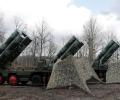
The US has already imposed sanctions on Turkey for the purchase of a batch of S-400 missile defence systems.

Doval said it is time for closer consultations, greater cooperation and coordination among the regional countries to deal with the challenges emanating from Afghanistan.

Prime Minister Narendra Modi on Wednesday thanked President Vladimir Putin for Russia's help and support in India's fight against Covid-19 as the two leaders agreed to establish a "2+2 ministerial dialogue" between foreign and defence ministers to add further momentum to the bilateral strategic partnership.
There was speculation that India might sign a civil nuclear pact with Russia in its attempt to garner support in the Nuclear Suppliers Group, of which Russia is an important member.
India and Russia will set up a joint task force to boost bilateral trade to a level of $10 billion by 2010 from the present $2billion, a senior official of the Indian government has said.
The statement hinted at China's eagerness not to upset the United States, with which it want to maintain good relations.

"Few nations are more vital to the future of American security and prosperity than India," Garcetti told the committee.
India and Russia are expected to ink an initial agreement on the construction of four additional nuclear power plants in Tamil Nadu's Kudankulam during President Vladimir Putin's visit to New Delhi next week.
There has been a considerable drop in India's dependence on arms and equipment from Russia but the Indian military cannot operate effectively without Russian-supplied equipment and will continue to rely on its weapons systems in the near and middle terms, a Congressional Research Service report has said.

Modi has the chance to break out of India's passive mode and firmly tell Russia that in this day and age, India will not support unilateral invasions, asserts Harishchandra Dighe.
The United States has made it clear to India that it is "discouraging" it from proceeding with its acquisition of S-400 missile defence systems from Russia but Washington will have to weigh "important geostrategic considerations" while taking a decision on growing calls for a presidential CAATSA waiver to New Delhi, President Joe Biden's nominee for Coordinator for Sanctions Policy has told lawmakers.

'The threat of ceding space to China in Afghanistan appears to be one factor propelling our government to get a bit more active now.'

Top security czars of India, Russia, Iran and five central Asian countries on Wednesday pledged to work for ensuring that Afghanistan does not become a safe haven for global terrorism and called for the formation of an open and truly inclusive government in Kabul.
The meeting on the sidelines of the Shanghai Cooperation Organisation Summit in Bishkek is their first interaction after Modi's re-election following the stunning victory of the BJP in the general elections last month.

The terrible beauty of Doval's initiative is that it is all about a new journey rather than about a set compass pointing toward a pre-determined destination, observes Ambassador M K Bhadrakumar.

BrahMos Aerospace, an India-Russia joint venture, produces the supersonic cruise missile that can be launched from submarines, ships, aircraft, or from land platforms.
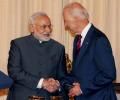
US-India defence cooperation must not adversely affect the India-Russia interface, which has its own strategic meaning and content, asserts Vice Admiral Premvir Das (retd).

India also ranked second in terms of volume of legal demands for content removal, after Japan, Twitter said in a blog that provided an update to its transparency report.
 © 2026 Rediff.com - Investor Information - Advertise with us - Disclaimer - Privacy Policy - Sitemap - Feedback - About us - Terms of use - Grievances