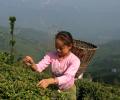
The famed Darjeeling tea may have slip to a new production low in 2025, as changing weather patterns, a shortage of pluckers and mounting economic stress weigh on the region's gardens.

Geopolitical headwinds leading to lower demand from export markets, coupled with lower domestic buying, have dragged the auction average of Darjeeling tea to its lowest level since 2015. Data from Calcutta Tea Traders Association (CTTA) shows that the average price of Darjeeling tea at Kolkata auctions for January-December 2023 was Rs 319.74 per kg. The last time it dipped below this level was in 2015 at Rs 285.71 per kg.
In the last three years, 20 gardens have changed hands, and 90 per cent of the buyers are from non-tea background.

The tea industry's cup of woes brimmeth - scanty rainfall and pest attacks have dragged down production in May, prices are lower than last year, and demand from some export markets is muted. Production in North Bengal - comprising the Dooars, Terai, and Darjeeling - is majorly affected; parts of Assam are also hit. Arijit Raha, secretary general, Indian Tea Association (ITA), said that the Tea Board numbers for April show a crop loss of about 9 per cent for North Bengal, compared to last year.
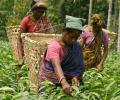
Tea estates across Assam and West Bengal, which were hitherto closed owing to the lockdown, opened in April.
It's a busy season for Indian producers of orthodox tea. As Sri Lanka, the world's largest supplier of orthodox tea, struggles with its worst economic crisis, a window of opportunity has opened up in neighbouring India. Calls to Indian planters and exporters from foreign buyers of Sri Lankan orthodox tea are pouring in and the buoyant sentiment is reflecting in prices at auction centres. Orthodox tea refers to loose-leaf tea which is produced using traditional or orthodox methods such as plucking, withering, rolling, oxidation and drying.

Over the past year, McLeod sold 21 gardens in India, reducing almost 32 million kg in production.

Last year, major tea companies performed well on the back of higher prices. However, a drop in prices over the past month and a half, is threatening to put a spanner in a repeat performance. Tea prices started on a strong note this year with prices ruling higher than last year on the back of crop loss due to adverse weather conditions. After mid-June, however, prices started dropping, though they are still higher than 2019-levels for north Indian teas (which account for more than 80 per cent of total production).
Planters from Assam said despite the Covid-19 pandemic, trade enquiries from China had been rising. However, owing to the growing conflict, enquiries may dry up. 'We have seen how the trade dried up in case of the Pakistan conflict and fear the same,' a planter from Assam said.
Rough estimates from plantation companies have pegged production loss in excess of 100 million kg (mkg) across India which is valued at around Rs 2000 crore. Usually, plantation companies in Assam and West Bengal produce around 15 per cent of the total tea during March-April.
Scanty rainfall, last year's lockdown, growing competition from Nepal and the disaster of the 2017 Gorkhaland agitation are steadily weakening exports and sales of Darjeeling tea.

As on March 31, 2019, while the promoter group's stake, including individual promoter shareholders as well as group investment firms, stood at 42.71 per cent, it fell to 38.39 per cent on Tuesday.

Production between January and mid-March declined by about 5.85 million kg.

The brothers, who began their ad journey a decade apart from each other, Piyush in 1979 and Prasoon in 1989, will be the eighth recipient of the award.
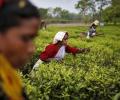
The tea industry, hit by rising costs, falling prices and political unrest in the North Bengal plantations, is especially vulnerable to the COVID-19 lockdown.

Iran is India's largest importer of tea in value terms while in terms of volume, it is the second largest after Russia
However, strong rupee, concerns over production at home may spoil the party

The world-famous Darjeeling tea is losing its flavour even as it struggles with falling production, says Avishek Rakshit.
 © 2026 Rediff.com - Investor Information - Advertise with us - Disclaimer - Privacy Policy - Sitemap - Feedback - About us - Terms of use - Grievances