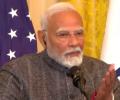
In November last year, an indictment was unsealed in the United States District Court for the Eastern District of New York, charging prominent Indian executives, including Chairman of the Adani Group, Gautam Adani, by linking them to an alleged bribery scheme.

'If anybody in the US thinks that because we have an agreement or hold joint naval exercises, we will acknowledge their determination of whom we should deal with, then they are mistaken.'

External Affairs Minister S Jaishankar reiterated India's stance on the Depsang and Demchok areas in Ladakh, stating that Indian security forces will patrol up to the historical limits. He also firmly rejected Nepal's alleged territorial claims, asserting that India's position on the border is clear and will not be altered. Jaishankar also addressed the situation in Myanmar and India's 'Neighborhood First' policy, highlighting the government's commitment to regional cooperation and development.
Distancing himself from Prime Minister Tony Blair's stand, British Home Secretary John Reid has said the war in Iraq and Afghanistan could be a "factor" in turning young British Muslims into extremists.
Karat demanded that the UPA categorically spell out its stand on the International Atomic Energy Agency meeting, with regard to the Iran nuclear issue.
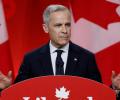
In a dramatic shift in Canada's foreign policy, Prime Minister Mark Carney on Thursday declared that the long-standing economic and security relationship between Canada and the United States has ended, responding to US President Donald Trump's announcement of new auto tariffs that could severely impact Canada's economy, Politico reported.
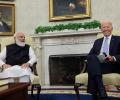
'The message that we intend to leave with at the end of this trip is one of real gratitude for the friendship and the close partnership that President Biden and Prime Minister Modi have enjoyed over the last four years, but also one of tremendous optimism because we see a lot of opportunity in the future.'
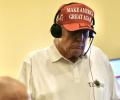
Security experts have warned that using Signal for discussions of this nature violates every established protocol for handling classified information.

China remains the elephant in the room and has to be tamed, which the United States alone is unable to do and therefore calls allies to come on board.
'The strategic direction of the relationship will not be affected. But the perception has been affected.'
Delhi's inability to open up a new canvas with Pakistan and Sharif is symptomatic of its sluggish thinking. Jyoti Malhotra analyses
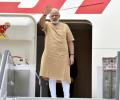
'In these days of a communication revolution, was it necessary for him to go to every country?' 'Mahatma Gandhi had no internet or a twitter account, but the whole world recognised him as the greatest leader of the twentieth century,' says Ambassador T P Sreenivasan.
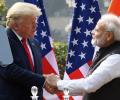
Prime Minister Narendra Modi and United States President Donald Trump on Monday vowed to work towards a 'trusted' partnership with a focus on boosting India-US cooperation in areas of trade, energy and defence in their first phone conversation since the American leader's inauguration last week.
Senior BJP leader Arun Shourie on Monday accused the United Progressive Alliance government of "outsourcing" the country's foreign policy to the United States in the wake of industrialised nations (G-8) putting curbs on full nuclear cooperation with countries like India.
India is "very important" for America's foreign policy and crucial for the stability and peace in the region, an influential US lawmaker said on Thursday. "India is a very important part of the United States foreign policy," Congresswoman Sheila Jackson Lee, who is co-chair of the Congressional caucus on Pakistan and heads the Afghan caucus said at a panel discussion in Washington.

As Donald Trump registered a historic comeback in the US presidential election, many former Indian diplomats on Wednesday concurred that the India-US ties will "continue to grow" from strength to strength, even as some of them cautioned that Trump is "highly unpredictable" and New Delhi will have to "wait and watch" to see what position he adopts going forward.
Dr Jaishankar is expected to discuss the dates for the fifth Quad leaders' summit in India later this year.
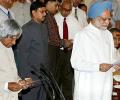
The landmark India-US civil nuclear deal of 2008, brokered during Manmohan Singh's tenure as Prime Minister, is seen as a crowning achievement in his foreign policy legacy. The agreement ended India's nuclear isolation, fostered a strategic partnership with the US, and opened doors to advanced technologies and defense cooperation. This historic deal also laid the groundwork for India's engagement with the global nuclear community.
The Romney campaign, shifting its line of attack on Barack Obama, has accused the United States President of downplaying the killing of its ambassador in Libya as a mere 'bump in the road,' saying the country's foreign policy under his administration is in 'disarray.'The Middle East of today, which is experiencing a series of anti-American protests, looks like the Tehran of 1979, Republican Vice Presidential candidate Congressman Paul Ryan, alleged.

Cheaper ripoffs was how China powered its way as an economic superpower but hitherto the tech realm had remained out of bounds. With DeepSeek's AI model the West, it seemed, was about to lose its competitive edge in cutting edge generative AI technology. And this is what is causing deep furrows in the forehead of tech titans in Silicon Valley.
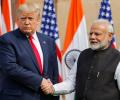
The China threat continues to resonate in the strategic partnership between India and the USA, points out Rup Narayan Das.
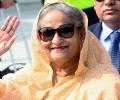
The Anti-Discrimination Student Movement (SAD), which led protests against Bangladesh Prime Minister Sheikh Hasina, has launched itself as a political party called the National Citizen Party (NCP). The new party, which aims to 'dismantle constitutional autocracy' and establish a 'second republic,' has pledged to create a 'solely Bangladesh-oriented' political system, with no room for 'pro-India and pro-Pakistan politics.' The NCP's inaugural rally was attended by representatives of various political parties, including the Bangladesh Nationalist Party (BNP), Jamaat-e-Islami, and envoys from the Vatican and Pakistan.
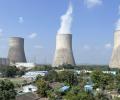
In a significant move, the United States on Wednesday removed restrictions on three Indian nuclear entities, over a week after National Security Advisor Jake Sullivan announced that Washington was finalising steps to 'remove' hurdles for civil nuclear partnership between Indian and American firms.
Prime Minister Yusuf Raza Gilani has summoned envoys in key world capitals for a meeting to review Pakistan's strategy on important foreign policy issues like the war on terrorism and relations with countries like the United States and India. Pakistan's envoys to the US, India, Afghanistan and several European countries are among those who have been asked to provide recommendations for forming strategies in the wake of the cross-border NATo raid.
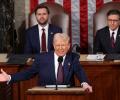
'Trump's desire to withdraw the US from some arenas on the global stage will result in ceding space to China.'

How have aspirations, ambitions and hopes broken down for these young men from the most advanced parts of India? asks Mihir S Sharma.
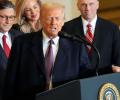
US President Donald Trump has 'America First' as his priorities and this includes making America safe again, making the country affordable, achieving energy dominance, draining the swamp and bringing back American values, the White House said on Monday.

US President Joe Biden on Saturday rolled out the red carpet to welcome leaders of Quad countries, Prime Ministers Narendra Modi of India, Anthony Albanese from Australia and Fumio Kishida of Japan.
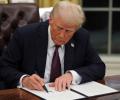
US President Donald Trump signed an executive order directing the Department of Justice to pause enforcing a nearly half-century-old law that was used to launch a bribery investigation against the Adani Group. Trump signed an order to pause enforcing of the 1977 Foreign Corrupt Practices Act (FCPA) that prohibits American companies and foreign firms from bribing officials of foreign governments to obtain or retain business.
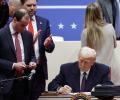
Trump signed an order to pause enforcing of the 1977 Foreign Corrupt Practices Act (FCPA) that prohibits American companies and foreign firms from bribing officials of foreign governments to obtain or retain business.
Indian foreign policy is listlessly meandering. At times, it stands still lost in thoughts and then it dashes forward -- and the next thing you know, it begins dashing backward. The pantomime seems to be happening with no greater logic than that it creates the illusion of a flurry of activity -- and our PM feels good and dynamic, says M K Bhadrakumar.
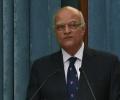
Former National Security Advisor (NSA) Shivshankar Menon has stated that the political dynamics between India and Pakistan have resulted in a "controlled level of hostility" that benefits the ruling elites in both nations. Speaking at the Kerala Literature Festival, Menon described Pakistan as a "brand new state" still grappling with its national identity. He argued that India's foreign policy towards Pakistan is influenced by its domestic politics, resulting in an uneasy equilibrium characterized by a "controlled level of hostility." Menon also questioned the concept of a multipolar world, stating that the current global order is merely "confused." He emphasized that the United States remains the world's true military hegemon, while other nations, including China, are regional powers. Menon further argued that there is no binding international order, leading to a state of "between orders." He highlighted the absence of definitive international agreements on crucial issues in recent decades.
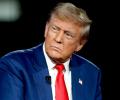
A leading expert predicts that the incoming Trump administration will likely continue its pro-India policies, including the Indo-Pacific strategy and Quad, but highlights potential challenges such as trade disagreements, immigration issues, and a possible quid pro quo for technology sharing. The expert also notes that the Trump 2.0 administration may prioritize great power politics over strategic altruism, potentially impacting human rights and religious freedom concerns.
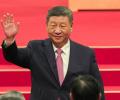
President Xi Jinping has said that no one can ever stop Taiwan's reunification with China as he signed off 2024 amid growing anxieties in the country over the continued slowdown of the economy and the return of Donald Trump, who has threatened to impose punitive tariffs and trade measures against Beijing in his second term.

From early indications, the Modi government's foreign policy seems to be pragmatic and reciprocal, says K G Suresh.
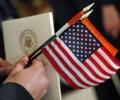
BJP president Rajnath Singh has said that if the party comes to power in the next general election, its foreign policy wouldn't be much different from that of the Congress government. Aziz Haniffa in Washington

'When compared to many of America's treaty allies in Asia, Modi 3.0 is on a much stronger footing.'
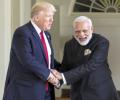
'Trump has no more elections to fight and his soaring ambition, which is no secret, will be to carve out a presidential legacy that outshines by far all his mediocre predecessors.' 'Trump's turnaround on the H-1B visa debate shows that he can take tough decisions and there are no holy cows in his domain,' asserts Ambassador M K Bhadrakumar.

'He may respect others, but he is unlikely to admire them'

Hollywood's biggest night was high on glitz and glamour but lacked the edge and excitement of the movies it was celebrating, observes Sukanya Verma.
