
Moody's Investors Service on Thursday slashed India's economic growth projection to 8.8 per cent for 2022 from 9.1 per cent earlier, citing high inflation. In its update to Global Macro Outlook 2022-23, Moody's said high-frequency data suggests that the growth momentum from December quarter 2021 carried through into the first four months this year. However, the rise in crude oil, food and fertilizer prices will weigh on household finances and spending in the months ahead.

Tata Steel was the top gainer in the Sensex pack, rallying 3.23 per cent, followed by SBI, Yes Bank, Hero MotoCorp, ICICI Bank and Bharti Airtel.

Stating that COVID-19 has not yet been contained in India, the rating agency in a statement said the government stimulus package is low relative to countries with similar economic impacts from the pandemic. "The COVID-19 outbreak in India and two months of lockdown -- longer in some areas -- have led to a sudden stop in the economy. That means growth will contract sharply this fiscal year (April 2020 to March 2021)," it said. "Economic activity will face ongoing disruption over the next year as the country transitions to a post-COVID-19 world."
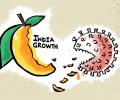
Former finance secretary Subhash Chandra Garg went on to say that the 2020-21 fiscal will go down in the history of India as the year when India got way-laid from its story of three decadal outstanding growth.

Credit rating agency Fitch said on Monday the proposed Securities and Exchange Board of India guidelines on Real Estate Investment Trusts will safeguard investors' interest, but sought clarity on whether such investments would also provide tax benefits. "The REIT will be a trust under the Indian Trusts Act and the taxation will be at the trust level. But it would be good to clarify if the unit-holder would be exempt from paying tax," it said.

Tata Motors was the biggest loser in the Sensex pack, tumbling 2.47 per cent, followed by Reliance Industries (2.44 per cent), Maruti (1.84 per cent), SBI (1.76 per cent) and Bajaj Finance (1.23 per cent).

Fitch expected inventory turnover to improve on a sector-wide basis.

Bharti's ratings headroom is likely to improve with an equity infusion, planned asset sales and growing EBITDA from Africa.

After navigating the turbulent pandemic waves, the recovering Indian economy is now sailing through unchartered waters of rising coronavirus cases, spiralling commodity prices and spiking inflation though the lighthouse of sustainable growth remains visible. As 2022 begins, a raft of developments, ranging from Budgetary announcements to continuation of stimulus measures to monetary policy, will set the tone for the domestic economy, which is projected to grow more than 9 per cent in the current fiscal ending March 2022. The country's continuing massive vaccination drive and 'precaution' doses starting for select categories of people this month will provide a firewall against any steep spike in coronavirus cases amid the emergence of the Omicron variant.

The IMF on Tuesday cut India's economic growth forecast by 0.5 percentage points to 9 per cent for the current fiscal year, with its chief economist Gita Gopinath saying that the slight downgrade is mainly due to the impact of the spread of the Omicron variant. "If you look at the 2021-22 fiscal year, we have a slight downgrade of -0.5 percentage points and for the next fiscal year 2022-23 we have a slight upgrade of 0.5 percentage points. So, growth for the previous fiscal year is now nine per cent and for this year now is at nine per cent. We moved it up slightly," Gopinath told reporters during a news conference in Washington. In its latest update of World Economic Outlook on Tuesday, the International Monetary Fund has cut India's economic growth forecast to 9 per cent for the current fiscal year ending March 31, joining a host of agencies which have downgraded their projections on concerns over the impact of the spread of Omicron on business activity and mobility.

The Indian economy remains on track to regain its position as the world's fastest-growing major economy after official estimates on Friday put the expansion at a tempered 9.2 per cent this fiscal amid concerns over the impact of a resurgent virus on the fragile recovery. The growth in the gross domestic product (GDP) of 9.2 per cent in April 2021 to March 2022 fiscal (FY 2021-22) given by the National Statistical Office (NSO) in its first advance estimate compares with 9.5 per cent expansion forecast by the Reserve Bank of India (RBI) last month. The economy had contracted by 7.3 per cent in the previous financial year.

Prime Minister Shinzo Abe has made reviving the economy his government's top priority, but his spending promises have raised concerns that Japan's public debt burden, already the worst among major economies, could deteriorate further.
S&P Global Ratings on Tuesday raised India's growth projection for the current fiscal to -7.7 per cent from -9 per cent estimated earlier on rising demand and falling COVID infection rates. "Rising demand and falling infection rates have tempered our expectation of COVID's hit on the Indian economy. S&P Global Ratings has revised real GDP growth to negative 7.7 per cent for the year ending March 2021, from negative 9 per cent previously," S&P said in a statement. The US-based rating agency said its revision in growth forecast reflects a faster-than-expected recovery in the quarter through September. For the next fiscal, it projected India's growth to rebound to 10 per cent.

The retrenchments at the company promoted by Mumbai BJP chief Mangal Prabhat Lodha come at a time when the economic growth has dipped to a six-year low of 5 per cent, which has led many to fear if the spectre of job losses across sectors awaits next.
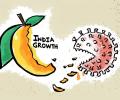
The rating agency said, rising COVID-19 cases in India will keep private spending and investment lower for longer.

The economic impact of the Omicron variant of COVID-19 on emerging economies will depend on a mix of government restrictions, public comfort with social interactions, and capacity of governments and central banks to provide additional policy support to the private sector, Moody's Investors Service said on Wednesday. The emergence of the new variant poses new risks to the global economic growth and inflation outlook, as concerns mount about the variant's health risks and several countries have imposed new travel restrictions in recent days. These restrictions will likely increase over the coming weeks until scientists learn more about the variant, it said.
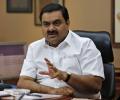
Unlike RIL, the Adani group has not yet brought in any big stakeholders to refinance debt or expand.

There are various estimates of India's debt to GDP ratio, but the consensus is that that it would be over 80 per cent at the end of the current fiscal year.

India's economy will do well once vaccination reaches a critical mass as pent up demand, global recovery and easy financial conditions will boost activities, RBI's Monetary Policy Committee (MPC) member Ashima Goyal said on Tuesday.

US private equity firm I Squared Capital is dropping out of the race to buy India's second-largest state oil firm, Bharat Petroleum Corporation Ltd (BPCL) owing to a complex deal structure and lack of financial backers for the transaction, sources said. I Squared Capital through its Indian arm, Think Gas was among the three suitors that had evinced interest in buying the government's near 53 per cent shareholding in BPCL. "The company has made a decision not to participate in the financial bidding," a source with direct knowledge of the development said.

Chief Economic Advisor Krishnamurthy Subramanian said India's economy will witness a decline in the current fiscal, but the drop will be limited if there is an economic recovery in the October-March period.

The intent to hire in the current quarter is likely to rise by 7 per cent over the previous three months if further lockdowns and workplace operating rules are not enforced, mainly driven by demand in healthcare, pharmaceuticals, educational services, ecommerce and technology start-ups and IT, according to a report. In fact, out of the 21 sectors reviewed, more than 8 sectors will witness a 9-11 per cent rise in their intent to hire in the current quarter, TeamLease Employment Outlook Report has revealed.

The girl from the north east who now walks for the best names in international fashion today was content wearing hand-me-downs from cousins those days.

General elections are scheduled to be held sometime in the first half of 2014.

While most economies contracted in the second quarter of 2020, the Chinese economy grew by 3.2 per cent.
Fitch Ratings on Tuesday said a higher natural gas price will help improve Reliance Industries' profitability in 2014-15 fiscal and would lead it to invest more in raising production.

On government's last week's announcement of revamping of PSU banks, Fitch Ratings said the move is "credit positive, but risks remain".

Capital needs are likely to increase substantially each year.

S&P Global Ratings on Wednesday said the second wave of COVID infections poses downside risks to India's GDP and heightens the possibility of business disruptions. The second wave brings in uncertainty and a drawn-out COVID outbreak will impede India's recovery, it said.

In April, S&P had lowered India's rating outlook to negative from stable

In its latest monetary policy report released recently, RBI had said credit growth is likely to remain modest, reflecting weak demand and risk aversion due to the disruptions caused by the coronavirus pandemic.

He said companies with a good strategy, technology, capital, liquidity and a motivated team will emerge as winners after the crisis.
Housing demand is likely to slow down due to higher prices and increased home loan rates in the current year, rating agency Fitch said on Monday.

Online travel portals and airlines say the demand from companies is being led by essential services sectors like pharmaceutical, oil and gas, and power.
"It's a welcome development, but we also feel it was long overdue... It's a recognition of the actions that the government has undertaken like GST, bankruptcy. We also need to keep all these things in perspective," Chief Economic Adviser Arvind Subramanian said.
Global ratings agency, Fitch Ratings, said the 180 days past due (dpd) two-wheeler loans (loans where EMIs are overdue for over 90 days) have reached as high as 6 per cent of original principal outstanding in some pools.

S&P Global Ratings has forecast India's economy to shrink by 5 per cent in the current fiscal. It, however, has projected GDP growth to be 8.5 per cent in 2021-22 and 6.5 per cent in 2022-23.
The Union Budget 2011-2012 is likely to be more beneficial for the special and underdeveloped states, including J&K, Himachal Pradesh and Bihar, rating agency Fitch said on Wednesday.

As per the credit rating agency's survey, a whopping 94 per cent of those surveyed viewed inflation and rising interest rates as main threats to Indian debt markets, followed by global sovereign issues (66 per cent) and budget deficit (64 per cent).
India's economy is unlikely to see double-digit growth and may grow between 8 per cent and 9 per cent this fiscal year (2021-22, or FY22), against the estimated 11.5 per cent, according to leading economists and rating agencies. The downward revision of growth projections to as low as 10 per cent is mostly on account of stringency in restrictions by states, relatively slow vaccination pace, and the possibility of a third wave of the pandemic. However, they say the impact will not be as severe as the first wave, and expect the first quarter to see positive growth.
 © 2026 Rediff.com - Investor Information - Advertise with us - Disclaimer - Privacy Policy - Sitemap - Feedback - About us - Terms of use - Grievances